
Steel ships face huge forces from waves and cargo. Without the right support, they can bend or break.
Angle steel plays a key role in keeping ship hulls strong and stiff. It helps spread out heavy loads from cargo, waves, and machinery across the whole structure. This stops local damage and keeps the ship safe.
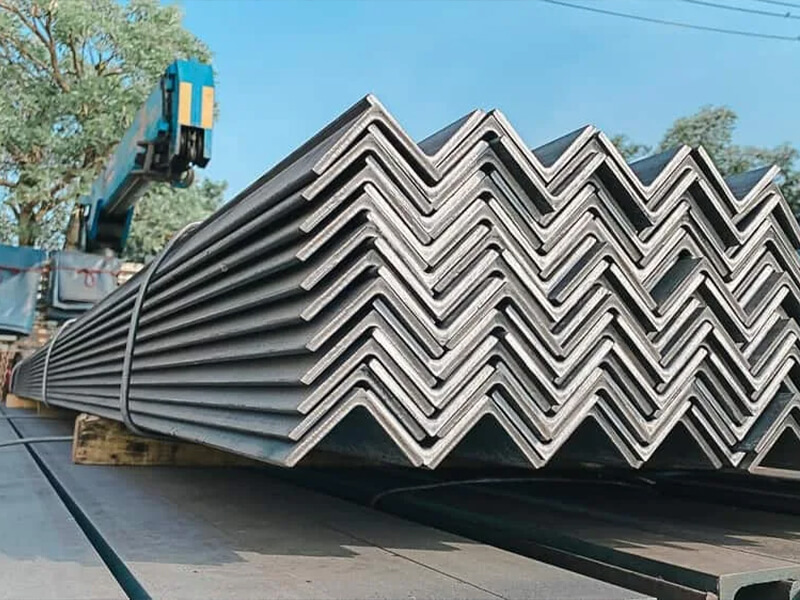
When you look at a ship, you see big steel plates. But those plates alone are too weak. They need a skeleton behind them. That is where angle steel comes in. I have worked with marine steel for years at CN Marine Steel. Our clients, like Gulf Metal Solutions from Saudi Arabia, often ask me why angle steel matters so much. In this post, I will break down how angle steel works inside modern ships. I will also share where we use it and why it still beats other shapes. If you buy or build ships, this information will help you make better choices.
How Does Angle Steel Contribute to Hull Strength, Stiffening, and Load Distribution in Modern Ships?
A ship’s hull is like a big metal box. But if you press on the sides, they can cave in easily. That is a problem.
Angle steel adds stiffness to the hull plates. It stops them from buckling under pressure. It also takes heavy loads from the deck, cargo, and engines and spreads them evenly across the ship’s frame. This prevents cracks and keeps the ship’s shape.
What makes angle steel so good at these jobs?
Let me explain with three simple ideas: strength, stiffening, and load distribution.
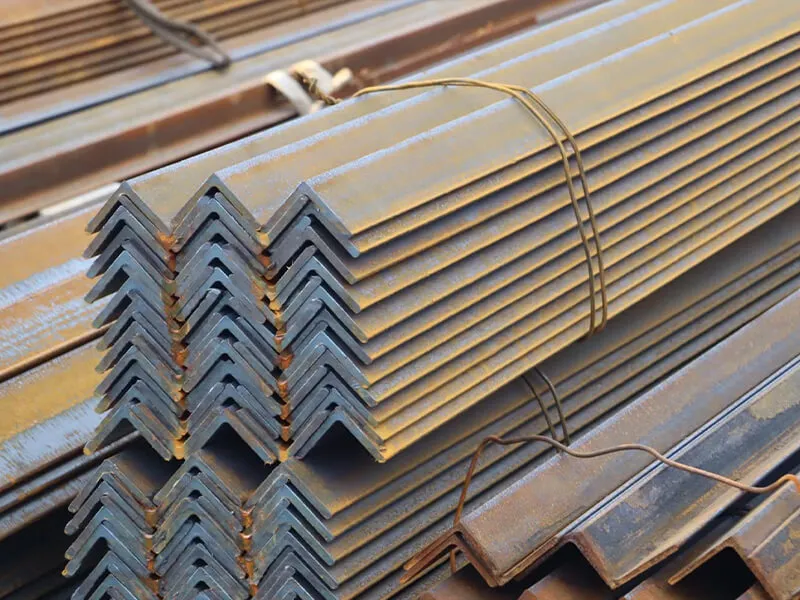
Strength – Angle steel has an L-shaped cross section. That shape gives it a high moment of inertia for its weight. In plain English, it resists bending much better than a flat bar of the same thickness. When you weld or bolt an angle to a steel plate, the plate becomes much harder to bend. The angle acts like a rib.
Stiffening – Modern ships have large, flat surfaces on the hull bottom, sides, and deck. Without stiffeners, these plates would vibrate and flex. Over time, flexing leads to metal fatigue. Fatigue causes tiny cracks that grow. Angle steel stiffeners cut that flexing down to a safe level. We place them in a grid pattern. The result is a hull that feels solid and quiet under load.
Load distribution – Think of a heavy cargo like iron ore in a bulk carrier. That weight pushes down on the bottom plates. If the plates are not supported, the load concentrates in small areas. Those areas get overstressed and dent. Angle steel frames take the load from the plates and pass it to stronger parts like the keel and girders. This spreads the force over a much bigger area. The hull can then carry thousands of tons without trouble.
| Function | What angle steel does | Why it matters |
|---|---|---|
| Hull strength | Resists bending forces from waves and cargo | Prevents permanent deformation |
| Stiffening | Reduces plate flexing and vibration | Avoids metal fatigue and cracks |
| Load distribution | Transfers local loads to main structure | Stops overstress and denting |
In my daily work, I see how this plays out. One of our regular buyers from Vietnam ships marine angle steel for oil tankers. They told me that using the right size angle in the double bottom cut their inspection repairs by half. The angles kept the plates from oil-canning (that popping sound when a plate flexes back and forth). So angle steel is not just a piece of metal. It is the backbone of a safe ship.
What Are the Primary Applications – Transverse Frames, Longitudinal Stiffeners, and Deck Beams – for Angle Steel Today?
When you walk inside a ship’s hull, you see steel shapes everywhere. It can look confusing. But most of those shapes fall into three jobs.
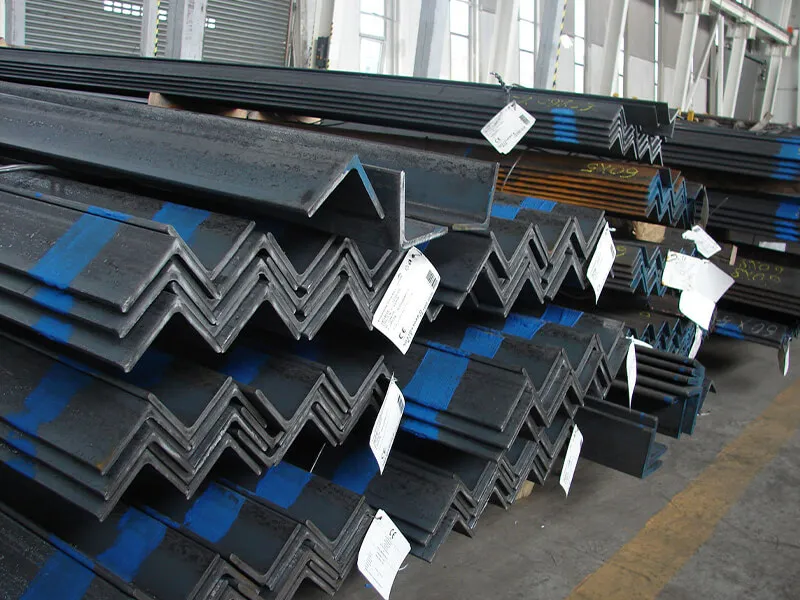
Angle steel is used today mainly for transverse frames that run side to side, longitudinal stiffeners that run front to back, and deck beams that hold up the deck. Each job needs a different size and spacing of angle steel.
Let me break down each application one by one.
Transverse frames – These are the ribs of a ship. They run from the bottom up the sides, like the ribs in a human chest. On smaller ships and in the ends of large ships, transverse frames are the main support. We use large unequal leg angles for these frames. The longer leg gets welded to the hull plate. The shorter leg sticks out as a flange. This shape gives maximum stiffness for the weight. Spacing is usually between 600 mm and 900 mm. In older ships, frames were riveted. Now we weld them, which is faster and stronger.
Longitudinal stiffeners – These run the length of the ship. On big ships like container carriers and bulkers, longitudinal stiffeners are the main system. They sit inside the double bottom, along the sides, and under the deck. Angle steel works well here because it is easy to cut and fit around other parts. Longitudinals are smaller than transverse frames in a typical ship. We use equal leg angles often, like 100×100 mm or 120×120 mm. They run continuously through holes in the transverse frames. This creates a strong grid that resists the bending of the whole ship.
Deck beams – The deck takes heavy loads from cargo, containers, and people. Deck beams support the deck plates from below. They run from side to side. Angle steel deck beams are common in ships with moderate deck loads. For very heavy loads, we might use a larger T-section or built-up beam. But for most cargo ships, an angle steel deck beam is strong enough and much cheaper. The angle is placed with one leg up against the deck. The other leg hangs down. This gives a flat surface on top for welding the deck plate.
Here is a quick guide to typical sizes:
| Application | Common angle size | Leg type | Spacing |
|---|---|---|---|
| Transverse frame | 150x90x12 mm | Unequal | 700 mm |
| Longitudinal stiffener | 120x120x10 mm | Equal | 800 mm |
| Deck beam | 130x130x11 mm | Equal | 750 mm |
Our client from Mexico builds fishing boats. He switched from flat bar to angle steel for his deck beams. The result was a much stiffer deck with no extra weight. His welders also liked the angle because it gave them a flat surface for welding. Small changes like that save time and money on every ship.
How Have Design Trends Like Double Hulls and High‑Tensile Steel Changed Where and How Angle Steel Is Used?
Ship designs have changed a lot in the last 30 years. The old single-hull tankers are mostly gone. Now we have double hulls. Also, steel itself got stronger.
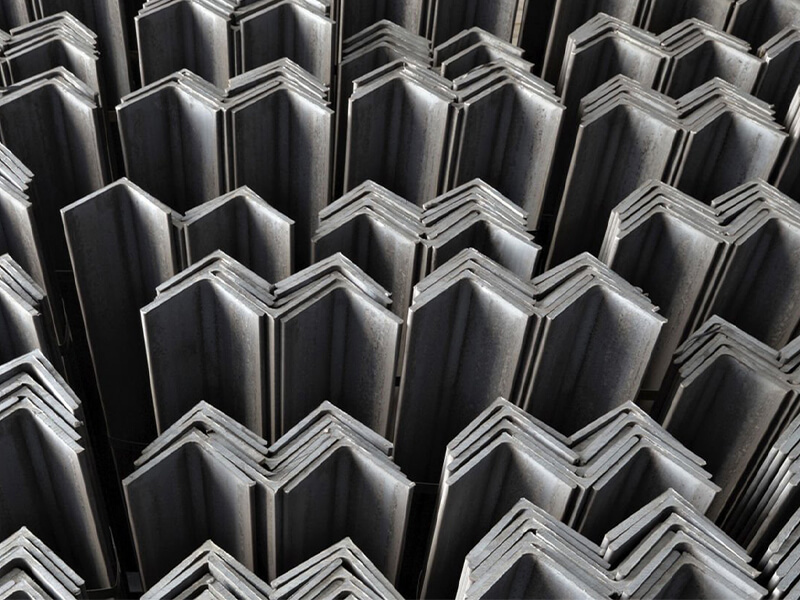
Double hulls create more spaces inside the ship where angle steel is needed for support. High‑tensile steel allows us to use thinner and smaller angle steel for the same strength. This changes the size and placement of angle sections but not the basic role.
How double hulls changed the game
A double hull has an outer shell and an inner shell. Between them is a narrow space. That space is used for ballast water or as a void. But this space needs its own stiffening. Both the inner and outer plates must be supported. So we install angle steel stiffeners on both sides. The stiffeners are often shorter and closer together. They also must allow access for inspection and cleaning. That means we use angle steel with one leg cut short or with brackets.
In a single hull, the frames were on just one side of the plate. Now in a double hull, the same plate may have stiffeners on both sides. This adds weight but improves safety. For a steel supplier like us, it means more demand for smaller angles. Sizes like 65×65 mm or 80×80 mm become very popular for the inner hull. The outer hull still uses larger angles because it faces wave pressure.
High‑tensile steel changes thickness, not shape
High‑tensile steel (HTS) has a yield strength of 355 MPa or more. Normal mild steel is around 235 MPa. So HTS is about 50% stronger. Designers can use thinner plates and smaller sections. For angle steel, this means we can drop one or two sizes. A frame that needed 150x90x12 mm in mild steel may only need 130x80x10 mm in HTS.
But HTS is more brittle. It does not like sharp notches or sudden changes in shape. Angle steel has a sharp corner inside the L. That corner is a stress concentrator. So with HTS, we must pay more attention to the weld details. We also need to avoid placing the angle in areas with high impact loads. For secondary members like deck stiffeners, HTS angle works fine. For primary members like the keel, designers often stay with mild steel or use a different shape.
I saw this clearly with a customer from the Philippines. He builds tugboats. He switched to HTS angle steel for the longitudinal stiffeners. He saved 15% in steel weight. But he kept mild steel for the transverse frames near the bow, where ice or logs might hit. That mix of materials is now common.
Practical changes in how we use angle steel
- Smaller angles – HTS means we use smaller leg sizes for the same job.
- Tighter spacing – In double hulls, stiffener spacing drops from 900 mm to 600 mm.
- More welding – Double hulls have more pieces, so more welding hours.
- Access matters – Angles in ballast tanks need rounded edges for coating.
For our business, these trends mean we stock a wider range of angle sizes. We also work with mills that certify HTS angle steel to class society rules like ABS or Lloyd’s. Buyers now ask for test certificates on every bundle. We provide that without delay.
Why Does Angle Steel Remain Preferred over Bulb Flat or Flat Bar for Secondary and Tertiary Structural Members?
You might wonder why we do not just use bulb flat steel everywhere. Bulb flat is very stiff for its weight. Flat bar is cheap. So why stick with angle?
Angle steel stays preferred because it is easy to connect to other parts, works with both welding and bolting, has standard sizes worldwide, and costs less than bulb flat for small to medium members. Flat bar lacks the flange stiffness, while bulb flat is harder to cut and fit.
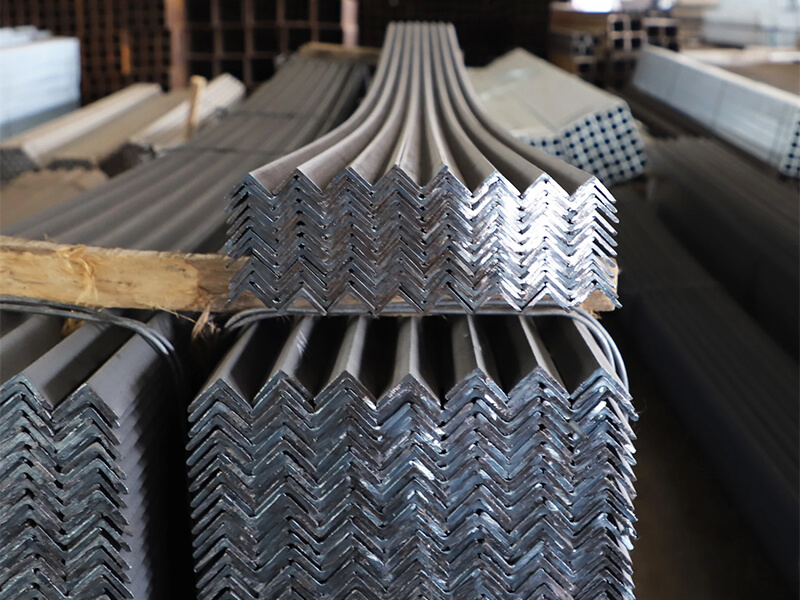
Let me compare the three options directly.
Flat bar – This is just a rectangle. No flange. It is cheap and simple. But flat bar bends easily in its weak direction. When you weld it to a plate, it only adds stiffness in one direction. For secondary members like small brackets, flat bar is fine. For longer stiffeners, it is too weak. You would need a very thick flat bar to match an angle. That thick bar is heavy and wastes steel. So flat bar is only good for the lightest jobs, like supporting pipe hangers or small platforms.
Bulb flat steel – This has a bulb shape on one edge and a flat web. It is very efficient. The bulb gives high stiffness with less steel than an angle. Bulb flat is the first choice for longitudinal stiffeners on big ships. But bulb flat has two problems. First, it is hard to cut a hole in the web for pipes or man access. The bulb gets in the way. Second, connecting a bulb flat to a crossing frame is tricky. You need special brackets or cutouts. In many shipyards, workers prefer angle steel because they can cut, drill, and weld it with standard tools.
Angle steel – The L shape is simple. You can cut it with a band saw or a torch. You can drill holes easily. You can weld it to plates on either leg. You can bolt through either leg. Angle steel works with every type of connection. That flexibility is huge. In a ship’s tight spaces, you often need to attach a stiffener at an odd angle. Angle steel lets you do that. Bulb flat does not.
Here is a comparison table based on what I see with my customers:
| Feature | Angle steel | Bulb flat | Flat bar |
|---|---|---|---|
| Stiffness for weight | Good | Best | Poor |
| Ease of cutting | Easy | Moderate | Easy |
| Ease of welding | Very easy | Moderate | Easy |
| Ease of bolting | Very easy | Hard | Easy |
| Connection to crossing members | Simple | Complex | Simple |
| Cost per meter (same stiffness) | Medium | High | Low but heavy |
| Availability worldwide | High | Moderate | High |
When angle steel is the clear winner
For secondary members (like side shell stiffeners in a small ship) and tertiary members (like ceiling supports or floor stiffeners), angle steel wins every time. Why? Because these members are not the main strength of the ship. They just need to be good enough, cheap, and easy to install.
I remember a conversation with a buyer from Qatar. He was building crew boats. His yard tried to use bulb flat for everything because an engineer said it was “more modern.” But the welders complained. Cutting bulb flat to fit around deck openings took twice as long. They switched back to angle steel for all secondary members. The welding time dropped by 30%. The ship passed inspection with no issues.
That is the real world. Angle steel is not always the lightest or the strongest. But it is the most practical. And in shipbuilding, practical wins when the job is not the main strength path.
One more point from my own experience
We export marine angle steel to over ten countries. Our stock includes sizes from 50×50 mm up to 200×200 mm. We sell much more angle than bulb flat. Why? Because our buyers are distributors and fabricators. Their customers – the shipyards – ask for angle steel for most small and medium jobs. They know that their workers can handle angle quickly. They also know that angle steel is easy to replace in a repair. If a bulb flat stiffener gets damaged, finding a matching piece is hard. For angle, every port has a supplier.
So the preference for angle steel is not just about engineering. It is about supply chains, worker skills, and repair costs. That is why angle steel stays the workhorse of ship structures.
Conclusion
Angle steel gives ships the strength, stiffness, and load spread they need. It is simple, flexible, and reliable for most jobs.