
Wrong L-shaped steel can break a marine project. You need a clear sourcing plan.
EPC contractors start by pre‑qualifying certified mills, then define exact grades and dimensions, balance bulk orders with phased delivery, and always use third‑party inspection plus mill certificates to avoid claims.
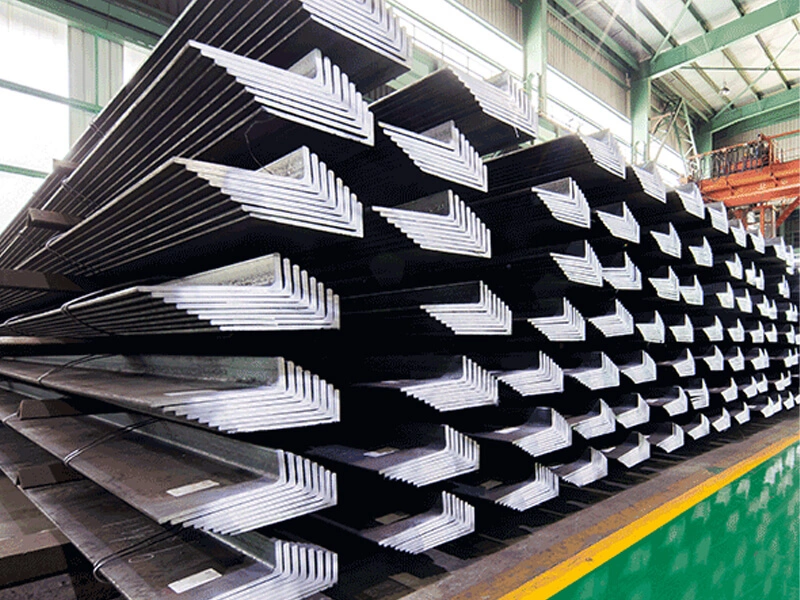
I work with EPC contractors from Saudi Arabia to the Philippines. They all ask the same questions about L‑shaped steel. Let me walk you through the answers step by step.
How Do EPC Contractors Pre‑Qualify Mills and Suppliers for Class‑Approved L‑Shaped Steel?
You pick a supplier. The steel fails class approval. Now your schedule is broken.
The answer is a pre‑qualification checklist. You check the mill’s class certificate, audit their production line, ask for recent project references, and test sample pieces before you order.
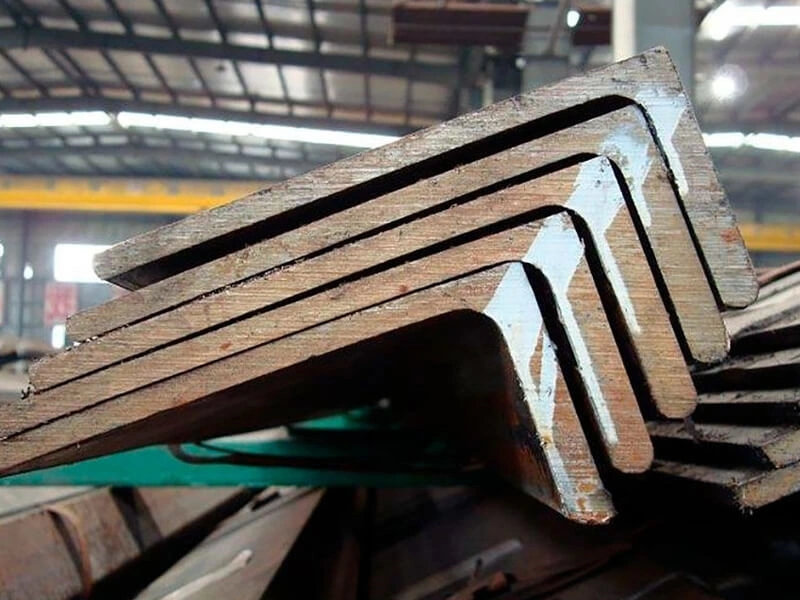
Check the mill’s class approval first
Not every mill can make marine L‑shaped steel. The steel must meet rules from DNV, ABS, LR, BV, or ClassNK. So you ask the mill for their current class certificate. Do not accept an old one. Class approvals expire.
I remember a contractor in Pakistan. He bought L‑shaped steel from a new supplier. The price was low. But the mill’s ABS approval had expired six months before. The contractor did not check. At the port inspection, the steel was rejected. He lost two months and paid double for urgent material from a certified mill.
So make a simple pre‑qualification table.
| Mill Name | Class Approval (Current) | Last Audit Date | Project References (Last 2 years) |
|---|---|---|---|
| Mill A | ABS, DNV | 2025-03 | 3 offshore platforms |
| Mill B | LR, BV | 2024-11 | 1 FPSO, 2 jack-up rigs |
| Mill C | None | N/A | None – new mill |
Only move forward with mills that have current approvals for the specific shape and grade you need.
Audit their production and testing
A class certificate on paper does not mean every batch is good. You need to know if the mill follows the rules every day. Ask for their internal test records. See if they do regular tensile and impact tests on L‑shaped steel.
You can also hire a third‑party inspector to visit the mill before you place a big order. This costs $1,000 to $2,000. But it saves you from a $100,000 mistake.
I suggest asking these five questions to every mill.
- Do you have an in‑house lab for mechanical testing?
- How often do you test each size and grade?
- Can you show me the last 10 heat certificates?
- Do you allow SGS or TUV to witness your tests?
- What is your rejection rate for marine sections in the last year?
A good mill answers all of them quickly. A bad mill hesitates or says no.
Ask for reference projects
Talk to other EPCs who used this mill. Ask them about delivery times, surface quality, and how the mill handled problems. One phone call can tell you more than a dozen certificates.
I once helped a client from Malaysia. He was looking at two mills. Both had class approval. He called three references for each mill. One reference said the mill was always late. The other reference said the mill sent wrong dimensions twice. He chose the third mill based on good references. That mill delivered on time, and the steel passed all inspections.
Test a sample before bulk order
Even after all checks, test a small sample. Order 10 to 20 tons of L‑shaped steel first. Cut it, weld it, and send it to a lab. Check the chemical composition, yield strength, and impact values at low temperature (often -20°C or -40°C for marine use).
Only when the sample passes, you place the full order. This step adds two weeks to your timeline. But it removes almost all risk.
What Technical Specifications (Grade, Dimensions, Coatings) Do EPCs Define Before Issuing RFQs?
You send a vague RFQ. The supplier sends a low price. Then the steel arrives and does not fit.
The answer is a detailed specification sheet. You list the exact grade (like A36 or AH36), dimension tolerances (EN or JIS standard), surface condition, coating type, and edge preparation before you ask for prices.

Choose the right grade for marine environment
L‑shaped steel for marine structures must resist corrosion and low temperatures. Common grades are A36 (general), A572 Gr50 (higher strength), and AH36 (shipbuilding). For Arctic or cold regions, you need DH36 or EH36 with impact test at -40°C.
Do not guess. Look at your class rules. ABS, DNV, and LR have tables for minimum grades based on the structure’s location and design temperature.
Here is a simple guide.
| Marine Structure | Recommended Grade | Minimum Yield (MPa) | Impact Test Temp |
|---|---|---|---|
| Jetty fender panels | A36 | 250 | Not required |
| Offshore platform leg | A572 Gr50 | 345 | 0°C |
| Ship hull L‑stiffeners | AH36 | 355 | -20°C |
| Arctic module support | DH36 or EH36 | 355 | -40°C |
Write the grade clearly in your RFQ. Do not say “or equivalent.” That invites problems.
Define dimensions and tolerances
L‑shaped steel comes with leg length, leg thickness, and radius at the corner. You must specify which standard you follow. Most marine projects use EN 10056-1 or JIS G3192.
For example, an L 150x90x12 means legs of 150mm and 90mm, and thickness of 12mm. But the tolerance on leg length might be +/- 2mm for EN, or +/- 1.5mm for JIS. If your fabrication requires a tight fit, you need to state that.
Also tell the supplier if you need sharp corners or rounded corners. Standard L‑shaped steel has a radius. If you need a square corner for welding, you must request it. Many mills can do it, but they need to know.
I learned this from a project in Vietnam. The contractor ordered L 100x100x10 without specifying corner radius. The mill sent standard radius of 12mm. The contractor’s welding fixture did not work. He had to grind every corner. That added 200 hours of labor. Now he always writes “square corner max radius 3mm” in his RFQ.
Decide on coating and surface finish
Marine L‑shaped steel usually comes as black steel (mill scale). But if you store it outside near the sea, it will rust fast. So you may need a primer coating. Ask for shop primer (15-25 microns) or a full epoxy coating.
Also define rust grade. For example, “Surface must be SA 2.5 blast cleaned before primer.” Or “No heavy rust scale allowed. Rust grade B or better.”
I suggest adding a coating table to your RFQ.
| Item | Requirement |
|---|---|
| Mill scale condition | Removed by shot blasting |
| Primer type | Zinc-rich epoxy, 20-30 microns |
| Rust grade before primer | SA 2.5 (near white metal) |
| Touch-up after cutting | Same primer provided with order |
This way, you and the supplier agree on the same finish. No surprises.
Include edge preparation
L‑shaped steel can have mill edges (as rolled) or sheared edges. For welding, sheared edges are better because they are cleaner. Write “sheared edges, no burrs” in your spec.
If you need the steel to be cut to exact lengths, say so. For example, “Supply in 6m and 12m lengths, tolerance +/- 3mm.” Mills can cut to length for a small fee. That saves you cutting time at your yard.
How Do EPCs Balance Bulk Pricing, Phased Delivery, and Inventory Holding Costs for Marine L Sections?
You want a low price, so you buy all steel at once. But your storage space is small. And your cash is stuck in inventory.
The answer is a split order. You negotiate a bulk price for the whole quantity. Then you ask the mill to deliver in two or three batches. You pay only for what you receive each month. This lowers your holding cost and keeps cash flow healthy.
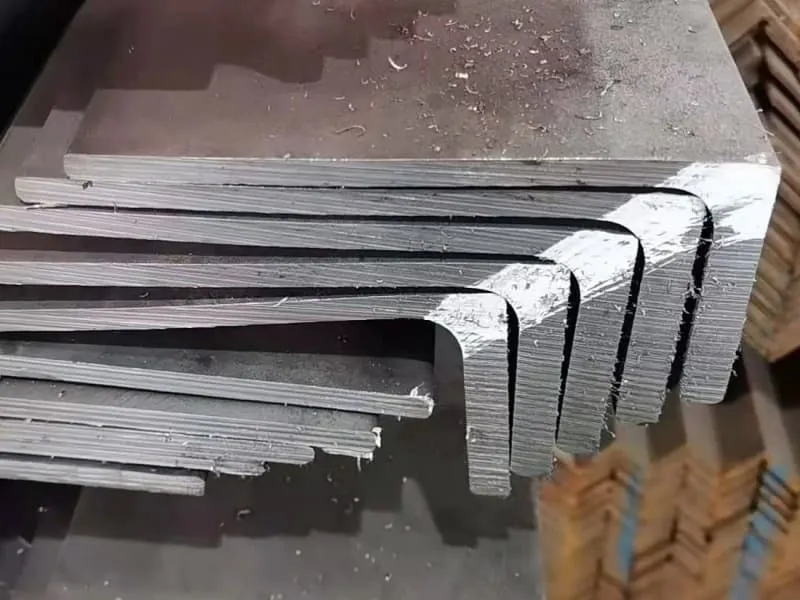
Negotiate the price for total tonnage first
Mills give better prices for larger orders. So you calculate your total L‑shaped steel for the whole project. Maybe it is 500 tons. You ask the mill for a price based on 500 tons. That price is lower than the price for 200 tons.
But you do not need all 500 tons at once. You need 150 tons in month one, 200 tons in month two, and 150 tons in month three. So you tell the mill: “I will order 500 tons total. Please give me the 500‑ton price. But ship in three batches.”
Most mills agree to this because they secure the full order. They might ask for a deposit of 20% to 30% on the total. That is fine. You still pay less overall.
Here is an example of cost comparison.
| Order Type | Total Tons | Price per Ton | Total Steel Cost | Delivery Cost (3 batches) | Inventory Holding Cost (3 months) | Total Cost |
|---|---|---|---|---|---|---|
| Single delivery | 500 | $650 | $325,000 | $8,000 | $12,000 | $345,000 |
| Phased (3 batches) | 500 | $660 | $330,000 | $12,000 | $3,000 | $345,000 |
Wait, the total is the same? In this example, yes. But the phased order uses less of your working capital each month. You do not tie up $200,000 in steel sitting in your yard. That money can buy other materials.
Calculate your holding cost
Many EPCs forget the cost of storage. Holding steel costs money. You pay for yard space, security, insurance, and the risk of rust or theft. A simple formula is 2% of steel value per month.
So if 500 tons cost $330,000, holding for three months costs $330,000 x 2% x 3 = $19,800. That is real money. Phased delivery reduces that number because you hold less steel for less time.
I worked with a contractor in Mexico. He ordered all L‑shaped steel for three jetties at once. He stored it outside. After two months, 30% of the steel had surface rust. He had to blast it again. That cost him $8,000. Plus he had to rent extra space because his yard was full. Now he always uses phased delivery.
Use a delivery schedule table in your contract
Write the delivery schedule into your purchase order. Be specific about dates. Do not say “as needed.” Say “Batch 1: 150 tons by May 15. Batch 2: 200 tons by June 15. Batch 3: 150 tons by July 15.”
Also state what happens if the mill is late. For example, “If delivery is delayed by more than 10 days, the mill pays 1% of batch value per week as penalty.”
This protects you. A mill in China once delayed my client’s batch by 25 days. The client got a $4,500 discount because of the penalty clause. He used that money to cover his schedule disruption.
Coordinate with your construction schedule
Look at your Gantt chart. When does your team need L‑shaped steel? For the foundation? For the superstructure? For handrails? Align each batch with a specific construction phase.
Do not let the mill ship everything early. “Early delivery” is not a gift. It is a problem. You have to store it. You might pay for it early. So always put “no early delivery without written approval” in your contract.
I suggest a simple table for your internal planning.
| Batch | Tonnage | Required On‑Site Date | Construction Phase | Storage Days Needed |
|---|---|---|---|---|
| 1 | 150 | May 15 | Foundation | 5 |
| 2 | 200 | June 15 | Main frame | 7 |
| 3 | 150 | July 15 | Deck and railing | 3 |
Keep this table visible to your procurement team. They can then push the mill to ship exactly on time.
Why Do EPCs Rely on Third‑Party Inspection and Mill Certificates to Guarantee Compliance and Avoid Claims?
You trust the mill. But the steel fails at the site. The client asks for a claim. You have no proof.
The answer is simple. You hire an independent inspector like SGS, TUV, or Bureau Veritas. They check the steel at the mill before shipment. You also ask for original mill certificates (MTCs) that match each heat number. Together, these two documents protect you from claims.
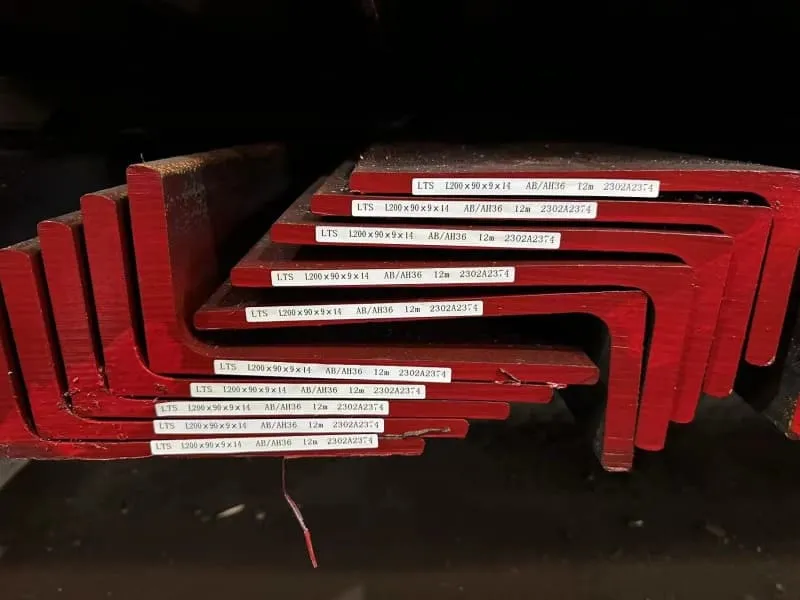
Every batch of L‑shaped steel has a heat number. The mill tests a sample from that heat. They record the chemical composition (carbon, manganese, etc.) and mechanical properties (yield, tensile, elongation). That record is the mill certificate, or MTC.
You must get the MTC for every heat number delivered to you. Check that the values meet your specification. For example, for AH36, carbon should be under 0.18%, yield over 355 MPa.
Do not accept a “general certificate” that covers a whole month. You need a certificate for each heat number. That way, if one piece fails, you can trace it to the exact heat. [web:5]
I saw a problem in Qatar. A contractor received L‑shaped steel with MTCs. But the MTCs were for a different heat number. The steel looked the same. Later, some pieces cracked during welding. The mill denied responsibility because the MTCs did not match. The contractor could not prove the steel came from that mill. He lost $50,000.
So always check that the heat number stamped on the steel matches the heat number on the MTC.
Every batch of L‑shaped steel has a heat number. The mill tests a sample from that heat. They record the chemical composition (carbon, manganese, etc.) and mechanical properties (yield, tensile, elongation). That record is the mill certificate, or MTC.
You must get the MTC for every heat number delivered to you. Check that the values meet your specification. For example, for AH36, carbon should be under 0.18%, yield over 355 MPa.
Do not accept a “general certificate” that covers a whole month. You need a certificate for each heat number. That way, if one piece fails, you can trace it to the exact heat.
I saw a problem in Qatar. A contractor received L‑shaped steel with MTCs. But the MTCs were for a different heat number. The steel looked the same. Later, some pieces cracked during welding. The mill denied responsibility because the MTCs did not match. The contractor could not prove the steel came from that mill. He lost $50,000.
So always check that the heat number stamped on the steel matches the heat number on the MTC.
Third‑party inspection adds an independent check
Mill certificates are good. But the mill writes them. A third‑party inspector works for you. They go to the mill and check:
- Dimensions (leg length, thickness, straightness)
- Surface condition (no cracks, laminations, or heavy rust)
- Marking (heat number, grade, size are correct and legible)
- Sample cutting for independent testing
The inspector then writes a report. If the steel passes, you can ship with confidence. If it fails, you reject it at the mill. That is much cheaper than rejecting it at your site.
The cost of third‑party inspection is usually $500 to $1,500 per day plus travel. For a 500‑ton order, that is less than 0.5% of the steel value. It is a small insurance.
How to avoid claims from your client
Your client (the project owner) will ask for proof of compliance. They want to see MTCs and inspection reports. If you cannot provide them, the client may reject the steel and charge you for delays.
So build a documentation package for each delivery.
| Document | Who Provides | Purpose |
|---|---|---|
| Mill certificate (MTC) | Mill | Proves chemical and mechanical properties |
| Third‑party inspection report | SGS/TUV/BV | Confirms dimensions, surface, marking |
| Packing list | Supplier | Shows what was shipped |
| Bill of lading | Shipping line | Proves shipment date |
| Photos of steel with markings | Supplier or inspector | Visual proof of condition |
Keep all these in one folder. Share them with your client before the steel arrives. This builds trust. It also means the client cannot suddenly claim the steel is wrong after they have used it.
A client from Saudi Arabia told me that clear documentation saved him from a big claim. His client said the L‑shaped steel was underweight. But the third‑party report showed the exact dimensions and density. He sent the report. The claim was dropped.
Use a hold point system
You can set up a hold point system with the mill. This means the mill cannot move to the next step without your approval. For example:
- Hold point 1: After rolling, before cutting. You or your inspector check dimensions.
- Hold point 2: After cutting, before coating. You check surface and marking.
- Hold point 3: After coating, before packing. You check coating thickness and drying.
This sounds strict. But for big marine projects, it works. The mill knows you are serious. They will take extra care. And you get exactly what you ordered.
Conclusion
Pre‑qualify mills, write clear specs, use phased delivery, and always add third‑party inspection. That is how EPCs source L‑shaped steel safely.