
Your steel plates are packed for export. They arrive bent, scratched, and wet. The carrier says your packing was inadequate. You lose your claim.
Marine steel plate export packing has four core components: dunnage (wooden timbers) between layers, edge protectors under straps, steel or nylon strapping, and weatherproofing (tarps or VCI film). Different export modes – container, flat rack, or bulk vessel – require different packing specifications. Marking and documentation must be clear for customs and traceability.
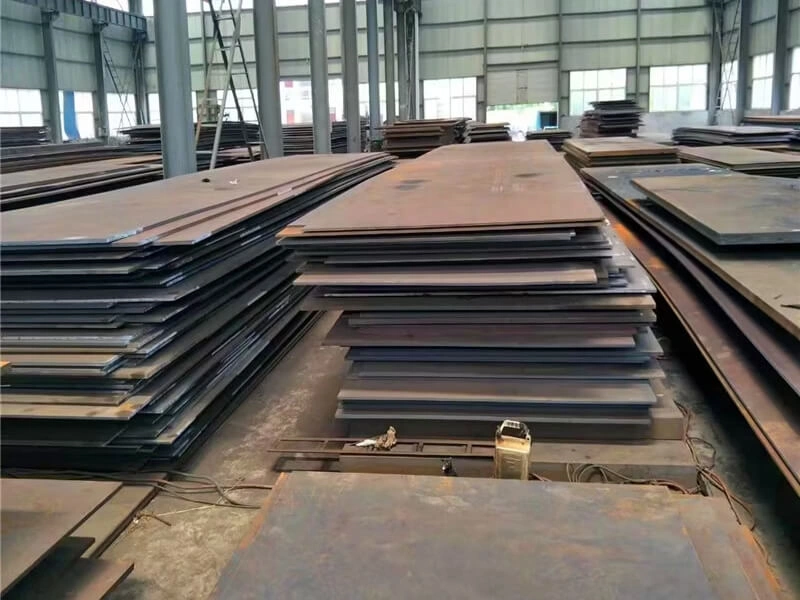
I am Zora Guo from cnmarinesteel.com. I have exported thousands of tons of marine steel plates. Proper packing is not just about protection – it is about legal compliance and claim protection. Let me explain the standards that work.
What Are the Core Packing Components: Dunnage, Edge Protectors, Strapping, and Weatherproofing?
You stack plates. You put straps around them. You ship. That is not enough. You need four essential components.
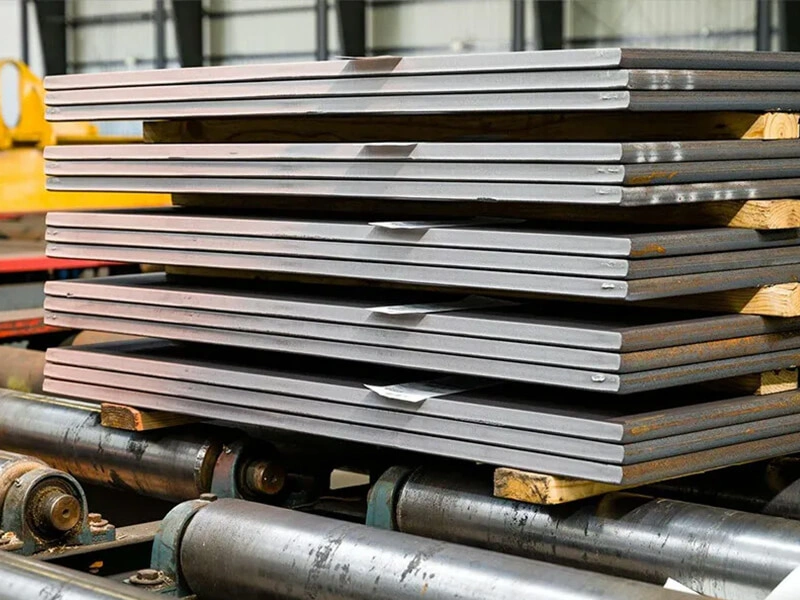
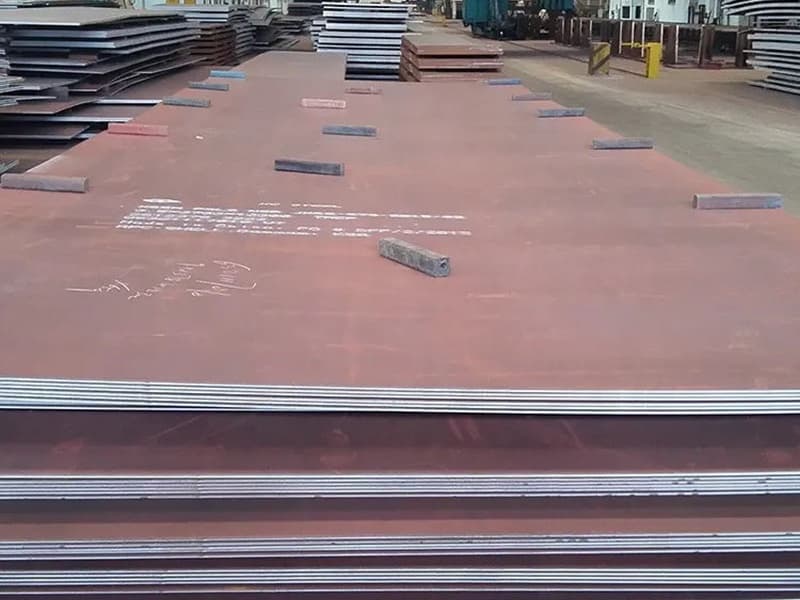
The four core packing components are: dunnage (wooden timbers between each layer to prevent metal‑to‑metal contact and allow air circulation), edge protectors (plastic or metal corners under straps to prevent cutting), strapping (steel or nylon belts to hold the stack together), and weatherproofing (tarps, shrink wrap, or VCI film to block moisture). Missing any one component invites damage and voids insurance claims.
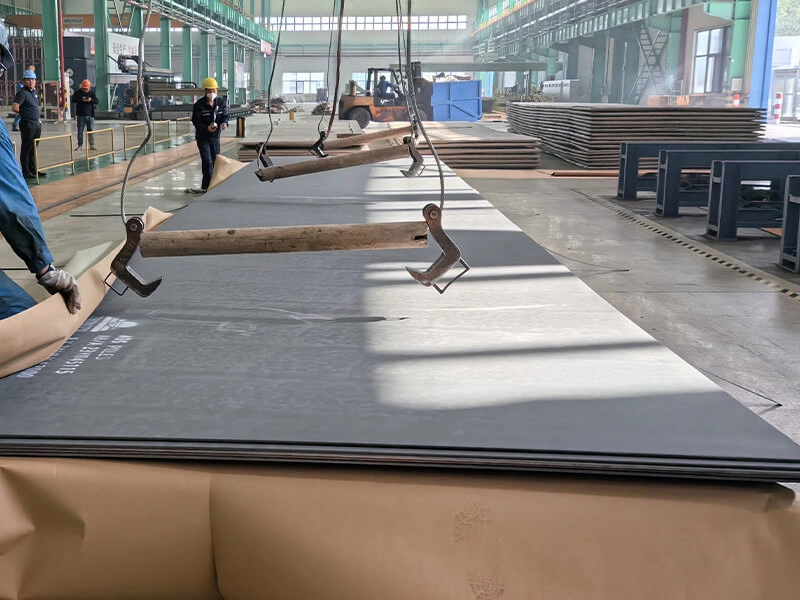
Let me detail each component.
Dunnage – The Layer Separator
Dunnage is wooden timbers placed between layers of steel plates. It prevents metal‑to‑metal contact, which causes scratching and rust. It also creates air gaps for circulation and distributes weight evenly.
Specifications per major carrier (Maersk):
- Minimum 5 pieces of 100mm x 100mm wood per layer, OR 4 pieces of 150mm x 150mm wood
- Dunnage must extend at least 30cm beyond the plate at each end
- Dunnage must be aligned vertically – each piece directly above the one below
- Spacing close enough to prevent plates from bending between supports
Without dunnage, plates rub against each other. The mill scale wears off. Rust starts. The plates become unusable.
Edge Protectors – Stopping the Saw Effect
Steel straps and lashing belts are under high tension. When the vessel rolls, the straps vibrate against the sharp edges of the plates. Over a long voyage, this vibration can cut several millimeters into the steel – like a saw.
Edge protectors are L‑shaped pieces of plastic, rubber, or galvanized steel placed between the strap and the plate edge. They distribute the strap pressure over a wider area and prevent cutting.
Where to place: At every point where a strap or lashing belt touches a plate edge – corners and along the sides. For heavy loads, use two protectors per strap.
Strapping – Holding It Together
Strapping keeps the stack of plates as one unit. Without strapping, plates can slide apart during transport.
Steel strapping: 32mm wide, 0.8mm thick. Use with crimp seals. Minimum 2 vertical straps and 2 horizontal straps per bundle.
Nylon lashing belts: For flat racks and breakbulk. Use with ratchet tensioners. Breaking strength minimum 5 tons per belt.
Tension: Tight enough to compress the stack slightly but not so tight that it bends the top plates. For steel strapping, use a tensioner tool. For nylon belts, use a ratchet.
Weatherproofing – Blocking Moisture
Steel rusts when wet. Ocean voyages expose steel to salt spray, rain, and condensation.
Options:
- Tarps: Heavy‑duty polyethylene. Secure with ropes or straps. Ensure tarp does not touch wet ground – water can wick up.
- Shrink wrap: Clear plastic film that is heated to shrink tight around the bundle. Better for flat racks. Allows visual inspection.
- VCI film (Volatile Corrosion Inhibitor): Plastic film impregnated with chemicals that vaporize and coat the steel surface, preventing rust. Ideal for long‑term storage or humid voyages.
For standard containers, the container itself provides weather protection. But plates still need dunnage and edge protectors inside the container.
A Real Example
A supplier in China shipped plates without edge protectors. The steel straps cut 3mm grooves into the plate edges during a 40‑day voyage. The buyer rejected the shipment. The supplier had to replace 100 tons at $80,000. Now they use edge protectors on every strap.
How Do Different Export Modes (Container, Flat Rack, Bulk Vessel) Require Different Packing Specifications?
The same packing does not work for every shipping method. A standard container protects from weather but limits size. A flat rack is open to the elements but can carry oversized plates.
For standard containers, packing focuses on internal securing – dunnage, strapping, and edge protectors – because the container provides weather protection. For flat racks, you need weatherproofing (tarps, shrink wrap, VCI film) in addition to dunnage and strapping, because flat racks are open. For bulk vessels (breakbulk), you need the most robust packing – heavy dunnage, multiple lashings to vessel hardpoints, and full weatherproofing, often with additional welding of stop bars.
Let me detail each mode.
Standard Container Packing
The container itself is a steel box. It protects from rain and salt spray. But the internal walls are not strong enough to stop a shifting load.
Packing requirements:
- Dunnage: Yes, between layers and under bottom layer.
- Edge protectors: Yes, under all straps.
- Strapping: Yes, steel straps around the stack.
- Weatherproofing: Not needed (container is waterproof).
- Securing to container: Use wooden wedges or inflatable dunnage bags to fill side gaps. Forces toward the door‑end must be arrested by a bulkhead anchored in the corner posts.
- Maersk rule: Dunnage bags are NOT accepted due to quality concerns. Use wooden wedges instead.
Flat Rack Packing
Flat racks have no side walls or roof. The cargo is exposed to wind, rain, and salt spray.
Packing requirements:
- Dunnage: Yes, between layers and between bottom layer and flat rack floor.
- Edge protectors: Yes, under all straps and lashings.
- Strapping: Steel straps around stack, plus nylon lashing belts to flat rack lashing points.
- Weatherproofing: Required. Use shrink wrap, heavy tarps, or VCI film. Cover the entire stack.
- Anti‑slip: Place rubber mats or coarse wood dunnage between steel plates and the flat rack bottom rails to increase friction.
- Weight distribution: Cargo weight must be spread to the side girders. Heavy weights cannot be placed solely on the wooden floor.
Critical flat rack rule: The maximum payload of a 40ft heavy‑duty flat rack is approximately 45 tons, but this can only be used when cargo weight is spread over the entire length of the bottom rails.
Bulk Vessel (Breakbulk) Packing
Breakbulk means steel loaded directly into the vessel’s hold, not in containers. This is the most demanding packing environment because the hold may have no internal securing points.
Packing requirements:
- Dunnage: Heavy timbers (150mm x 150mm or larger) between layers and between bottom layer and the tank top (floor of the hold).
- Edge protectors: Yes.
- Strapping and lashings: Steel straps around stack, plus heavy chains or wire rope lashings to vessel hardpoints. Weld stop bars to the tank top to prevent sliding.
- Weatherproofing: Not needed for lower holds (covered by vessel). For open deck stowage (upper deck), use heavy tarps.
- Corrosion protection: For long voyages, apply VCI spray or film.
Summary Table
| Component | Standard Container | Flat Rack | Bulk Vessel |
|---|---|---|---|
| Dunnage | Required | Required | Required (heavy) |
| Edge protectors | Required | Required | Required |
| Strapping | Steel straps | Steel + nylon lashings | Steel + chains |
| Weatherproofing | Not needed | Tarps/shrink wrap/VCI | VCI for long voyage |
| Securing to carrier | Wooden wedges | Lashings to rails | Welded stop bars |
| Weight limit | 28 tons per 20ft | 31‑45 tons | Vessel capacity |
A Real Example
A customer shipped steel on flat racks without weatherproofing. The voyage took 35 days across the Indian Ocean. Salt spray caused heavy rust. The buyer spent 200 hours grinding plates. The supplier paid for the labor. Now they use shrink wrap on all flat rack shipments.
What Marking, Labeling, and Documentation Are Required on Export Bundles for Customs and Traceability?
Your steel arrives. Customs holds it because the bundle labels are missing. Or the heat numbers do not match the certificate.
Each export bundle must have a weather‑resistant tag showing: bundle number, thickness, grade, heat number range, quantity, and gross weight. Each plate must be stamped or painted with its heat number and grade. The packing list must match the tags exactly. Mill certificates (MTCs) must show the same heat numbers. For customs, you also need a commercial invoice, certificate of origin, and bill of lading. Missing or mismatched labels cause customs delays, rejections, and traceability failures.
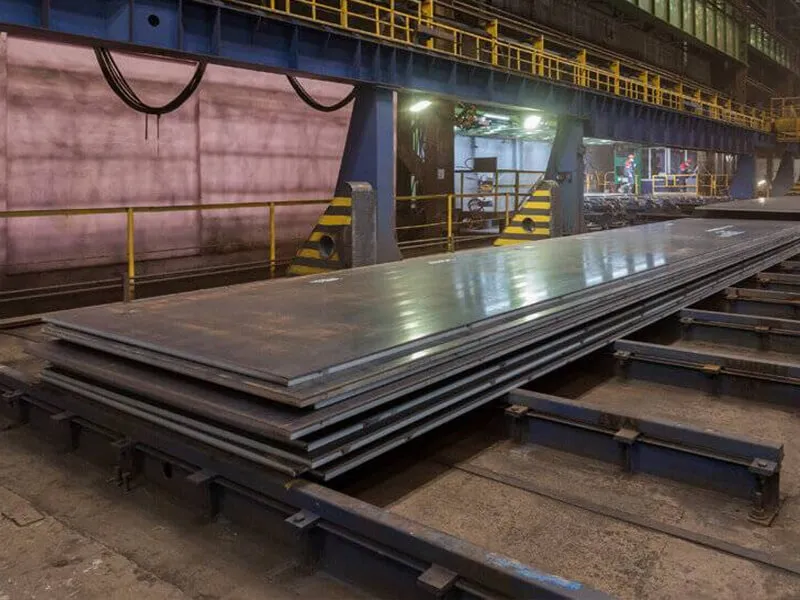
Let me detail the requirements.
Bundle Label (Tag)
Each bundle must have a tag that is:
- Weather‑resistant: Printed on synthetic paper or laminated, attached with wire or heavy string.
- Visible: Placed on the outside of the bundle, not buried inside.
- Legible: Large font (minimum 20pt).
| What the tag must show: | Field | Example |
|---|---|---|
| Bundle number | B001 | |
| Thickness | 12mm | |
| Grade | AH36 | |
| Heat number range | H12345 – H12350 | |
| Quantity (pieces) | 25 plates | |
| Gross weight (kg) | 18,500 | |
| Project name (optional) | Project Falcon |
Plate Marking (Individual Plates)
Each plate must be stamped or painted with its heat number and grade. This is a class society requirement for traceability.
Standard marking on each plate:
- Heat number (e.g., H12345)
- Grade (e.g., AH36)
- Mill name or logo
- Dimensions (optional)
Marking location: Near one corner, on the top surface. Use paint stencil if stamping is not possible.
Documentation Required for Export
| Document | Purpose | Who issues |
|---|---|---|
| Packing list | Matches bundle tags to shipment | Supplier |
| Commercial invoice | Customs valuation | Supplier |
| Mill test certificates (MTCs) | Proof of grade and properties | Mill |
| Certificate of origin | Tariff preference (e.g., China to Saudi Arabia) | Chamber of commerce |
| Bill of lading | Proof of shipment | Carrier |
| Third‑party inspection report (if required) | Independent quality verification | SGS, BV, or class surveyor |
Traceability – Linking Everything
The heat number on the bundle tag must match the heat number on the individual plates. The MTC must show the same heat number. Customs may check this. Class surveyors definitely check this.
Traceability chain:
Plate stamp → Bundle tag → Packing list → MTC
If any link is broken, the steel is not traceable. Class surveyors will reject it.
A Real Example
A shipment from China to the Philippines arrived with bundle tags that had faded from rain. The packing list showed heat numbers, but the tags were unreadable. Customs held the shipment for 10 days while the supplier sent photos of the tags before shipping. The delay cost $5,000 in demurrage. Now they use laminated tags on every bundle.
How to Inspect and Verify Packing Compliance Before Shipment to Avoid Port Rejection and Cargo Claims?
You trust your supplier to pack correctly. The plates arrive damaged. The carrier says "not our fault – bad packing." You have no proof.
To avoid port rejection and cargo claims, perform a pre‑shipment packing inspection. Use a checklist to verify: dunnage between every layer, edge protectors under all straps, strap tension correct, weatherproofing applied, bundle tags legible, and markings match the packing list. Take photos of the packed bundle from all four sides. If using a third‑party inspector (SGS, BV), include packing verification in their scope. Keep these records for at least 6 months after delivery – that is your evidence if a claim is filed.
Let me give you a simple checklist.
Pre‑Shipment Packing Inspection Checklist
- Dunnage placed between every layer
- Dunnage size: minimum 100mm x 100mm (or 150mm x 150mm for heavy loads)
- Dunnage extends at least 30cm beyond plate ends
- Dunnage aligned vertically (each piece directly above the one below)
- Spacing close enough to prevent bending (every 1‑1.5m)
Edge protectors:
- Edge protectors placed under every strap where it touches a plate edge
- Edge protectors cover the full width of the strap
- For heavy loads, double protectors used
Strapping:
- Minimum 2 vertical straps around the stack
- Minimum 2 horizontal straps around the stack
- Steel straps tensioned correctly (not too loose, not bending top plates)
- Crimp seals properly closed
- Lashing belts (if used) tensioned with ratchets
Weatherproofing (for flat racks and breakbulk):
- Tarp or shrink wrap covers entire stack
- Tarp secured against wind (no loose flaps)
- For VCI film, no tears or holes
Marking and labeling:
- Bundle tag attached and legible
- Tag shows bundle number, thickness, grade, heat numbers, quantity, weight
- Individual plates stamped or painted with heat number and grade
- Stamps legible (not rusted or painted over)
Documentation:
- Packing list matches bundle tags
- Mill certificates match heat numbers
- Photos taken of packed bundle from all four sides
What to Do If You Find Non‑Compliance
If the inspection finds missing dunnage, no edge protectors, loose straps, or illegible tags:
- Reject the packing. Do not ship.
- Require the supplier to re‑pack at their cost.
- Take photos of the non‑compliance as evidence.
- If shipping cannot wait, document the non‑compliance on the packing list and bill of lading. For example: "Packed with dunnage missing between layers. Shipper assumes risk."
The Role of Third‑Party Inspection
For large or critical orders, hire SGS, Bureau Veritas, or a class surveyor to verify packing as part of pre‑shipment inspection. They will follow the same checklist and issue a report. This report is powerful evidence if a claim arises.
Most cargo insurance policies require proof that packing was adequate. Without a third‑party inspection report, the insurer may deny your claim.
A Real Example
A buyer in Qatar received a shipment of plates. The plates had shifted during transit and were damaged. The supplier claimed the packing was adequate. The buyer had photos showing dunnage missing between layers. The supplier’s insurance paid for the replacement. The buyer always takes photos now.
Conclusion
Proper export packing includes dunnage, edge protectors, strapping, and weatherproofing. Each shipping mode (container, flat rack, bulk) requires different specifications. Mark bundles clearly and document everything. Inspect before shipping to protect your claim rights.