
You are building an offshore wind farm. You have chosen the location. You have secured the permits. But the steel for your foundations is not just any steel. It is bulb flat steel, and without it, your jackets and monopiles will be weaker, heavier, and more expensive.
Bulb flat steel is the preferred stiffening solution for offshore wind foundations because it offers the highest strength-to-weight ratio of any structural profile. For jacket foundations, monopile transition pieces, and offshore substations, bulb flats reduce steel weight, improve fatigue resistance, and simplify fabrication. With the global offshore wind market expected to grow at over 11% CAGR through 2034, demand for bulb flat steel is rising fast.
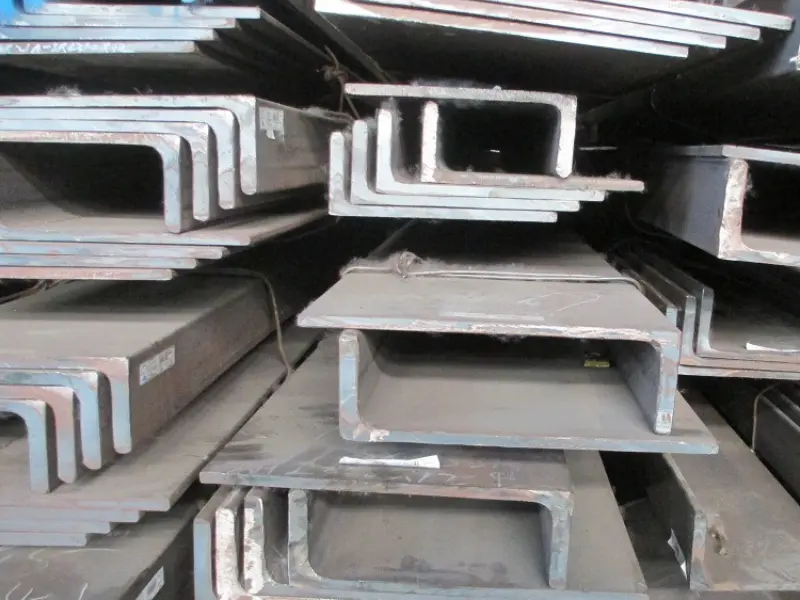
I am Zora Guo from cnmarinesteel.com. I have supplied bulb flat steel to offshore wind projects across Asia and the Middle East. I have seen what happens when the wrong profile is used – heavier jackets, slower fabrication, higher costs. Let me walk you through why bulb flat is the right choice for offshore wind.
How Does Bulb Flat Steel Strengthen Monopile and Jacket Foundations for Offshore Wind Turbines?
Offshore wind turbines sit on massive steel foundations. Monopiles are hollow steel cylinders driven into the seabed. Jackets are lattice structures with three or four legs connected by braces. Both need internal stiffening to resist wave loads, wind forces, and turbine vibrations.
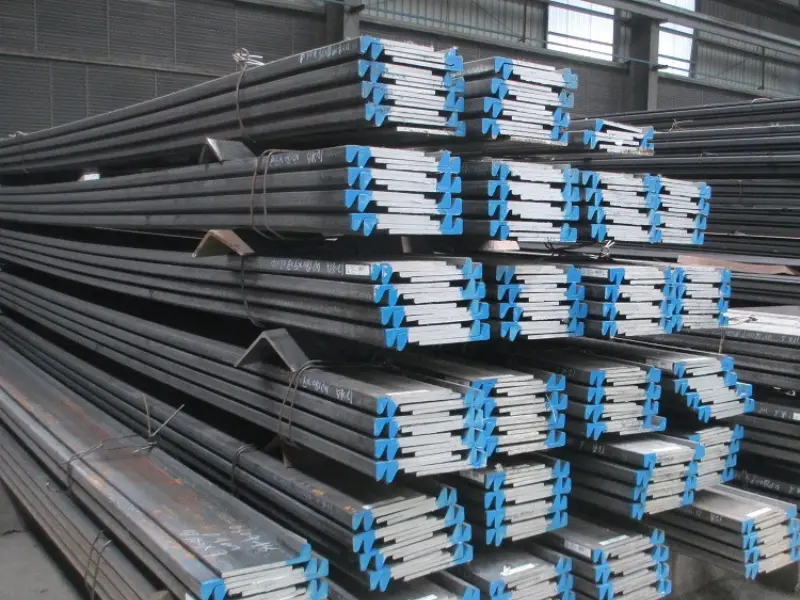
Bulb flat steel is the most efficient stiffener for these foundations. Its unique bulb-shaped head provides a better strength-to-weight ratio than angle bars or flat bars. When welded to the inside of a monopile or to the brace members of a jacket, bulb flats prevent buckling under high compressive loads. A typical jacket foundation uses up to 1,000 tonnes of steel, and a significant portion of that is bulb flat for bracing and stiffening. Bulb flats also simplify fabrication because they are hot-rolled as a single piece, eliminating the need to weld two separate profiles together.
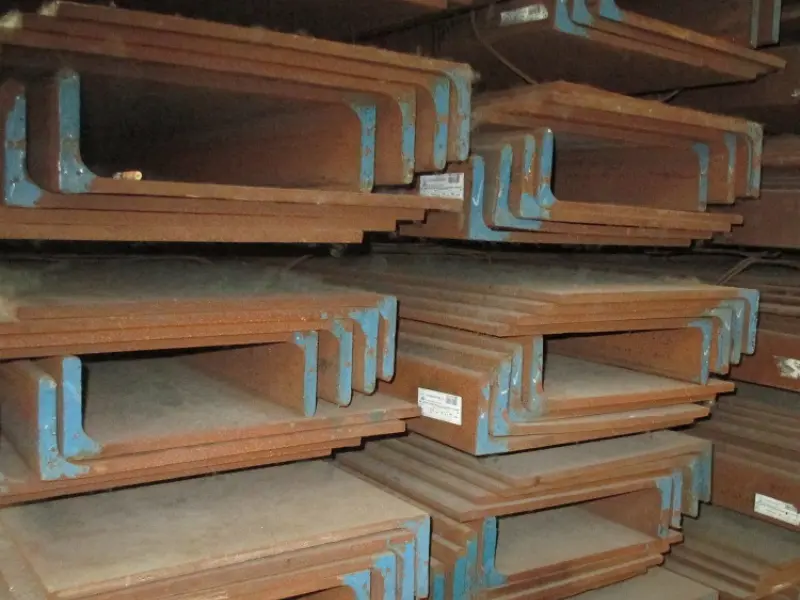
Let me explain how bulb flat works in each foundation type.
Monopile Foundations – The Bulb Flat Inside Story
A monopile is a large steel tube, typically 4‑6 meters in diameter. It is driven into the seabed like a giant nail. The turbine tower sits on top, connected through a transition piece.
Inside that hollow tube, the steel is subject to enormous bending forces from waves and wind. Without stiffening, the tube wall can buckle. Bulb flats are welded longitudinally inside the monopile, running the full length of the pile. These stiffeners increase the section modulus of the pile without adding excessive weight.
The bulb shape is not decorative. The bulb at the top of the profile adds material exactly where it is needed for bending strength. Compared to a flat bar of the same weight, a bulb flat is significantly stronger.
Jacket Foundations – The Lattice That Needs Bulb Flat Bracing
Jackets are steel lattice structures with legs connected by cross braces. They are used in deeper water where monopiles become too large. A typical jacket foundation can stand 95 meters tall.
The braces in a jacket are often made of tubular steel. But the connections between braces and legs are complex nodes where stress concentrates. Bulb flats are used for secondary bracing and stiffening within these nodes. They are also used on the legs themselves to increase local strength.
The offshore wind industry has also shown that bulb flats can be utilized as foundation piles for offshore wind farms. They are driven into the seabed to provide a stable foundation, supporting the weight and loads imposed by the structure.
A Real Example
A jacket foundation for a wind farm in the North Sea used over 200 tonnes of bulb flat steel for its internal bracing. The fabricator told me: "If we had used angle bars, the jacket would have been 15% heavier. Bulb flat gave us the strength we needed at lower weight." That weight saving translated into lower transport costs, easier installation, and a smaller foundation footprint.
What Role Does Bulb Flat Steel Play in Transition Pieces, Substations, and Platform Deck Structures?
The wind turbine does not sit directly on the foundation. There is a transition piece in between. And the power from multiple turbines goes to an offshore substation. Both need steel. Both use bulb flats.
In transition pieces, bulb flats stiffen the large steel can that connects the monopile to the turbine tower. Transition pieces weigh approximately 250 tonnes each and require substantial internal stiffening to handle the loads from the turbine[reference:13]. In offshore substations, bulb flats are used in the topside structure and the jacket foundation[reference:14]. Substations collect power from up to 100 turbines[reference:15] and their steel structures are massive. In platform decks, bulb flats provide a flat, stiff surface for walking, working, and mounting equipment[reference:16].
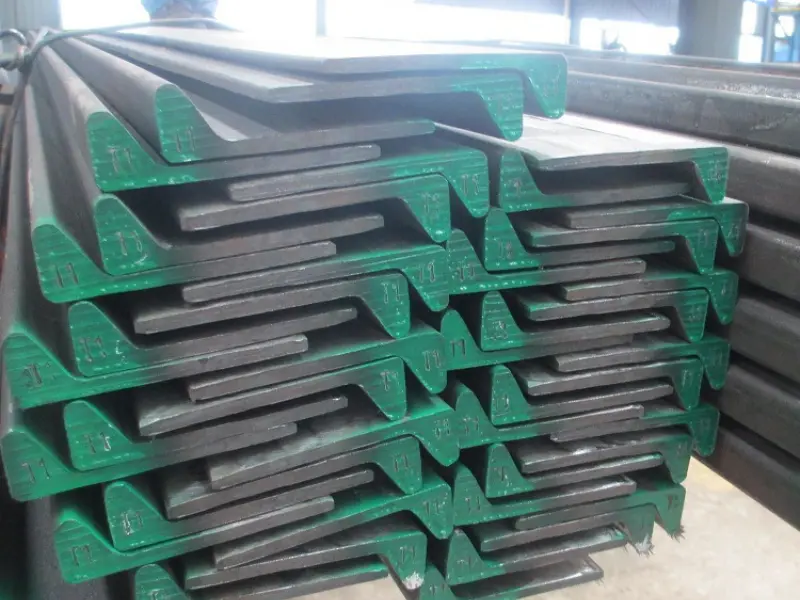
Let me detail each application.
Transition Pieces – The Critical Connection
The transition piece sits between the monopile and the turbine tower. It is a large steel tube with a platform at about 20 meters above sea level.
The transition piece must handle:
- The weight of the turbine above
- Wave loads at the waterline
- Vibrations from the spinning rotor
- Access for maintenance personnel
Bulb flats are welded inside the transition piece as longitudinal and ring stiffeners. They prevent the steel can from buckling under these loads. The high strength-to-weight ratio of bulb flat is particularly valuable here because the transition piece is a heavy component that must be lifted and installed offshore.
Offshore Substations – The Power Hub
Substations collect the electricity generated by the wind turbines and transform it for transmission to shore. A typical offshore substation sits on a jacket foundation and weighs over 1,500 tonnes.
The substation topside – the part above the water – has multiple decks for electrical equipment, transformers, and control rooms. These decks are stiffened with bulb flats. The jacket foundation for the substation also uses bulb flats for bracing.
Bulb flats are particularly valuable in substations because they reduce the overall weight of the structure. Every tonne saved on the substation reduces the size of the foundation needed.
Platform Decks – The Working Surface
On both the turbine transition pieces and the substation, there are decks where personnel walk and equipment is mounted. These decks are often stiffened with bulb flats.
The flat top of the bulb flat profile provides an excellent surface for welding to deck plates. The bulb on the bottom provides the bending strength. This makes bulb flats ideal for deck stiffening.
A Real Example
A transition piece manufacturer in Vietnam told me: "We used to fabricate stiffeners from welded plate. It took hours per stiffener. With bulb flats, we just cut to length and weld. Fabrication time dropped by 40%." That is a real productivity gain.
Why Do Offshore Wind Projects Require High-Strength Grades, Corrosion-Resistant Coatings, and Strict Class Approvals?
Offshore wind is not shipbuilding. The steel sits in salt water for 25+ years. It must survive storms, waves, and fatigue. The specifications are strict.
Offshore wind projects require steel grades like S355ML and S355G11+N, which offer high strength and impact toughness down to -40°C[reference:22]. These grades ensure the steel does not become brittle in cold North Sea or Baltic conditions[reference:23]. Corrosion protection is equally critical. Steel in the splash zone requires heavy coatings plus cathodic protection with sacrificial anodes[reference:24]. The standard EN 10225 covers weldable structural steels for fixed offshore structures, with plates up to 150mm thick[reference:25]. Bulb flats must meet these standards and carry inspection certificates[reference:26]. Class society approvals from DNV, ABS, and LR are non-negotiable.
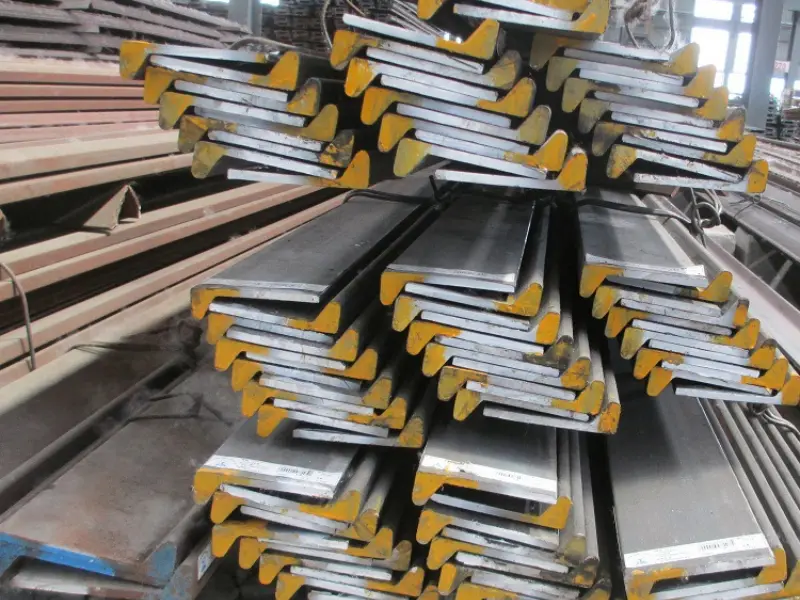
Let me explain each requirement.
Steel Grades – Strength in Cold Water
Offshore wind turbines are often installed in cold waters – the North Sea, the Baltic, the Atlantic coast. Steel that is strong at room temperature can become brittle at -20°C or -40°C.
The standard grade for offshore wind foundations is S355ML, which meets EN 10025-4 requirements. This grade provides:
- Minimum yield strength of 355 MPa
- Impact toughness down to -40°C
- Good weldability with low carbon equivalent
For more demanding applications, offshore steel grades like S355G7+M through S355G10+M are specified under EN 10225. These grades are specifically designed for fixed offshore structures and offer even better toughness and weldability.
The DIWIND specification combines these offshore grades with CE marking requirements, guaranteeing improved carbon equivalents compared to standard offshore grades.
Corrosion Protection – The 25‑Year Challenge
Offshore wind structures are expected to operate for more than 25 years. Corrosion in salt water is relentless.
The splash zone – where waves hit – is the most corrosive area. Steel there requires:
- Heavy coatings (epoxy or polyurethane) applied to SA2.5 surface preparation standard
- Cathodic protection with sacrificial anodes
- Extra steel thickness as corrosion allowance
Coating systems are specified with a higher protection class than for onshore turbines. Recent innovations include saline-resistant weathering steel that offers up to 20% better corrosion performance than conventional steel.
Class Approvals – The Legal Requirement
Every offshore wind structure must be certified by a classification society – DNV, ABS, LR, or BV. The steel itself must come from mills approved by these societies.
Bulb flats for offshore wind are typically supplied with 3.2 inspection certificates. This means the material is tested and traceable to the heat it came from. The standards EN 10225 and EN 10067 cover dimensions, tolerances, and testing requirements.
A Real Example
A jacket foundation for a Baltic Sea wind farm required S355G10+M grade steel with Charpy impact testing at -40°C. The bulb flats were supplied with full DNV 3.2 certification. The fabricator told me: “The steel cost 20% more than standard shipbuilding grade. But the alternative was a foundation that could crack in winter. There was no choice.”
How Is the Growing Offshore Wind Market Driving Demand for Specialized Bulb Flat Steel Solutions?
Offshore wind is growing fast. Steel demand is following. Bulb flat steel is a direct beneficiary.
The global offshore wind market is projected to grow from $16.4 billion in 2025 to $46.4 billion by 2034, a CAGR of 11.89%. Steel demand is massive. The UK alone will require up to 25 million tonnes of steel for offshore wind between 2026 and 2050 – over 1 million tonnes per year. In China, 2026 offshore wind capacity alone is expected to pull over 500,000 tonnes of steel demand. The bulb flat market, valued at $3.2 billion in 2024, is projected to reach $4.8 billion by 2033. Europe is expected to see the highest growth rate, driven by offshore energy infrastructure projects. For steel suppliers and fabricators, this is a once‑in‑a‑generation opportunity.
Let me break down the numbers.
The Scale of Steel Demand
Each offshore wind turbine foundation requires hundreds of tonnes of steel. A single jacket foundation can use up to 1,000 tonnes. A monopile with transition piece uses similar quantities.
The UK offshore wind pipeline alone will require up to 25 million tonnes of steel between 2026 and 2050. That is equivalent to 20% of annual UK steel production. The US offshore wind market could generate $42 billion in steel demand over the next two decades.
In China, offshore wind is also accelerating. The "15th Five‑Year Plan" period (2026‑2030) expects stable growth in wind installations. For 2026 alone, offshore wind is projected to pull over 500,000 tonnes of steel demand.
Bulb Flat Market Growth
The global bulb flat market was valued at approximately USD 3.2 billion in 2024 and is projected to reach around USD 4.8 billion by 2033. This growth is driven by rising demand for durable, lightweight materials in shipbuilding and expansion of offshore energy projects.
Europe is expected to witness the highest CAGR, supported by advancements in naval shipbuilding and increasing offshore energy infrastructure projects. Asia Pacific currently holds the largest market share at about 45%, driven by strong shipbuilding industries in China, South Korea, and Japan.
What This Means for Buyers and Suppliers
For project developers and EPC contractors, the message is clear: secure your bulb flat steel supply early. Lead times for specialized offshore grades are longer than for standard shipbuilding steel. Mills that produce EN 10225 grades are fewer than those producing standard grades.
For steel suppliers, the offshore wind market represents a significant growth opportunity. The demand for high‑strength, corrosion‑resistant bulb flats will only increase as more wind farms are built in deeper water and harsher environments.
A Real Example
A steel mill in Europe recently expanded its bulb flat production capacity specifically for offshore wind. The sales director told me: "We used to sell 80% of our bulb flats to shipbuilding. Now offshore wind is 40% and growing. Every major wind farm project has a steel package that includes bulb flats."
Conclusion
Bulb flat steel is essential for offshore wind foundations. It strengthens monopiles and jackets, stiffens transition pieces and substations, and meets the highest offshore steel grades and corrosion protection standards. With the offshore wind market growing rapidly, demand for bulb flat steel solutions is rising fast.