
You are building a commercial vessel. You need steel plates. You need them delivered on time. You need them to pass class inspection. You do not want to manage five different suppliers.
A complete marine steel plate solution for commercial vessel construction covers everything from grade selection and class approvals to supply chain coordination, value‑added processing, and full traceability documentation. One supplier handles it all — reducing your administrative burden and project risk.
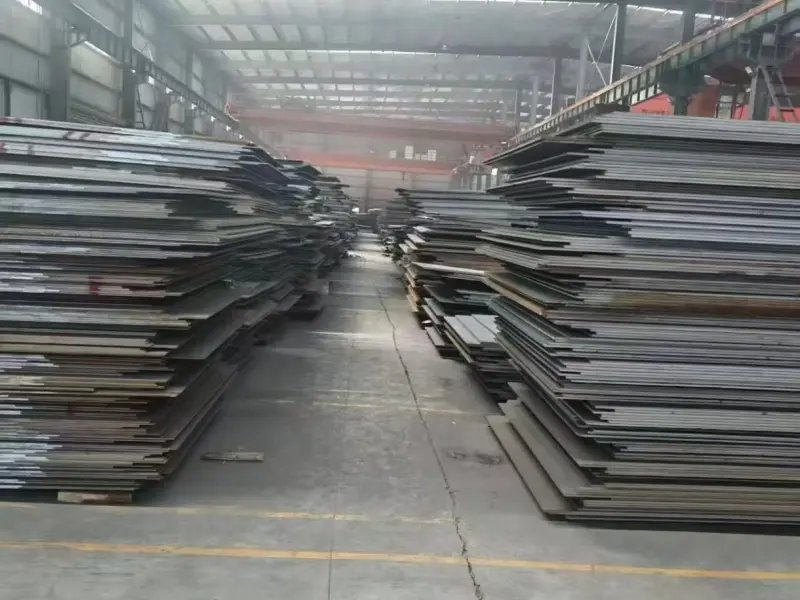
I am Zora Guo from cnmarinesteel.com. I have supplied steel plates for tankers, bulk carriers, container ships, and offshore vessels. I know what shipyards need. A complete solution is not just about selling plates. It is about making your job easier. Let me walk you through what a real complete solution looks like.
Grades, Thicknesses, and Class Approvals – How to Match Steel Plates to Hull Zones, Structural Requirements, and ABS/DNV/LR Rules
Every ship has different zones. The bottom needs heavy plates. The deck needs medium plates. The superstructure needs light plates. Each zone has different grade and thickness requirements.
Matching steel plates to hull zones starts with the class society rules (ABS, DNV, LR). The bottom shell requires high‑strength grades (AH36/DH36) in thicknesses of 15‑30mm. The deck uses AH32/AH36 in 10‑20mm. The superstructure uses Grade A in 6‑10mm. Thicknesses increase in high‑load areas like hatch corners and engine room foundations. A complete solution provides all grades and thicknesses from one source, with full class approvals. You do not need to source from multiple mills for different zones.
Let me explain how to match plates to each zone.
Hull Zones and Their Plate Requirements
| Hull zone | Typical grade | Typical thickness range | Key considerations |
|---|---|---|---|
| Bottom shell | AH36, DH36 | 15‑30mm | High wave pressure, collision resistance |
| Side shell | AH32, AH36 | 12‑20mm | Wave loads, fatigue resistance |
| Deck | AH32, AH36 | 10‑20mm | Cargo loads, buckling resistance |
| Inner bottom | AH32 | 10‑15mm | Cargo loads, corrosion allowance |
| Bulkheads | A, AH32 | 8‑15mm | Watertight integrity, stiffening |
| Superstructure | A | 6‑10mm | Low loads, weight saving |
| Hatch corners | DH36, EH36 | 20‑30mm | Stress concentration, fatigue critical |
Class Approval Requirements
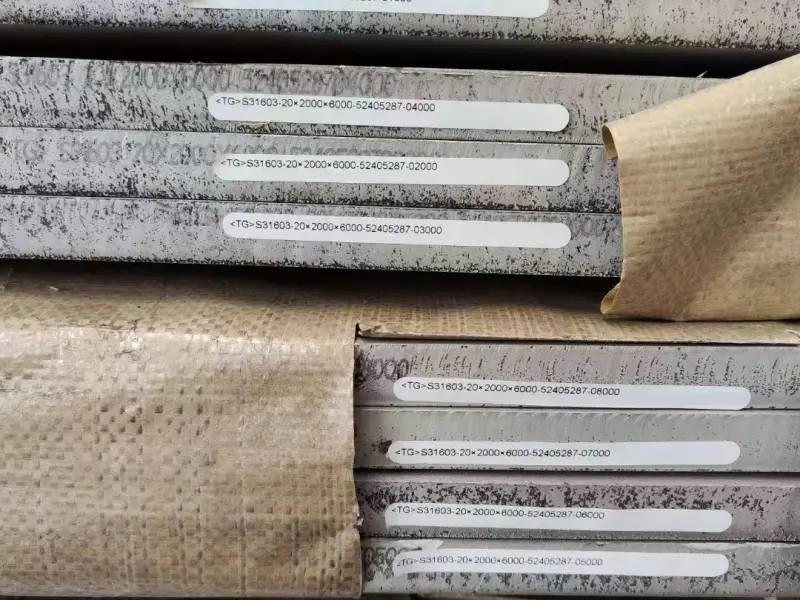
Each grade must come from a mill approved by the relevant class society. A complete solution ensures that every plate — regardless of grade or thickness — carries the correct class stamp. Material Manufacturer Approval Certification
For a vessel built to ABS rules, all plates must come from ABS-approved mills. For DNV, the same applies. A supplier who can source from multiple ABS- and DNV-approved mills gives you flexibility and security.
Grade Selection Guide
- Grade A — General purpose, low stress zones, superstructure
- Grade AH32 — High stress zones in warm climates
- Grade AH36 — High stress zones, weight‑sensitive areas
- Grade DH36 — High stress zones in cold climates, offshore
A Real Example
A shipyard building a 50,000 DWT bulk carrier needed plates ranging from 8mm Grade A to 25mm DH36. They sourced from three different suppliers. Each supplier had different delivery schedules and quality standards. The yard spent weeks coordinating. After switching to a single supplier offering all grades and thicknesses, coordination time dropped by 70%.
From Mill to Yard – Supply Chain Coordination, Phased Deliveries, and Just‑in‑Time Inventory for On‑Schedule Construction
Steel plates are heavy. They take up space. They tie up capital. You do not want them all at once. You want them when you need them.
A complete solution includes supply chain coordination: phased deliveries that match your block assembly schedule, just‑in‑time inventory that reduces on‑site storage, and real‑time tracking so you know where your steel is at all times. For a typical commercial vessel, steel is delivered in 3‑5 phases — bottom blocks first, then side blocks, then deck blocks, then superstructure. This reduces your on‑site inventory by 50‑70% and frees up yard space for fabrication. Your steel arrives when you are ready to cut it.
Let me explain how phased delivery works.
The Phased Delivery Model
A complete solution starts with your construction schedule. You tell your supplier when each block will be fabricated. The supplier phases the steel deliveries accordingly.
Typical phased delivery plan for a commercial vessel:
- Phase 1 (Weeks 1‑4): Bottom shell plates — heaviest plates, highest grades
- Phase 2 (Weeks 5‑8): Inner bottom and side shell plates
- Phase 3 (Weeks 9‑12): Deck plates
- Phase 4 (Weeks 13‑16): Bulkhead plates
- Phase 5 (Weeks 17‑20): Superstructure plates — lightest plates, lowest grades
Benefits of Phased Delivery
| Benefit | Impact |
|---|---|
| Reduced on‑site inventory | 50‑70% less steel in your yard |
| Lower working capital | Pay for steel as you receive it |
| Less rust and damage | Steel does not sit outside for months |
| More yard space | Space for fabrication, not storage |
| Flexible adjustments | If schedule changes, adjust future phases |
Just‑in‑Time Inventory
JIT takes phased delivery one step further. Steel arrives 1‑2 weeks before fabrication starts. Your yard does not need to store steel for future phases. The supplier holds it at their warehouse or at the mill.
Real‑Time Tracking
A complete solution includes tracking. You should know where every plate is at every stage — mill production, port loading, vessel position, customs clearance, final delivery. No more “I will call you back” from your supplier.
A Real Example
A shipyard in Malaysia built three tankers simultaneously. They used phased deliveries from a single supplier. Each tanker had its own delivery schedule. Steel for Tanker 1 did not interfere with steel for Tanker 2. On‑site inventory dropped from 3,000 tons to 1,200 tons. Yard space increased by 40%.
Processing, Fabrication, and Value‑Added Services – Cutting, Beveling, Shot Blasting and Priming to Speed Up Your Production
You receive plates. Then you cut them. Then you bevel the edges. Then you blast and prime them. This takes time, space, and equipment. A complete solution can do all of this before the plates arrive.
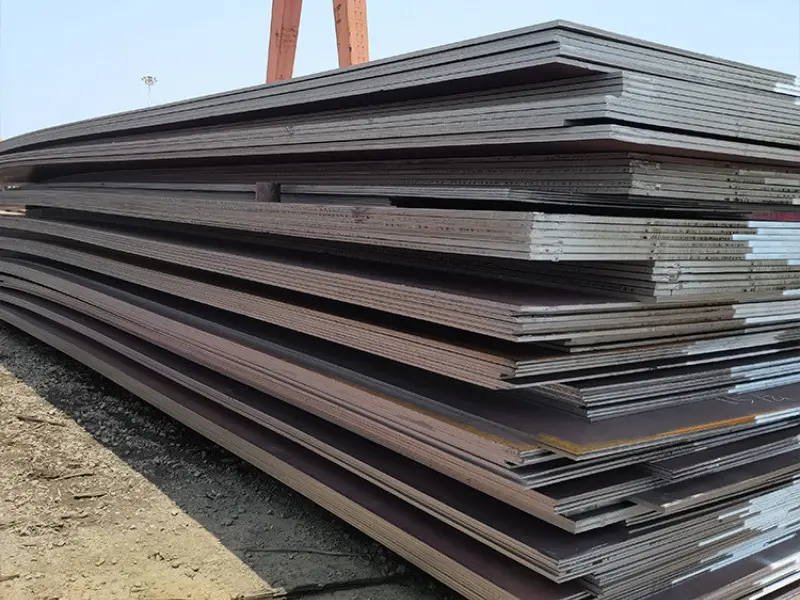
Value‑added services can accelerate your production by 2‑4 weeks. CNC cutting to your exact dimensions eliminates the cutting step at your yard. Beveling (edge preparation for welding) reduces your welding preparation time. Shot blasting removes mill scale and rust, preparing the surface for coating. Primer application protects the steel from corrosion during fabrication. A complete solution offers these services at the supplier‘s facility or at a nearby service center. Your plates arrive ready to weld — straight from the container to the fabrication line.
Let me explain each service.
CNC Cutting — Ready to Fabricate
Instead of receiving full plates and cutting them at your yard, you can have the supplier cut plates to your exact dimensions. This saves you:
- Time — Cutting is done before delivery, not during fabrication
- Labor — Your cutting team can focus on assembly
- Space — No need for a cutting bay on your yard
- Scrap — Professional nesting reduces waste
The supplier cuts plates using CNC machines with precision of ±1mm. Your plates arrive as ready‑to‑weld parts.
Beveling — Ready to Weld
Beveling is preparing the plate edges for welding. Instead of your welders grinding bevels on every plate, the supplier does it at the service center. Your plates arrive with the correct bevel angle and land.
Time saved: A typical 12m plate takes 30‑60 minutes to bevel by hand. With pre‑beveled plates, your welder starts welding immediately.
Shot Blasting — Ready to Coat
Mill scale and rust must be removed before coating. Shot blasting is the most effective method. A complete solution offers shot blasting to Sa2.5 standard (near‑white metal blast). Your plates arrive clean and ready for primer.
Priming — Protected from Corrosion
After shot blasting, a primer coat is applied. This protects the steel from corrosion during fabrication and storage. The most common primer is zinc‑rich epoxy, which provides cathodic protection.
Time saved: Your yard does not need to blast and prime plates. They arrive protected and ready for welding.
A Real Example
A shipyard in Vietnam used a supplier that offered cutting, beveling, and shot blasting. Plates arrived with edges prepared and surfaces clean. The fabrication team started welding the same day. The shipyard saved 3 weeks on each vessel.
Traceability, Testing, and Compliance Documentation – Ensuring Full Material Certification and Class Surveyor Acceptance
The class surveyor will check every plate. They will check every certificate. They will trace every heat number. If anything is missing, your project stops.
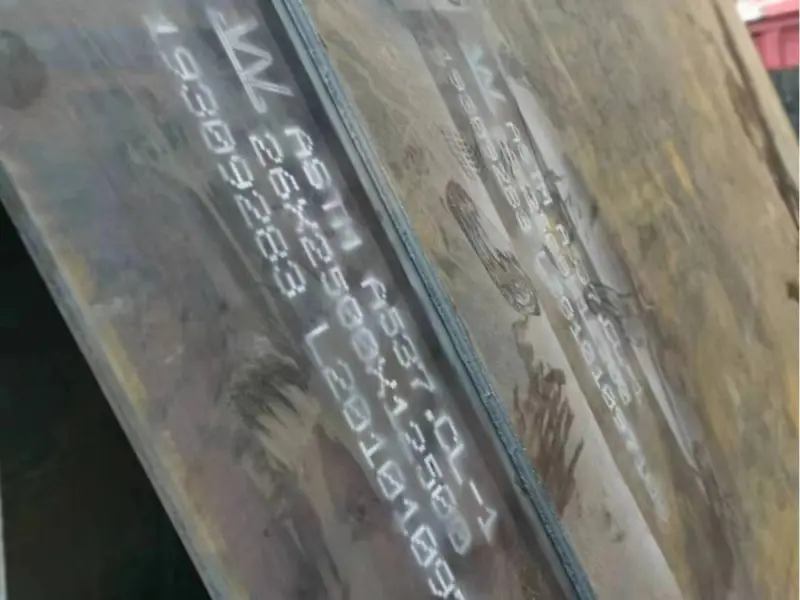
Full traceability and compliance documentation are essential parts of a complete solution. Every plate must have a unique heat number stamped on it. That heat number must match the mill test certificate (MTC). The MTC must show the chemical composition, mechanical properties, and class society stamp. A complete solution provides all documentation in a standardized format — no missing certificates, no mismatched heat numbers, no last‑minute scrambling. Your class surveyor gets exactly what they need, when they need it.

Let me explain what full traceability looks like.
Heat Number Traceability — The Chain of Evidence
Every steel plate is stamped with a heat number. That heat number identifies the specific batch of steel. The mill test certificate (MTC) shows the test results for that heat number.
Traceability chain:
- Mill produces a heat of steel with heat number H12345
- Plates from that heat are stamped H12345
- Mill certificate shows test results for H12345
- Shipyard receives plates with stamp H12345
- Class surveyor checks that the stamp matches the certificate
If any link in this chain is broken, the steel is not traceable. Class surveyors will reject it.
Mill Test Certificates (MTCs)
Each heat of steel must have an MTC that includes:
- Heat number
- Grade
- Chemical composition (C, Mn, Si, P, S, etc.)
- Mechanical properties (yield, tensile, elongation)
- Charpy impact results (energy and temperature)
- Class society stamp
- Mill name and date
EN 10204 3.2 Certification
Many marine projects require 3.2 certification. This means a third party (class surveyor or accredited inspector) has verified the test results. A complete solution provides 3.2 certification for all class‑approved plates.
Standardized Documentation
A complete solution ensures all documentation is in a consistent format. No more deciphering different certificate styles from different mills. Your quality team knows exactly where to find the heat number, the test results, and the class stamp.
A Real Example
A shipyard in Qatar had to stop production for 3 days because the class surveyor could not match the heat numbers on the plates to the certificates. The supplier had mixed plates from different heats. After switching to a supplier with a standardized documentation system, the yard never had that problem again.
Conclusion
A complete marine steel plate solution covers grade selection and class approvals, supply chain coordination with phased deliveries, value‑added processing to speed up fabrication, and full traceability documentation for class acceptance. One supplier, one point of contact, one complete package.