
Approving a marine angle steel substitution without a checklist leads to rejected certificates and delayed hull surveys. I have watched the wrong letter on an MTC stall a vessel for weeks. This article gives you the confirmation points that keep the approval clean.
Before approving any marine angle steel substitution, confirm five things in writing: the designer’s approval of the replacement grade, the classification society’s written acceptance, the Charpy impact test temperature, the carbon equivalent and delivery condition, and the certificate type with the correct society mark. Approve before production starts, never after.
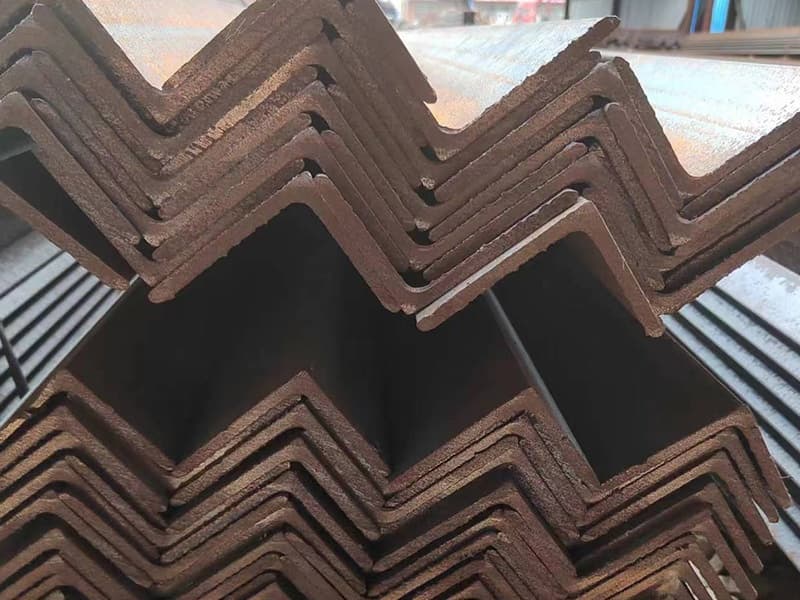
Most substitution requests do not arrive looking dangerous. They arrive as a friendly email from a supplier: the grade you asked for is out of rolling programme this month, but here is an equivalent, same size, two percent cheaper, can ship next week. I have written some of those emails myself, so let me be honest about what sits behind them. Sometimes the substitute really is sound. Sometimes it is the grade the mill had on the rack, dressed up in the word equivalent. Your job as a buyer is not to refuse substitutions — refusals cost you lead time too. Your job is to confirm the right things before you sign the amendment, and that list is shorter than most people expect.
What Does a Valid Marine Angle Steel Substitution Actually Require?
A substitution that only the supplier believes in is not a substitution. It is a risk transfer from their warehouse to your hull. The approval chain has three links, and all three must be in place before a single billet is reheated.
A valid substitution requires written approval from three parties before production: the vessel’s designer or engineering authority, the classification society named on the drawing, and the buyer. Verbal equivalence claims from a supplier carry zero weight at the surveyor’s table, and a substitution approved after delivery usually costs more than the original order saved.
The Designer Decides the Grade, Not the Price List
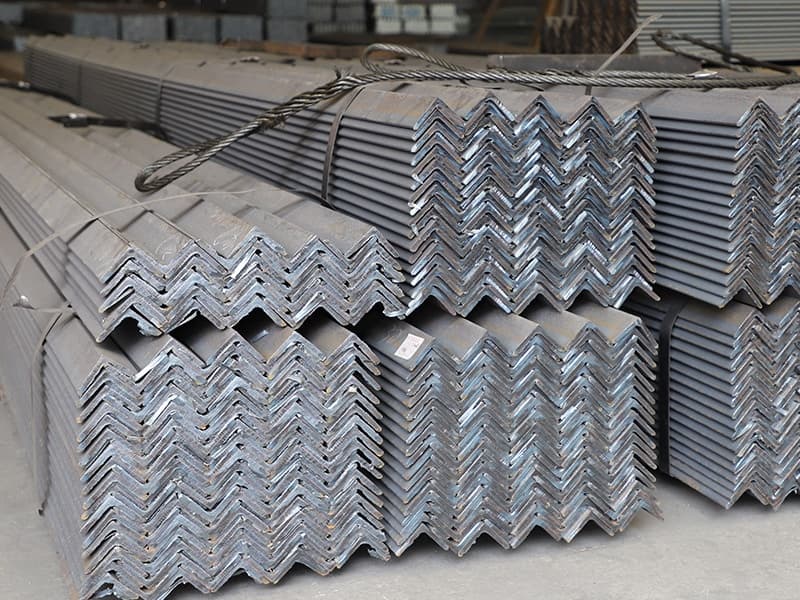
The first confirmation is the simplest and the most ignored: does the designer actually accept the substitute? Under the IACS framework, hull structural steel designations are harmonised, so ABS AH36, LR AH36, BV AH36 and CCS AH36 describe the same yield, tensile and impact requirements. That harmony is real, and it is why cross-society sourcing works at all. But harmony between societies is not the same thing as equivalence between grades. AH32 standing in for AH36, or DH36 for EH36, is a design decision with thickness and application limits attached. The rules permit certain equivalences in defined ranges; the classification society’s approval is what makes the substitution legal for the vessel; and the revised drawing must follow the approval, not precede it.
I keep a rule from my port-side handovers: a substitution approved after the steel sits on the quay is always the most expensive kind. The discount on the cheaper grade never covers the survey re-work, the re-submission, and the crane hire to turn the bundle over for re-stamping. Ask the designer and the society surveyor together, in writing, while the order is still a spreadsheet line. That single habit has saved our clients more money than any negotiation on price.
The Paper Trail Must Be Consistent End to End
The second confirmation is documentation. The approved substitute grade has to appear identically on the purchase order, the mill test certificate, the packing list, and the inspection records. I have seen shipments where the PO said one grade and the MTC said another — same steel, different letters — and the yard’s quality department rejected the lot on paperwork alone. The physical angle was fine. The file was not. When we prepared a substitution for Gulf Metal Solutions in Saudi Arabia, we re-issued the full document set with the approved grade on every page before the material left our warehouse, and their SGS inspector signed off in a single visit because there was nothing to reconcile. That is what a clean trail looks like, and it costs nothing except discipline.
| Confirmation point | What you should see | Evidence to demand |
|---|---|---|
| Designer approval | Written acceptance of the substitute grade | Email or drawing revision from the engineering authority |
| Class acceptance | Society surveyor’s written approval, before rolling | Approval letter or surveyor’s endorsement |
| Revised drawing | Updated drawing naming the substitute | New revision number, not a markup |
| PO consistency | Substitute grade on every document | PO, MTC, packing list cross-checked |
| Approval timing | Before mill production starts | Dated approvals preceding the rolling date |
Who Actually Signs, in Practice
Small yards sometimes assume the supplier can self-certify an equivalence. We cannot, and any supplier who claims they can is telling you something about how they handle the rest of the order. The buyer signs the commercial amendment, the designer signs the technical acceptance, and the society signs the classification acceptance. Three signatures, three inboxes. If your supplier offers to handle the class liaison for you — we do this for several regular clients — ask which society office they work through and get the surveyor’s contact directly. One surveyor’s name in your email thread is worth more than a folder of assurances.
How Do You Compare the Substitute Grade Beyond Yield Strength?
Two grades with the same yield number can still be different materials. If you compare strength alone, you are reading one column of a ten-column specification and calling it a review.
Compare the complete specification side by side: Charpy impact test temperature, carbon equivalent, chemical composition limits, delivery condition, dimensional standard, and traceability. Two grades can share yield and tensile values while differing in toughness class or weldability, and only the full comparison shows whether the substitute genuinely fits the design.
The Toughness Letter Is the Whole Game
The letter in a high-strength hull grade is a temperature class, not a quality ranking. AH36, DH36, EH36 and FH36 share identical yield and tensile requirements — 355 MPa minimum yield, 490 to 620 MPa tensile — and differ only in the Charpy V-notch test temperature: 0 °C, minus 20 °C, minus 40 °C, minus 60 °C. A colder letter costs more alloy and more mill control, but it buys no extra strength. That asymmetry is exactly why substituting down a toughness class is the most tempting and most dangerous swap in the trade. The certificate will show the same 355 MPa the drawing asks for, and the substitution will look harmless until the first winter storm loads the frame.
The same trap hides inside the society naming systems. DNV writes the 0 °C / 355 MPa class as A36, without the H — so mapping ABS AH36 to DNV E36 is not a like-for-like substitution at all; DNV E36 is the minus 40 °C grade. ClassNK uses a K prefix, so the equivalent is KA36. Before you approve anything, write the cross-walk into the amendment: substitute grade, its Charpy temperature, the original grade, its Charpy temperature. If the two temperatures differ, stop and go back to the designer.
Carbon Equivalent and Delivery Condition Decide the Welding
Hull frames are welded, not bolted, so weldability is part of the substitution decision even though it never appears on the price list. The carbon equivalent, calculated from the heat analysis on the MTC, governs preheat requirements and crack sensitivity. A substitute with a higher CE than the original grade can force a change to the yard’s qualified welding procedure — which is a re-qualification exercise, not a Tuesday. Delivery condition matters the same way. A grade supplied normalized behaves differently from the same grade as-rolled or TMCP, and if the original design basis assumed one condition, the substitute must match it or the designer must accept the difference.
I stood in a fabrication shop once watching a crew preheat every single weld on angle brackets that had never needed preheat before, because the substitution quietly moved the CE up by a few points. Nothing failed. Everything slowed down. The fabricator billed the extra gas and man-hours back through the variation order, and the substitution’s two percent price advantage evaporated before the frames left the shop floor. Total exposure, not unit price, is the number to review.
| Property | Original grade example (AH36) | Substitute question to answer |
|---|---|---|
| Yield strength | 355 MPa min | Same or higher? |
| Charpy test temperature | 0 °C | Same or colder? If warmer, stop |
| Carbon equivalent (CE) | From MTC heat analysis | Compatible with yard’s WPS? |
| Delivery condition | Normalized / TMCP / as-rolled | Matches design basis? |
| Dimensional standard | JIS G3192 or EN 10056 | Same tolerance class? |
| Certificate | EN 10204 3.1 with society mark | Same certificate type issued? |
Chemistry Limits Are Not Negotiable Padding
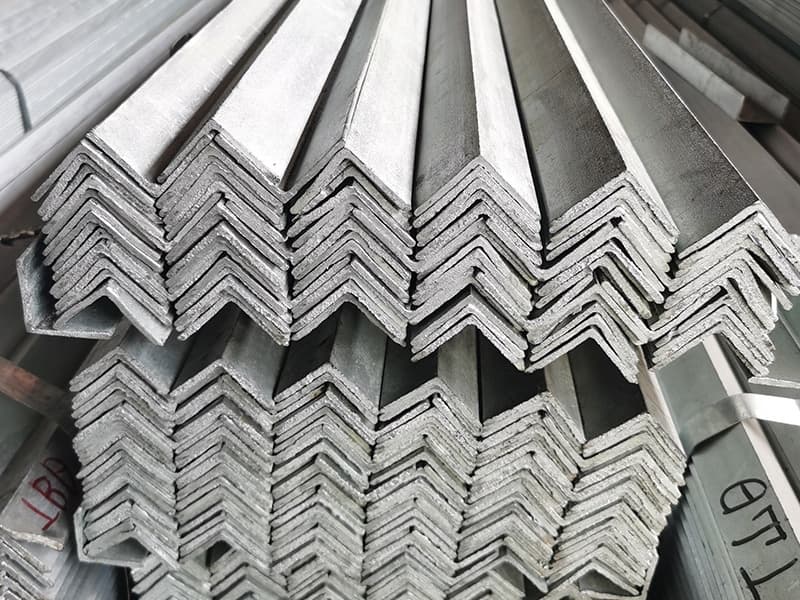
High-strength hull steels carry tight chemistry controls — carbon at 0.18 percent maximum, manganese between 0.90 and 1.60, phosphorus and sulfur at 0.035 each, with niobium, vanadium and titanium as grain-refining additions. A commercial structural grade can look similar on a brochure and still sit outside these limits, which is why an ASTM A36 angle can never substitute for a hull grade regardless of how good it looks on the rack. When you review a substitution, ask for the proposed heat’s actual analysis, not the standard’s limit table. The heat analysis is on the MTC; if a supplier will not show it before you approve, that unwillingness is itself a confirmation point — the wrong kind.
Which Confirmation Points Protect You Before You Sign the Amended Order?
The technical case can be airtight and the order can still go wrong, because substitutions create commercial fuzz exactly where purchase orders hate fuzz: dates, quantities, and who pays for inspection.
Before signing the amendment, confirm the approval chain in writing, lock the substitute grade into every document, request dual certification at the enquiry stage if the vessel may change flag, book third-party inspection against the substitute specification, and verify the society mark on the certificate before shipment. Each point takes minutes; each one skipped costs weeks.
Dual Certification Cannot Be Added After the Steel Ships
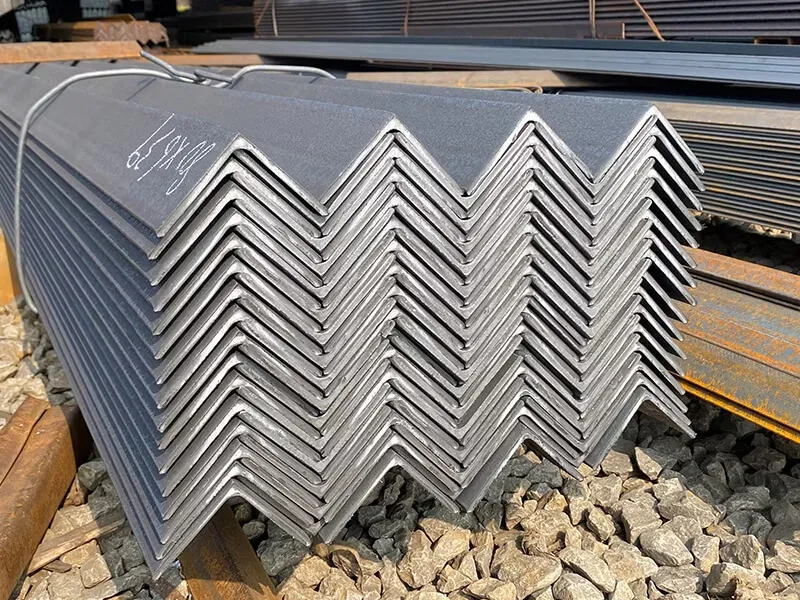
One production route can be approved by several societies, and the same section can carry dual or multiple certification — but it must be requested at the enquiry and written into the purchase order. It cannot be added after the angles have shipped. If your project has any chance of a flag change, a re-sale, or a society re-assignment mid-build, ask for the dual certificate while the order is still fluid. Mills charge a modest fee for it at the enquiry stage and an impossible favour afterwards. This is the single most common thing buyers forget, and the correction window closes the moment the bundle leaves the mill.
Inspection Terms Change With the Grade
A substitution re-opens the inspection question even when nothing else changes. If your contract specified survey attendance, sampling rates, or a third-party witness, those terms now apply to the substitute grade and its certificate. Book the inspector against the amended specification, not the original one — otherwise the inspector arrives with the wrong checklist and the findings are unhelpful in both directions. For our Gulf clients we routinely arrange SGS attendance before shipment, and the inspectors always ask for the substitution approval letter first. If it does not exist, the inspection stops. If it does, everything else usually goes smoothly.
| Substitution scenario | Main risk | Confirmation that protects you |
|---|---|---|
| Grade substituted down a toughness class | Brittle fracture in cold service | Designer + society written approval |
| Society mark differs from drawing | Certificate rejected at survey | Correct society on MTC, arranged pre-order |
| DNV A36 confused with DNV E36 | Wrong test temperature by 40 °C | Cross-walk table in the amendment |
| Commercial grade offered as equivalent | No mandated impact test at all | Marine grade named explicitly in PO |
| Certificate issued after shipment | Dual cert impossible to add | Dual certification requested at enquiry |
| Inspection booked to old spec | Wrong checklist, invalid findings | Inspector works to amended specification |
Write the Substitute Into the Order the Long Way
Finally, the amendment itself. Write the designation the long way, the same discipline you would use on a fresh order: “Marine angle steel, equal leg 150×150×12 mm, grade AH36 substituted to [approved grade], [society] certificated, EN 10204 3.1 MTC, Charpy at [temperature], length 12 m, JIS G3192 dimensional tolerance”. Thirty seconds of typing removes every ambiguity a busy mill clerk might otherwise resolve on your behalf — and clerks always resolve ambiguity in favour of whatever is on the rack. Every serious enquiry we handle at Yichen Steel arrives written this way, and it is also the fastest route to an accurate quotation, because the mill knows exactly which rolling programme and certification route the amendment needs. For the designation details themselves, our guide to checking marine angle steel grade designations covers the cross-society naming traps, and this overview of AH36 applications explains where each toughness class belongs on the hull.
If you want a second pair of eyes on a proposed substitution, send us the original specification and the offered alternative — we will compare the heat analysis, the impact temperatures and the certification route before you commit. Reach me at sale@sdyichen.cn or on WhatsApp at +86 18615259305.
Conclusion
Approve substitutions in writing, before production, with the designer, the society and the full specification on the table. A clean paper trail costs minutes; a rejected certificate costs weeks.