
A vague marine angle steel purchase specification delays shipyards, triggers rework, and raises costs. One missing dimension or grade note can freeze fabrication for days. A complete spec prevents that.
A complete marine angle steel purchase specification must state the grade and classification society, exact leg-by-leg dimensions and thickness, length and quantity, delivery condition and tolerances, surface finish, marking, and required certificates. Without all seven blocks, suppliers quote on assumptions, not on your real need.
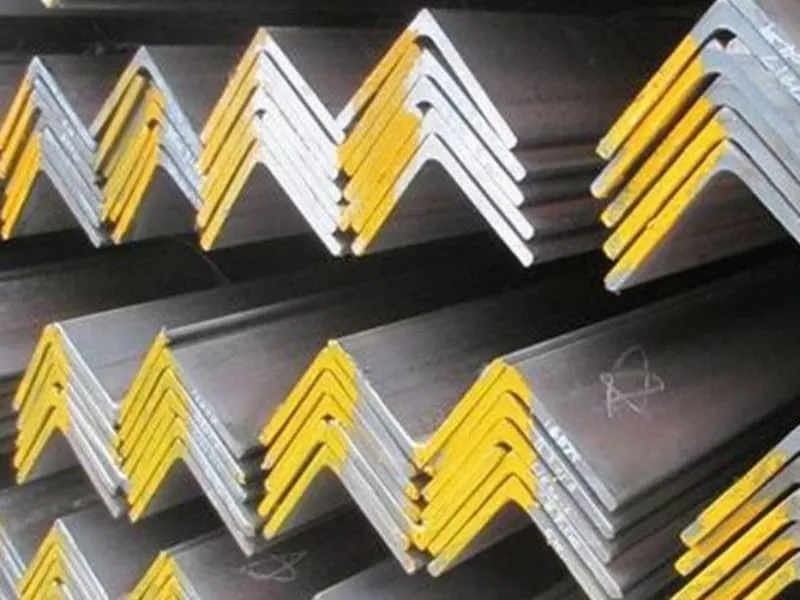
Most RFQs I review arrive with only half the story. The buyer asks for “100 tons of angle steel” and expects a firm price. Then the questions start: which grade, which society, what size, what length, what finish? Each back-and-forth email costs a day. In this guide I will show you how to build a purchase specification that gives every supplier the same clear brief, so the quotes you receive are comparable and the steel you receive matches your drawings.
What Grade and Classification Society Should Your Marine Angle Steel Specification Name?
The wrong grade in a hull frame can fail class survey. The right grade starts with the society that will certify your vessel. Name both in your spec.
Specify the exact steel grade and the classification society on every line. Write “LR Grade AH36” or “ABS Grade A,” not just “AH36” or “marine angle steel.” The society stamp determines which mill certificate and inspection rules apply.

Why grade and society go together
Marine angle steel grades follow the same strength and toughness system as shipbuilding plate. Normal-strength grades A, B, D and E have a minimum yield strength of 235 MPa. High-strength grades AH32, DH32, EH32, FH32 deliver 315 MPa, while AH36, DH36, EH36 and FH36 deliver 355 MPa. The letter tells you the impact-test temperature: A means 0 °C, D means -20 °C, E means -40 °C, and F means -60 °C. When I walk through our stockyard in Liaocheng, I can tell the difference by the painted grade mark on each bundle. A shipyard in warm Southeast Asia might run with Grade A for internal framing, but a hull sailing the North Atlantic needs DH36 or EH36.
The classification society is just as important as the grade. ABS, DNV, LR, BV, KR, CCS and RINA each publish rules for steel acceptance, inspection frequency and certificate format. A mill may roll steel to ABS AH36, but if your vessel needs LR certification, the same heat may still need additional testing or documentation. I always tell buyers: the grade without the society is a guess.
Here is a quick cross-reference we use when checking orders:
| Classification society | Normal-strength grades | High-strength grades |
|---|---|---|
| ABS | A, B, D, E | AH32, AH36, DH32, DH36, EH32, EH36, FH32, FH36 |
| DNV | VL A, VL B, VL D, VL E | VL AH32, VL AH36, VL DH32, VL DH36, VL EH32, VL EH36 |
| LR | A, B, D, E | AH32, AH36, DH32, DH36, EH32, EH36, FH32, FH36 |
| BV | A, B, D, E | AH32, AH36, DH32, DH36, EH32, EH36, FH32, FH36 |
| KR | KA, KB, KD, KE | KAH32, KAH36, KDH32, KDH36, KEH32, KEH36 |
| CCS | A, B, D, E | AH32, AH36, DH32, DH36, EH32, EH36, FH32, FH36 |
If your drawing only says “AH36 angle,” add the society before you send the RFQ. The supplier will know exactly which mill route and certificate to offer.
Which Dimensions, Lengths, and Tolerances Belong in the Specification?
A dimension error reaches the assembly line only when the bracket will not fit. By then, rework burns labor and schedule. Define dimensions in millimeters.
State leg lengths, thickness, length, and quantity in metric units. For equal-leg angles write “100 x 100 x 10 mm.” For unequal-leg angles write “150 x 90 x 12 mm.” Add the tolerance standard, usually JIS G3192 or EN 10056-1.

How to write the size block
Marine angle steel is quoted by the millimetre. Confusing inches with millimetres is the fastest way to order the wrong section. For an equal-leg angle, the order is long leg x long leg x thickness. For an unequal-leg angle, write the longer leg first, then the shorter leg, then the thickness. Standard lengths are 6 m, 9 m and 12 m, though we can cut to custom lengths for shipyard kits.
I usually ask buyers to add a simple size table to the RFQ. It removes ambiguity and lets the supplier quote exactly:
| Size (mm) | Section area (cm²) | Weight (kg/m) | Standard length | Common use |
|---|---|---|---|---|
| 100 x 100 x 10 | 19.2 | 15.1 | 6 / 9 / 12 m | Brackets, light framing |
| 150 x 150 x 12 | 34.9 | 27.4 | 6 / 9 / 12 m | Transverse frames |
| 200 x 200 x 16 | 62.8 | 49.3 | 9 / 12 m | Main hull stiffeners |
| 250 x 250 x 20 | 96.1 | 75.4 | 12 m | Heavy deck girders |
Tolerances that matter on the shop floor
JIS G3192 is the tolerance standard we see most often for shipbuilding angles. Side-length tolerances range from ±1.5 mm for small legs up to ±4.0 mm for legs over 200 mm. Thickness tolerances run from ±0.6 mm to ±1.5 mm depending on leg size and thickness. Straightness is usually limited to 0.2 % of length, so a 12 m bar should not bow more than 24 mm.
I remember a shipment to a Malaysian yard where the short leg of an L150 x 90 x 12 bar measured 86 mm instead of 90 mm. The brackets had already been cut. The yard had to re-weld every bracket, and the delay cost them a week. A dimensional inspection report from a third party like SGS would have caught it before the steel left China. We now offer that inspection as standard on request.
What Delivery Condition, Surface Finish, and Certificates Must the Specification Demand?
Rusty scale and missing certificates can stop a shipment at the quayside. The right delivery condition and paperwork keep the material moving from mill to hull.
Ask for the delivery condition, surface treatment, and full certificate package. Common conditions are AR, CR, N, or TMCP. Surface may be as-rolled, blasted to Sa 2.5, or primed. Certificates should include the Mill Test Certificate and classification society approval.
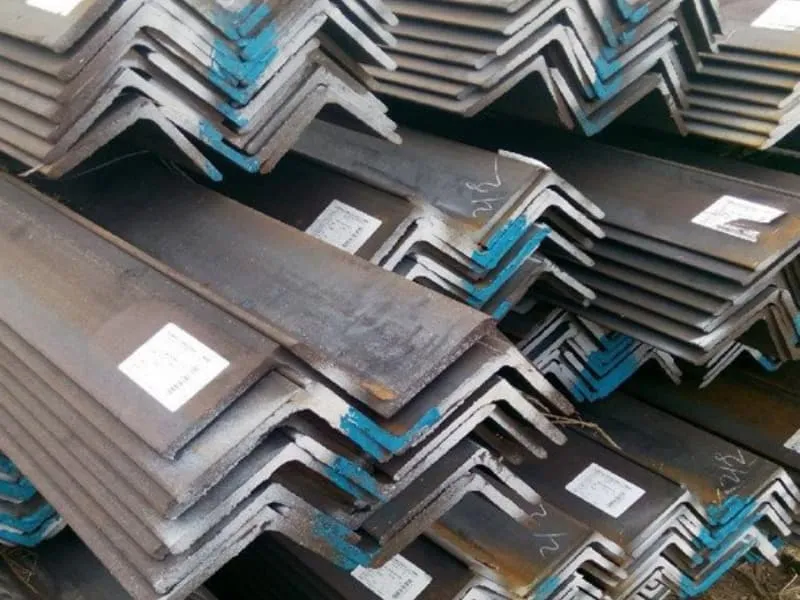
Delivery condition changes the steel’s behavior
As-rolled (AR) angles suit general framing. Controlled-rolled (CR) and normalized (N) conditions give more predictable toughness. Thermo-mechanically controlled processed (TMCP) angles refine the grain and deliver high toughness with lower carbon equivalent, which is better for welding. If your drawing calls for DH36 or EH36, check whether the society accepts TMCP or requires normalized material. The wrong condition can fail the class surveyor’s review.
Surface, marking, and packaging
Surface finish matters for corrosion and coating life. As-rolled black scale is cheapest but must be cleaned before painting. Shot-blasted Sa 2.5 with a 15–35 µm shop primer is common for shipyards that want to weld straight away. Marking must include the manufacturer, heat number, grade, size and classification society stamp. We bundle angles with steel straps, protect ends with caps, and mark each bundle with the heat number so the yard can trace every piece.
Certificate checklist
Every marine angle steel order needs a Mill Test Certificate. EN 10204 3.1 is the minimum; 3.2 adds independent inspection. The certificate must show the heat number, chemical composition, mechanical tests, and Charpy V-notch impact results at the correct temperature. It must also carry the classification society approval stamp.
| Document | What it proves | When to require it |
|---|---|---|
| Mill Test Certificate EN 10204 3.1 | Mill’s own test results | Standard production |
| Mill Test Certificate EN 10204 3.2 | Independent verification | High-risk or class-critical orders |
| Classification society approval | Steel meets class rules | Always for classed vessels |
| Third-party inspection report (SGS) | Dimensional and quality check | First order or strict acceptance |
How Do You Assemble These Blocks into a One-Page RFQ?
Even the best specification is useless if it is scattered across five emails. A single RFQ page keeps every supplier aligned.
Put the product table, commercial terms, and document checklist on one page. Add your target port, delivery window, and payment terms. A one-page RFQ reduces quote time and makes side-by-side comparison possible.
A practical RFQ template
I use this structure when I help buyers prepare their requests:
- Project and vessel description
- Material standard, grade, and classification society
- Full size list with quantities and lengths
- Delivery condition, surface finish, and tolerances
- Marking and packaging requirements
- Required certificates and inspections
- Delivery destination, Incoterm, and payment terms
- Quotation deadline and validity period
If you send this to three suppliers, you will receive three quotes based on the same assumptions. That is the fastest way to compare price, lead time, and service level.
Why Does a Vague Specification Lead to Costly Delays and Demurrage?
Most of the rework I see every quarter is not the mill’s fault. The buyer sends an RFQ with one or two missing blocks, the mill quotes on best-case assumptions, and the steel arrives in a form the yard cannot use. The vessel’s schedule absorbs the cost. A clear spec is the cheapest insurance a shipyard can buy.
A vague specification always costs more than a complete one. Every missing block — grade, dimension, finish, certificate — adds at least one round of emails, a week of delay, or a rejected lot on arrival. A complete spec is not paperwork for its own sake; it is the difference between steel on the quayside and steel in the shop.
The hidden cost of “just send me a price first”
I learned this lesson from a project-based distributor in Saudi Arabia we now work with every quarter. Gulf Metal Solutions sent us an RFQ the first time and asked only for “marine angle and plate, mix sizes, ASAP.” Our sales team replied within two hours, as we always do, but we had to ask nine follow-up questions before we could quote a real number: society for the first vessel, grade for hull versus internal frames, leg sizes, lengths, finish, certificate type, delivery port, payment terms, and target price band. Each question cost a day in email time. By the time the offer was on the table, the buyer’s project had slipped a week. They placed the order, we shipped on time with third-party SGS inspection at the mill and delivery support to Dammam port, but the buyer told us later they would have started a week earlier if the spec had been complete on day one.
That conversation changed how we onboard every new buyer. We now send a short one-page RFQ template up front, so the questions get answered before the first offer is drafted. The buyer’s response time drops from a week to a day, because the structure has already done the thinking.
The cost lines that always show up
When the spec is thin, three lines always show up on the buyer’s invoice:
- Re-quote time. Every clarification round is at least one day’s work for both buyer and seller, often more. Over a four-supplier shortlist, an extra round of questions per supplier can eat [Zora will replace] working hours from the procurement team before the first firm quote arrives.
- Demurrage at the port. Wrong dimensions or surface finish flagged at destination mean sorting, re-export, or local rework. Container demurrage at major ports like Jeddah, Manila or Ho Chi Minh City runs from [Zora will replace] per day per container. A single wrong lot can erase the savings from the cheapest quote.
- Class surveyor rejection. A missing heat number on the marking, or a 3.1 certificate when 3.2 was specified, can hold the entire vessel’s steel at class review. The fix is small but the schedule cost is large: most yards we work with hold the steel for [Zora will replace] days while the mill re-issues paperwork.
Why I trust a complete spec over a fast quote
The instinct among newer buyers is to push for the fastest quote. I push back. Speed without clarity is the most expensive thing in our industry. The fastest accurate quote is the one that arrives after a complete RFQ. The five blocks above — grade and society, dimensions and tolerances, delivery condition, certificates, commercial terms — turn a request into a contract before the first email is answered. If you send the spec right the first time, you get a price you can hold, a delivery date the mill can keep, and steel that does not come back to you in a dispute.
Buyers who adopt this habit early in their sourcing career save themselves months of rework across a single vessel project. Buyers who skip it pay the same cost, every time, until they upgrade their spec. The page you build today is the simplest upgrade you will ever make to your procurement workflow.
For a deeper cross-reference on how to align grade pick and society call before sending the RFQ, see our guide on selecting the right marine plate grade. For the angle size table that goes with each grade, our marine angle steel catalogue has the latest stock sizes and weights.
Conclusion
A complete marine angle steel purchase specification is a one-page shield against delay, rework, and rejected steel. Get the grade, dimensions, condition, and certificates right, and the quote you receive will match the steel you need.