
The offshore energy sector is facing a brutal reality. Global offshore crude oil production is projected to hit record levels in 2026, yet platform construction costs have skyrocketed. Every structural failure or material delay costs millions in downtime. You cannot afford to get your steel selection wrong.
Bulb flat steel is the preferred stiffener for offshore platforms because it offers superior strength-to-weight ratio, reduces welding labor by up to 30%, and provides better fatigue resistance than traditional flat bars or angles. Choosing the right bulb flat means balancing steel grade, size, corrosion protection, and supply reliability.
Let me share what I have learned from supplying bulb flat steel to offshore projects across Southeast Asia, the Middle East, and Latin America. I have worked with project managers who wasted weeks on material selection. I have seen procurement teams order the wrong steel grades and pay the price. And I have helped clients avoid these mistakes with a systematic approach. This article walks you through everything you need to know about bulb flat selection for offshore platforms, from basic material properties to advanced corrosion management and supply chain strategy.
Why Bulb Flat Steel Is the Preferred Stiffener for Offshore Platform Construction?
Flat bars have been used for decades. Angles are common. But when you look at the structural requirements of modern offshore platforms, neither option performs as well as bulb flat steel. So why is that?
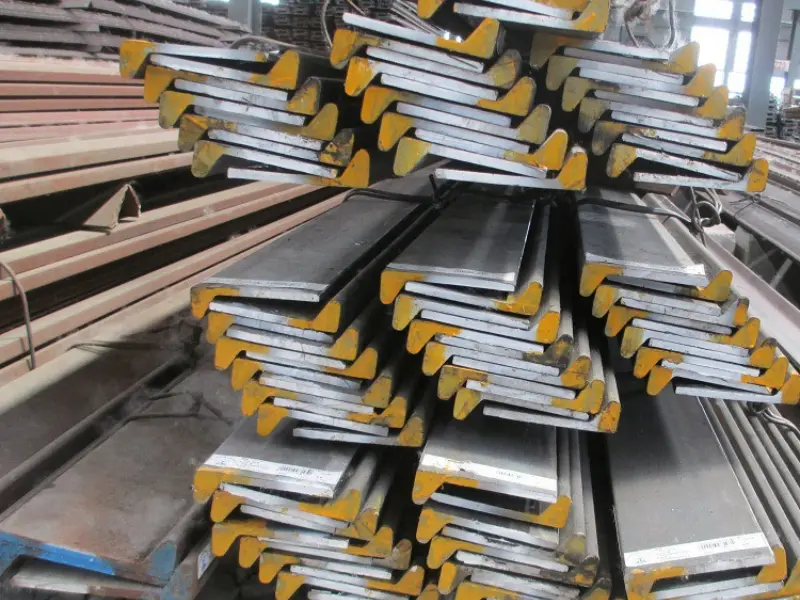
Bulb flat steel is preferred over flat bars and angles because its bulb-shaped profile provides greater section modulus per unit weight, reducing overall steel tonnage by 10-15%. Its flat surface also simplifies welding connections to deck plates, cutting fabrication time and labor costs significantly.
Strength-to-Weight Ratio
This is where bulb flat steel really shines. The bulb shape at the top of the section adds material where it matters most. It increases the section modulus without adding unnecessary weight along the web.
Here is a quick comparison based on typical offshore specifications:
| Section Type | Weight per Meter | Section Modulus | Strength-to-Weight Efficiency |
|---|---|---|---|
| Flat Bar 200x10mm | 15.7 kg | 52 cm³ | Baseline |
| Equal Angle 200x200x15mm | 45.0 kg | 280 cm³ | Good but heavy |
| Bulb Flat HP200x10mm | 24.0 kg | 280 cm³ | Excellent |
As the table shows, bulb flat HP200 delivers the same section modulus as a 200mm angle but weighs almost half. That is a huge difference. Less steel means lower material costs. Less weight means the platform’s floating or fixed structure requires less buoyancy or foundation support.
Welding and Fabrication Efficiency
The flat web of bulb flat steel makes welding straightforward. You do not need special jigs or complex edge preparations. Welders can run continuous fillet welds along the full length of the stiffener.
Compare that to traditional angle stiffeners. With angles, you have a protruding leg that gets in the way. You have to manage access to both sides of the angle leg. You often need to cut corners or notch the angle at intersections. This adds labor hours and increases the risk of welding defects.
One of my clients in Malaysia shared their experience. They switched from angles to bulb flats for the deck stiffeners on a small offshore platform. Their welding crew finished the job 25% faster. They saved over 200 labor hours on that single project.
Fatigue Performance
Offshore platforms face constant cyclic loading. Waves hit the structure. Wind pushes against it. Equipment vibrates. Over time, these repeated loads cause fatigue cracks to form.
Bulb flat steel performs better than angles and flat bars in fatigue. The smooth transition between the bulb and the web reduces stress concentrations. There are no sharp corners where cracks can start.
The classification societies know this. DNV, ABS, and LR all accept bulb flat steel as a suitable stiffener for fatigue-critical areas in offshore structures. They have design rules that cover bulb flat usage.
I recall a project in the Gulf of Mexico. The structural engineer specified bulb flats for the primary stiffening of a new production platform. When I asked why, he said: "We did a fatigue analysis. The bulb flat gave us 20% more fatigue life than a comparable angle. That translates to years of additional service before we need to inspect and repair."
Design Flexibility
Bulb flat steel comes in a range of sizes from HP80 up to HP430. You can select the section that exactly matches your structural requirements. You do not need to oversize just to get enough strength.
This design flexibility helps you optimize the platform’s weight and performance. You can use smaller sections in lightly loaded areas and larger sections where the loads are heavy. Every kilogram of steel you save has a ripple effect on the entire structure.
What Steel Grades and Sizes Should You Specify for Offshore Platform Bulb Flats?
You know you want bulb flat steel. But which grade? Which size? The options can feel overwhelming. Pick the wrong grade, and your platform fails classification. Pick the wrong size, and you waste money or compromise safety.
For offshore platforms, specify bulb flat steel grades that meet the relevant classification society rules for offshore structures, typically AH36, DH36, or EH36 depending on design temperature. The size must match the required section modulus for your specific stiffening application, ranging from HP80 for light framing to HP430 for primary structural members.
Understanding Steel Grades
The grade of bulb flat steel tells you about its mechanical properties. It tells you the minimum yield strength, tensile strength, and impact toughness.
Here is a breakdown of the common grades for offshore applications:
| Grade | Minimum Yield Strength | Impact Test Temperature | Typical Application |
|---|---|---|---|
| AH36 | 355 MPa | 0°C | General purpose, warm climate |
| DH36 | 355 MPa | -20°C | Intermediate, moderate climate |
| EH36 | 355 MPa | -40°C | Cold regions, high-risk areas |
| FH36 | 355 MPa | -60°C | Arctic and extreme conditions |
The "36" in all these grades means a minimum yield strength of 355 MPa (51,000 psi). The difference is in the impact toughness. AH36 is fine for most tropical offshore locations. DH36 is used when the platform operates in areas with occasional freezing temperatures. EH36 is for North Sea, Barents Sea, or similar cold environments.
What the Classification Societies Require
Every offshore platform must be built to a classification society’s rules. DNV, ABS, LR, BV, or others. These rules specify the minimum steel grades for different structural elements.
Here is what you need to know:
- Primary structures: These are the main load-bearing members. They usually require DH36 or EH36 grade steel.
- Secondary structures: These are stiffeners and non-critical framing. They may use AH36 or even mild steel.
- Special areas: Some zones, like the splash zone, may have additional toughness requirements.
Always check the relevant rule book. The classification society will specify the minimum requirements. It is your job to meet or exceed them.
I worked with a project in Qatar. The platform was destined for the Persian Gulf. The engineer specified DH36 for all primary stiffeners. I asked why not AH36. He said: "The operator’s internal standard requires DH36 for all critical structural steel. It gives us a margin of safety."
Selecting the Right Size
Size selection is about section modulus. The bulb flat must be large enough to carry the expected loads without deflecting too much or failing.
The process works like this:
- Calculate the load: What forces will the stiffener carry? Dead load, live load, wave load, wind load?
- Determine the span: How far does the stiffener span between supports?
- Calculate the required section modulus: Use structural engineering formulas.
- Select the bulb flat size: Choose the smallest HP size that meets or exceeds the required section modulus.
Do not skip this step. I have seen procurement teams order bulb flats based on "what we used last time." That is a dangerous shortcut. Every platform is different. Loads vary. Spans vary. Use the proper engineering calculations.
Standard Sizes Available
Here are the common bulb flat sizes you will find in the market:
| Designation | Web Height | Flange/Web Thickness | Weight per Meter | Typical Use |
|---|---|---|---|---|
| HP80 | 80 mm | 6 mm | 5.3 kg | Light deck stiffening |
| HP100 | 100 mm | 7 mm | 8.0 kg | Intermediate framing |
| HP140 | 140 mm | 9 mm | 15.2 kg | Deck and bottom stiffening |
| HP180 | 180 mm | 10 mm | 22.8 kg | Primary and secondary stiffening |
| HP240 | 240 mm | 12 mm | 37.8 kg | Heavy primary members |
| HP320 | 320 mm | 14.5 mm | 60.0 kg | Major structural beams |
Most offshore platforms use HP140 to HP240 for their primary stiffeners. HP80 and HP100 are used for lighter framing. HP320 and above are for special heavy applications.
The Certification Checklist
When you order bulb flat steel for an offshore platform, make sure these certificates are included:
- Mill Test Certificate: Shows the chemical composition and mechanical properties.
- Classification Society Certificate: Confirms the steel meets the society’s requirements.
- Traceability Documentation: Links each piece of steel back to the original heat.
Without these, your steel will not be accepted by the surveyor. You will be stuck with a shipment you cannot use.
How Does Corrosion Protection and Surface Treatment Extend Bulb Flat Service Life in Marine Environments?
The ocean is relentless. Saltwater corrodes steel. Humidity attacks it. Marine organisms attach to it. Even the best bulb flat steel will fail prematurely if you do not protect it from corrosion.
Corrosion protection extends bulb flat service life by creating a barrier between the steel and the marine environment. Coating systems, cathodic protection, and proper surface preparation work together to prevent rust and maintain structural integrity for decades. The most effective approach combines coatings with sacrificial anodes or impressed current systems.
The Marine Corrosion Threat
Let me be clear about what you are up against. Offshore platforms sit in some of the most corrosive environments on Earth.
There are five zones of corrosion risk:
| Zone | Description | Corrosion Risk | Protection Priority |
|---|---|---|---|
| Atmosphere | Above the splash zone | Moderate | Coating is primary protection |
| Splash Zone | Alternating wet and dry | Extreme | Coating plus additional thickness |
| Tidal Zone | Regular immersion and exposure | High | Coating and cathodic protection |
| Submerged | Fully underwater | Moderate | Cathodic protection is primary |
| Seabed | Buried in sediment | Low | Minimal protection needed |
The splash zone is the most dangerous. The constant wetting and drying accelerates corrosion. Oxygen is plentiful. Saltwater is abundant. The combination creates ideal conditions for rust.
One of my clients in Saudi Arabia learned this lesson the hard way. They used standard painted bulb flats for the splash zone on a small production platform. Within three years, the paint had failed. Rust had thinned the steel by 3 millimeters. They had to spend $500,000 on a retrofit.
Coating Systems
The first line of defense is the coating system. A good coating creates a physical barrier that keeps water and oxygen away from the steel surface.
Here is what I recommend for offshore bulb flats:
- Surface preparation: Blast clean to Sa 2.5 standard. This removes all rust, mill scale, and old coating. The surface must have a clean, grey appearance.
- Primer: Apply a high-performance zinc-rich epoxy primer. Zinc provides cathodic protection to the steel if the coating is scratched.
- Intermediate coat: Apply a build coat. This provides thickness and sealing properties.
- Top coat: Apply a durable top coat. This provides weather resistance and color retention.
The total dry film thickness should be at least 300 microns for atmospheric zones and 400-500 microns for the splash zone.
Cathodic Protection
Coating alone is not enough. You also need cathodic protection. This uses electrochemistry to stop corrosion.
There are two types:
- Sacrificial anodes: You attach blocks of a more active metal, like zinc or aluminum, to the steel. The anodes corrode instead of the steel. They protect the steel by sacrificing themselves.
- Impressed current: You apply a small electrical current to the steel. The current polarizes the steel and prevents corrosion.
Most offshore platforms use sacrificial anodes. They are simple to install. They need little maintenance. Their cost is also quite predictable.
The number and size of anodes depend on the platform’s surface area and the required protection current density. Classification societies have rules for anode design. Follow them.
Inspection and Maintenance
Corrosion protection is not a one-time job. You must inspect and maintain the system over the platform’s life.
Here is a simple inspection schedule:
- Every 3-5 years: Perform a general visual inspection. Look for coating failures, rust spots, and anode wastage.
- Every 5-10 years: Perform a detailed inspection. Take coating thickness measurements. Measure anode consumption.
- As needed: Recoat damaged areas. Replace consumed anodes.
A client of ours in Vietnam followed this schedule religiously. After 20 years, their bulb flat stiffeners looked nearly new. They had spent a modest amount on maintenance. They had saved millions in avoided repairs.
The Cost of Doing Nothing
Some operators try to save money by skimping on corrosion protection. It never works.
The cost of corrosion for offshore structures is enormous. NACE International estimated that corrosion costs the global oil and gas industry over $1 trillion annually. A significant portion of that comes from offshore platforms.
Here is what happens when you do not protect your bulb flats:
- Year 1-2: Minor rust spots appear.
- Year 3-5: The coating fails in patches. Rust progresses.
- Year 6-10: Section loss becomes measurable. The steel loses strength.
- Year 10+: The stiffeners may need replacement. The platform requires costly repairs.
Do yourself a favor. Invest in proper corrosion protection from the start. It is the cheapest insurance policy you will ever buy.
How to Secure a Reliable Bulb Flat Steel Supply Chain for Large-Scale Offshore Projects?
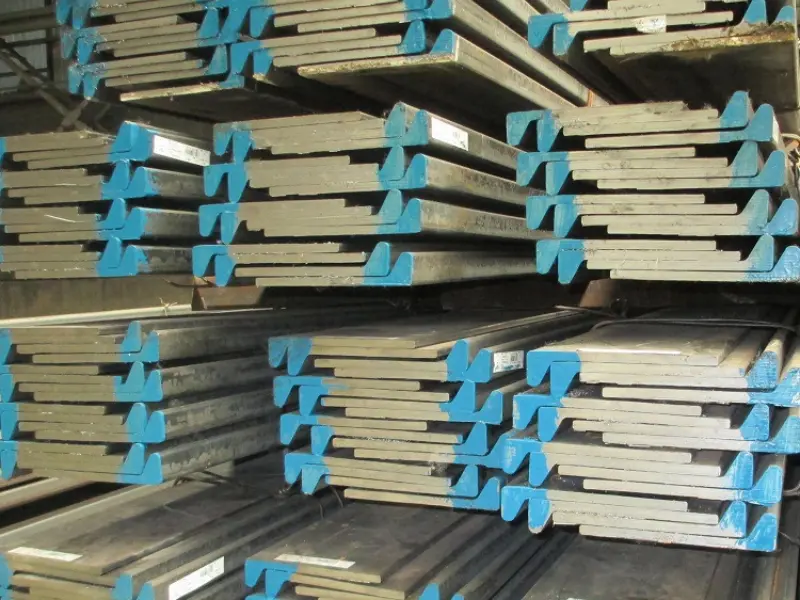
Large offshore projects consume thousands of tons of bulb flat steel. A single platform might need 2,000 to 5,000 tons of stiffeners. If your supply chain fails, the entire project schedule suffers. But securing that much steel is not as simple as placing one big order.
Securing a reliable bulb flat steel supply chain requires working with mills that hold offshore certifications, signing frame agreements with volume commitments, maintaining strategic buffer stock, and establishing clear communication protocols for production tracking and quality control. Split your orders across multiple qualified suppliers to avoid single-source dependency.
The Scale of the Problem
Let me put this in perspective. A typical jacket platform uses about 3,000 tons of structural steel. A large semi-submersible production platform might use 15,000 tons. Bulb flats often account for 15-25% of that total.
Most offshore projects are designed and built on a tight timeline. Delays of even two weeks in steel delivery can cascade through the entire construction schedule. Welding crews sit idle. Fabrication yards face demurrage charges. The platform’s delivery date slips.
The demand for bulb flats is not always steady. It is project-based. You might need 500 tons this month, 100 tons next month, and 1,000 tons the month after. Mills prefer stable, predictable orders. They do not like project-related spikes.
The Mill Capacity Challenge
Not every steel mill can produce bulb flat steel for offshore use. The mill must have:
- A special rolling mill: Bulb flats require a specific rolling process. The bulb shape is not easy to form.
- Classification society approvals: The mill must be approved by DNV, ABS, LR, or other societies to produce offshore grades.
- Quality control systems: The mill must have the testing equipment and procedures to verify the steel’s properties.
These requirements limit the number of qualified mills. There are maybe two dozen mills worldwide that are fully approved for offshore bulb flats.
One of our partner mills in China has been producing bulb flats for 25 years. They have approvals from all major classification societies. They roll bulb flats every week. That kind of experience matters.
The Procurement Strategy
Here is the procurement strategy I recommend to my offshore clients:
Step 1: Identify Qualified Mills
Create a list of all approved mills that produce your required sizes and grades. Verify their current approvals. Check their production capacity.
Step 2: Negotiate Frame Agreements
Sign a master agreement with one or two primary mills. Include volume commitments, pricing formulas, and allocation guarantees.
Step 3: Place Rolling Orders
Each project requires a "rolling order." This is a release under the frame agreement. It specifies the exact sizes, grades, quantities, and delivery dates.
Step 4: Monitor Production
Track the mill’s production progress. Confirm the steel is being rolled to the right specifications. Arrange for third-party inspections if needed.
Step 5: Coordinate Logistics
Book shipping space well in advance. Offshore projects often use specialized heavy-lift vessels. Confirm port handling and customs clearance.
The Buffer Stock Strategy
I recommend building a buffer stock of your most common bulb flat sizes and grades.
For example, if your projects typically use HP140x9mm AH36, keep 200-300 tons in inventory. That covers you for a shipment delay or a sudden increase in your own demand.
I had a client in Singapore who maintained a 500-ton buffer stock of bulb flats. When their primary mill had an unplanned shutdown, they continued production for six weeks without interruption. Their competitor, who had no buffer, lost 10 weeks of productivity.
Quality Control at Every Stage
Quality issues are a major risk in bulb flat procurement. A batch of steel that fails inspection cannot be used. It must be rejected, returned, or reworked. All of these options cost time and money.
I advise my clients to implement a three-stage quality control process:
- Stage 1: Mill Quality Control – The mill performs its own tests. You review the test certificates.
- Stage 2: Third-Party Inspection – A recognized testing agency like SGS inspects the steel before shipment. They take samples, run tests, and verify the certificates.
- Stage 3: Receiving Inspection – When the steel arrives at the fabrication yard, perform a final inspection. Check dimensions, surface condition, and markings.
This process sounds expensive. It is not. The cost of finding a problem at the yard is far higher than the cost of preventing it at the mill.
Communication Is Everything
The best supply chain in the world fails if communication breaks down.
Here is what I recommend:
- Assign a dedicated point of contact. One person on your side. One person on the mill’s side. They handle all communication.
- Use a shared tracking system. A simple spreadsheet or a project management platform. Update it daily.
- Schedule regular status calls. Once a week, talk to the mill. Discuss production progress. Address issues early.
- Document everything. Keep records of all communications. You will need them if there is a dispute.
We use this approach with all our offshore clients. It has worked across projects in Saudi Arabia, the Philippines, Malaysia, and Mexico.
Conclusion
Bulb flat steel is the backbone of offshore platform stiffening. It delivers strength, weldability, and fatigue performance that flat bars and angles simply cannot match. Choose the right grade. Apply proper corrosion protection. Build a reliable supply chain. Follow these steps, and your platform will stand strong for decades.