
Imagine finding out your ship plate certification is worthless after the steel is already on your production line. This risk is real. I see buyers face this silent threat more often than they think.
To avoid fake marine steel certificates, you must understand their purpose, implement a strict verification process, know how to obtain a genuine one, and act on what verification truly means. Independent third-party inspection is your strongest defense.
A certificate is your first line of defense in a high-stakes industry. But a paper alone does not guarantee quality. Let’s walk through the entire system—from the document’s core purpose to the actionable steps that separate real security from false promises. This knowledge is not just for quality managers; it’s for every business leader whose project depends on material integrity.
What is the purpose of material certificate?
You receive a stack of shipping documents. The Mill Test Certificate (MTC) is just one page among many. But treat it as a routine paper, and you gamble with your project’s structural safety and regulatory compliance.
A material certificate’s purpose is to provide a verifiable, traceable record of a steel product’s chemical composition and mechanical properties. It acts as a product "passport," proving the material meets the specific grade and standard (like ABS, DNV, or ASTM) required for its intended use, such as shipbuilding.
The Certificate as a Legal and Technical Lifeline
Think of a material certificate not as paperwork, but as a foundational piece of your project’s legal and technical backbone. Its purpose extends far beyond a simple checklist. I break it down into three critical roles it plays.
First, it is a Legal Document of Conformity. When you purchase AH36 ship plate, you are not just buying steel. You are buying a set of performance promises: specific yield strength, tensile strength, and impact toughness at -20°C. The MTC is the mill’s sworn statement that this particular batch of steel meets those promises. If the steel fails in service and an investigation reveals the material did not meet the certified specifications, this document becomes central to liability claims. It shifts responsibility back to the producer. Without a genuine, batch-specific certificate, you have no proof of what you bought.
Second, it provides Traceability and Quality Assurance. A proper MTC is not generic. It links directly to one heat number or melt batch. This is crucial. It means you can trace the steel back to the exact furnace melt, the processing route, and the finishing time. For a shipyard undergoing a class society survey (like Lloyd’s Register or Bureau Veritas), this traceability is mandatory. The surveyor will demand to see the MTC for plates used in the hull. They need to confirm the material’s journey from mill to ship aligns with strict rules. This traceability is what separates industrial procurement from buying a commodity.
Third, it serves as a Critical Communication Tool in the Supply Chain. The certificate gives everyone—the buyer, the fabricator, the welder, the inspector—a common reference. The welder can use the chemical analysis (especially the Carbon Equivalent value) to determine the correct pre-heat and welding procedures. The inspector knows exactly what values to test for during verification. It aligns all parties on a single, factual basis for the material’s capabilities.
Here’s a table showing what different parties rely on within the certificate:
| Party in the Supply Chain | Their Primary Use for the MTC | Key Information They Need |
|---|---|---|
| Procurement Manager | Proof of purchase compliance & contract fulfillment. | Standard/Grade (e.g., ABS Grade A), Heat Number, Mill Name. |
| Project/Quality Engineer | Verification of technical suitability for the design. | Mechanical Properties (Yield, Tensile, Elongation), Chemical Composition, Impact Test Results. |
| Fabrication/Welding Supervisor | Guidance for safe and correct processing. | Chemical Composition (C, Mn, Si, CEV), Delivery Condition (e.g., Normalized). |
| Class Society Surveyor | Audit trail for regulatory and safety approval. | Full traceability: Heat No., Standard, Mill Stamp, Alignment with approved drawings. |
| Insurance/Claims Adjuster | Evidence in case of material failure investigation. | Authenticity of document, Clear link between certificate and failed component. |
Understanding these purposes transforms your view of the certificate. It stops being a file to be archived and becomes an active, living document that must be questioned, verified, and respected throughout your project’s lifecycle. Ignoring its depth is the first step toward accepting a fake.
What is the certificate verification process?
Getting a certificate is one thing. Trusting it is another. I’ve seen beautifully formatted, official-looking certificates that were completely fabricated. A verification process is your filter for truth.
The verification process involves cross-checking the certificate’s details against independent sources. This includes validating the issuing mill’s authenticity, confirming the heat number aligns with mill records, checking for proper stamps/signatures, and most importantly, conducting physical and chemical tests on samples from the actual shipment to match the certified values.
Building Your Verification Firewall: A Step-by-Step Defense
A robust verification process is not a single action. It is a multi-layered firewall you build between your order and potential fraud. Let me outline the concrete steps we follow and recommend to our clients, like Gulf Metal Solutions, who prioritize this above all.
Layer 1: Document-Level Scrutiny (Before Shipment).
This starts the moment you receive the draft or copy of the MTC from your supplier.
- Check the Source Mill. Is it a known, reputable mill? You can often verify this by searching the mill’s official website or international certification databases. Be wary of obscure mill names.
- Examine the Format and Details. Genuine certificates from major mills have a consistent, professional format. Look for poor spelling, grammatical errors, or unusual logos. Check that all critical fields are populated: purchaser name, order number, heat number, grade, standard, and full chemical/mechanical data.
- Look for Security Features. Many mills now use QR codes, holograms, or unique serial numbers on their certificates. A PDF scan of a certificate should still show these features if they exist on the original.
- Demand Originality. Specify in your contract that you require the original hard copy of the MTC, shipped with the original Bill of Lading, or sent via courier. This makes forgery harder than manipulating a digital file.
Layer 2: Third-Party Inspection (The Most Critical Step).
This is non-negotiable for high-value or critical orders. You or an agent you trust must witness the loading and testing.
- Pre-Shipment Inspection (PSI). An inspector (from SGS, BV, Intertek, etc.) visits the mill or the supplier’s warehouse before loading. They randomly select plates from your batch, verify the heat numbers stamped on the plates match the certificate, and take samples.
- Independent Laboratory Testing. Those samples are sent to an accredited lab. The lab performs spectrographic chemical analysis and mechanical tests (tensile, impact). The results are then directly compared to the values on the mill’s MTC. Any significant deviation is a major red flag.
- The Power of "Witnessed." The test report will state "Testing witnessed by [Inspector Name] for [Your Company]." This report is your independent shield. It either validates the MTC or exposes it.
Layer 3: Supply Chain Cross-Verification.
- Direct Mill Confirmation (For Large Orders). For very large projects, some buyers successfully contact the mill’s export department directly to confirm they produced the steel under that heat number and that your supplier is an authorized agent. This can be difficult but is powerful.
- Historical Consistency. If you order the same grade repeatedly from a supplier, compare certificates from different batches. While heat numbers will differ, the format, signatories, and general data presentation from a legitimate mill should be consistent.
The table below contrasts a weak versus a strong verification stance:
| Verification Activity | Weak/Passive Approach | Strong/Active Approach |
|---|---|---|
| Receiving the MTC | Accepts a digital PDF from the supplier as proof. | Demands a high-resolution scan for review, followed by the original hard copy. Checks for security features. |
| Checking Mill Details | Assumes the named mill is legitimate. | Researches the mill, confirms its certifications (e.g., ISO 9001, Class approvals), and knows its reputation. |
| Physical Verification | Relies on the supplier’s word that the material matches the cert. | Contracts an independent inspector to witness material marking (heat no.) and sample collection at the load port. |
| Testing | Assumes the MTC values are accurate. | Pays for independent lab testing to create a factual benchmark against the MTC. Views any discrepancy as a contract issue. |
| Cost View | Sees inspection as an unnecessary extra cost. | Sees inspection as essential insurance and a cost of doing serious business. |
This process requires effort and budget. But for our client in Saudi Arabia, paying for SGS inspection was not an expense; it was the final step that gave them the confidence to proceed with payment. It turned an unknown risk into a managed, documented fact.
How to get a material test certificate1?
You need a certificate, but the path to getting a real one is not always clear. Relying on a supplier’s promise is a common trap. The source of the certificate determines everything.
You get a genuine material test certificate2e](https://cnmarinesteel.com/how-to-verify-mill-test-certificates-for-marine-angle-steel/1)[^1] by ensuring it originates directly from the producing steel mill, not a trader. Specify your need for original, mill-issued MTCs3 in your purchase contract. The certificate should correspond exactly to the heat/batch of steel you receive and be an inherent part of the product, not a separately provided document.
Navigating the Source: Mill, Trader, or Forger?
The question "how to get it" is really about controlling the source. There are three main channels, each with vastly different levels of risk and reliability.
The Ideal Channel: Direct from the Certified Producing Mill.
This is the most straightforward path. When you buy steel, the mill generates the MTC for that specific heat or batch as a core part of its quality release process. With a direct mill contract, the certificate comes with the mill’s official stamp, authorized signatures, and full traceability4. However, for most international buyers, especially for smaller volumes, buying directly from a major mill is impractical due to high minimum order quantities and complex logistics. This is where the role of the intermediary becomes critical—and risky.
The Common Channel: Through an Authorized Supplier or Agent.
This is where companies like ours operate. We have long-term contracts with specific, certified mills. When we place an order with the mill on your behalf, the mill produces the steel and issues the MTC in the mill’s name. We then pass this original, unaltered document5 directly to you. Our value is in vetting the mill, managing the logistics, and guaranteeing the document chain’s integrity. The key is transparency: we will always tell you the exact source mill and provide its credentials. A trustworthy supplier sees the MTC as the mill’s document to you, not their own.
The Risky Channel: Through an Unknown Trader or Broker.
This is where fakes proliferate. A trader with no fixed mill relationship might source material from various small yards or excess stock. They may provide a "certificate" they created themselves, a generic template, or even a forged copy of a real mill’s certificate with altered heat numbers. They often cannot or will not provide original documents. Their goal is to move metal, not ensure traceability4.
So, how do you practically ensure you get a real one? Follow these actionable steps:
- Make it Contractual. Your purchase order or contract must have a clear clause: "Supplier shall provide original Mill Test Certificates (MTCs) issued by the producing mill (XYZ Steel), corresponding to the heat numbers of the supplied material. Copies or trader-issued certificates are not acceptable."
- Ask Early, Ask Directly. During your supplier evaluation, ask: "Which specific mill will produce this steel? Can you show me their classification society approvals? Will you provide the original mill MTC?" A legitimate supplier answers these easily. An evasive one raises immediate concerns.
- Understand the Timeline. A real MTC is generated after production and testing are complete, but before shipment. You should receive a copy for review prior to the vessel’s departure. The originals travel with the shipping documents.
- Use Incoterms6 to Your Advantage. When you use terms like FOB (Free On Board), the supplier is responsible for getting the goods and documents to the ship. This includes the original MTCs. You can instruct your freight forwarder at the load port to check the document package before release.
The process is about due diligence before the order, not panic after arrival. By choosing a supplier whose business model is built on transparent mill partnerships—like our long-term cooperation with specific mills in Shandong—you build the genuine certificate into your supply chain from the start.
What does verification certificate mean?
You have a mill certificate and a third-party inspection report. Is that enough? The concept of "verification" goes deeper than a second piece of paper. It’s about the action and authority behind it.
A verification certificate means an independent, accredited body has physically checked the material, tested samples from your specific shipment, and officially confirmed that its properties align with the specified standards or the mill’s own certificate. It is an independent attestation of conformity, adding a crucial layer of objective trust.
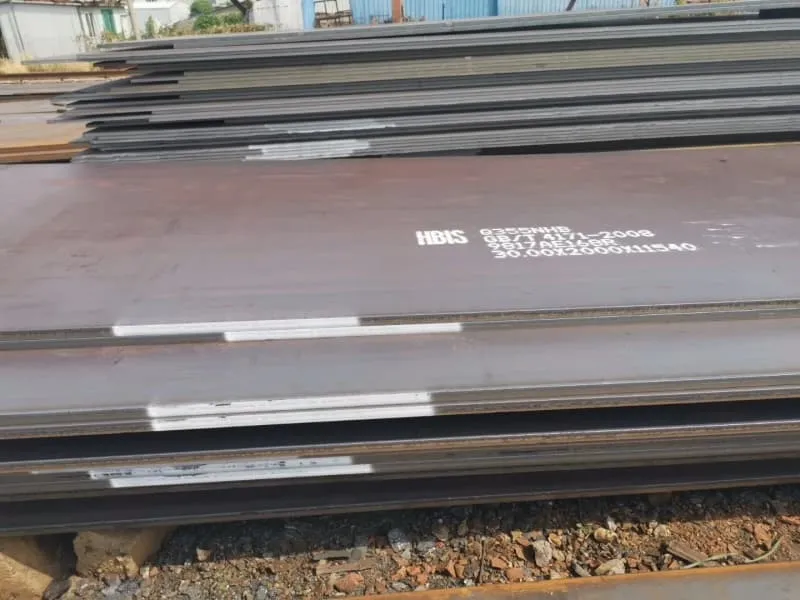
The Hierarchy of Trust: From Statement to Attestation
Many buyers confuse a Mill Test Certificate (a manufacturer’s statement) with a Verification Certificate or Report (an independent attestation). Understanding this difference is the final step in mastering material assurance.
A Mill Test Certificate (MTC or MTR) is a first-party declaration. It is the mill saying, "We made this, and it meets these specs." It is essential for traceability but is inherently subjective. The mill has a vested interest in the product passing.
A Verification Certificate/Report (from SGS, TÜV, Lloyd’s, etc.) is a third-party attestation. It is an independent organization saying, "We took samples from this specific batch intended for Buyer X, tested them in our lab, and our results confirm the material meets the required standards." This shifts the claim from the producer to a neutral, respected authority.
The meaning of this verification carries several profound implications:
1. It Changes the Power Dynamic.
With only an MTC, your ability to dispute quality rests on challenging the mill’s own data—a difficult task after the goods have arrived. With a third-party verification report, you have a document created by an entity you hired, on your behalf. If the verification fails, you have immediate, objective grounds to reject the shipment before it leaves the origin country. This was the core solution for Gulf Metal Solutions’ pain point with quality inconsistency. The inspection gave them leverage and certainty.
2. It Validates the Entire Chain, Not Just the Material.
A good verification process checks more than chemistry. It verifies the link between the material and the certificate. The inspector confirms the heat numbers on the plates match the heat numbers on the MTC. This step catches a common fraud: where a real MTC from a good batch is paired with inferior steel from a different batch. Verification certifies that this steel is that steel.
3. It Serves a Broader Audience.
While an MTC is primarily for engineers and class surveyors, a verification certificate speaks to a wider group:
- Your Finance Department: It provides concrete evidence for releasing payment, especially under Letter of Credit terms requiring inspection certificates.
- Your End Client: You can provide it as proof of your own rigorous quality control, enhancing your reputation.
- Regulators and Insurers: It serves as stronger evidence of due diligence if any disputes arise.
4. It Has a Cost, Which Reflects Its Value.
Verification is not free. Inspection and testing cost money. This cost acts as a filter. Suppliers pushing the lowest possible price will often resist or omit third-party inspection because it eats into their margin and exposes risk. A professional supplier builds this cost into the offering or readily agrees to it because it protects both parties.
Consider this final comparison of what different documents promise:
| Document | Who Issues It? | Core Message | Level of Trust |
|---|---|---|---|
| Supplier’s Commercial Invoice | The Seller (Trader/Supplier) | "You owe us money for these goods." | Low (Only for payment) |
| Mill Test Certificate (MTC) | The Manufacturer (Steel Mill) | "We produced this batch to these specs." | Medium (Essential but unilateral) |
| Third-Party Verification Report | Independent Inspection Body (e.g., SGS) | "We independently confirm this shipment matches the specs." | High (Objective and defensive) |
| Class Society Certificate | Classification Society (e.g., ABS, DNV) | "This mill’s process and this specific material are approved for marine use." | Highest (Regulatory approval) |
Therefore, "verification" means taking active control. It means moving from hoping the certificate is real to knowing the material is correct. It transforms quality assurance from a passive, trust-based exercise into an active, evidence-based process. In our business, offering SGS inspection support isn’t just a service; it’s a statement that we are confident enough in our supply chain to have it scrutinized by the world’s toughest auditors.
Conclusion
Avoiding fake certificates requires active steps: know their purpose, enforce a strict verification process, control the source, and invest in independent validation. Don’t just receive a document; interrogate it.
-
Understanding the significance of a material test certificate can help ensure quality and compliance in your projects. ↩
-
Explore this resource to learn the steps necessary to secure a genuine material test certificate for your materials. ↩
-
Discover the differences between mill-issued MTCs and other types of certificates to ensure you get the right documentation. ↩
-
Understanding traceability can help you ensure the quality and authenticity of the materials you purchase. ↩ ↩
-
This link will explain the importance of having original documents to avoid issues with material quality and compliance. ↩
-
Explore how Incoterms can influence the logistics and documentation of your material purchases. ↩