
You order AH36, DH36, and Grade A plates together. They look identical. One wrong plate in the wrong zone.
You manage multi‑grade supply by identifying and segregating grades at receiving, using color‑coding and labels to prevent mix‑ups, maintaining traceability even when heat numbers overlap, and planning production so each structural zone gets the correct grade.
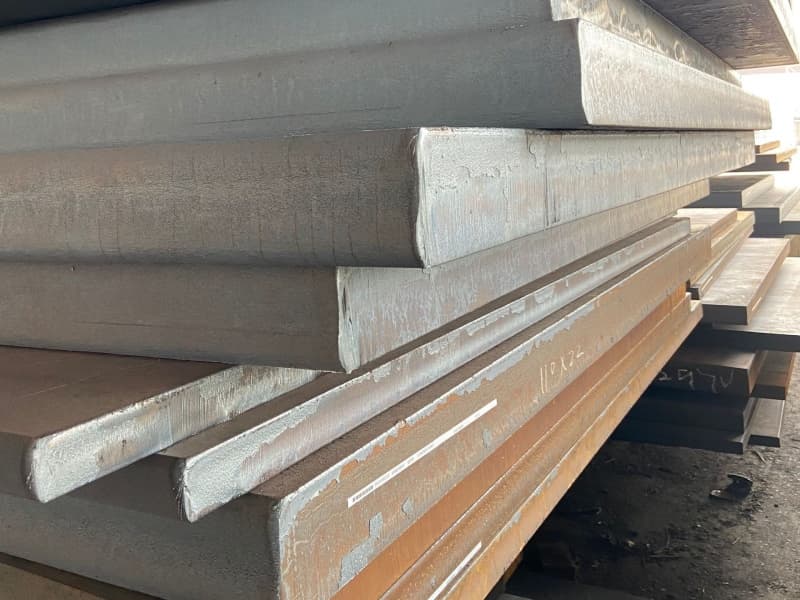
I have seen projects where a DH36 plate was accidentally used in a Grade A zone – and the classification surveyor caught it. The rework cost $15,000 and took two weeks. The yard had no system to prevent grade mix‑ups. Let me walk you through the simple system that stops this from happening.
How Do You Clearly Identify and Segregate Different Steel Grades at Receiving and Storage?
The truck arrives. The driver unloads all plates together. Your team puts them in one pile.
You identify and segregate grades by checking each plate’s stamp and label before unloading, moving plates directly to grade‑specific storage zones, and using quarantine for any plate with unclear marking. No mixing at any point.
The unmarked plate that caused a week of testing
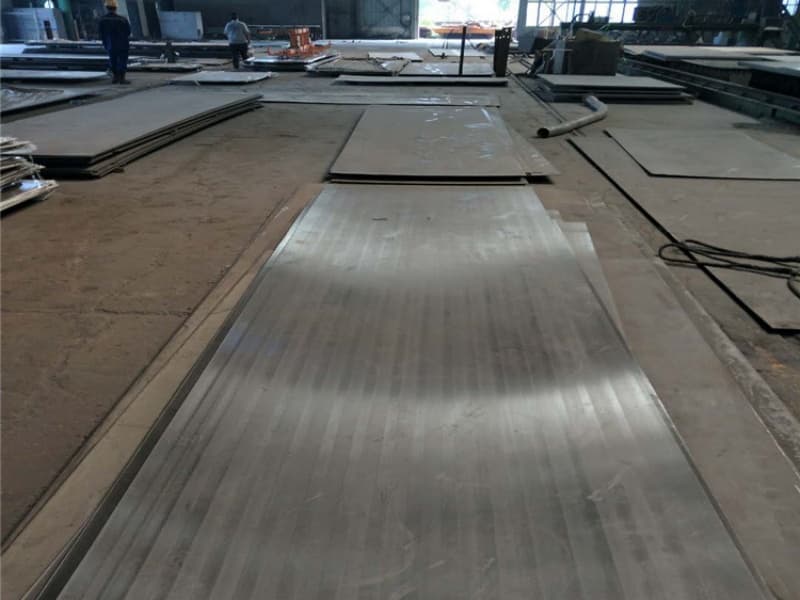
A shipyard in Vietnam received 300 tons of plates: AH36, DH36, and Grade A. The supplier’s labels fell off during shipping. The yard had no system to identify which plate was which. They had to test every plate – cutting samples, sending to a lab. That cost $4,000 and took one week. After that, they changed their receiving process.
So let me show you how to do it right.
First, three receiving rules that prevent mix‑ups.
| Rule | Action |
|---|---|
| 1. Do not unload without checking | Before lifting any plate, read the stamp or label. If unclear, set aside. |
| 2. Assign a receiving zone per grade | Have marked bays: Zone A (AH36), Zone B (DH36), Zone C (Grade A). |
| 3. Move directly to zone | Forklift takes plate from truck straight to its zone. No staging area. |
Second, what to do with unclear or missing marks.
| Situation | Action |
|---|---|
| Stamp is readable but faded | Mark with spray paint (color by grade) before storing |
| Stamp is completely unreadable | Quarantine – do not accept. Call supplier for verification. |
| Label fell off but stamp is there | Use stamp, apply new label |
| No stamp and no label | Reject the plate. Do not accept it. |
I stamp my plates clearly. My clients never have to guess.
Third, storage zone layout for multi‑grade projects.
| Zone | Grade | Color Code (Spray on end) | Maximum Capacity |
|---|---|---|---|
| A1 | AH36 | Yellow | 200 tons |
| A2 | DH36 | Orange | 150 tons |
| A3 | Grade A | White | 100 tons |
| A4 | Unknown / Quarantine | Red | 20 tons |
Keep at least 2 meters between zones. Use painted lines or chains as boundaries.
Fourth, the receiving log. Every plate that arrives is recorded.
| Date | Plate ID | Grade | Heat Number | Zone | Checked By |
|---|---|---|---|---|---|
| Mar 10 | P101 | AH36 | H22031 | A1 | Tom |
| Mar 10 | P102 | DH36 | H22032 | A2 | Tom |
This log helps you trace any future problems.
Your receiving and segregation checklist
- You have grade‑specific receiving zones marked on the yard floor
- You check every plate’s stamp or label before unloading
- You use quarantine zone for unclear marks
- You keep a receiving log
What Color‑Coding and Labeling Systems Prevent Grade Mix‑Ups During Fabrication?
The plate is in the cutting area. The welder grabs the nearest one. It is the wrong grade.
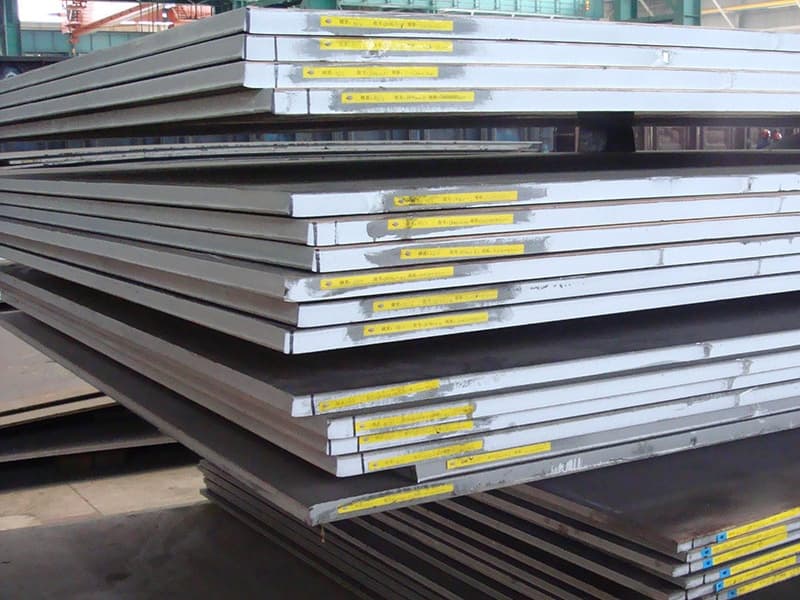
Color‑coding – painting the edge or end of each plate with a grade‑specific color – gives an instant visual check. Labeling with weather‑resistant tags provides backup. Together, they make grade identification obvious even from a distance.
The yellow paint that saved a weld
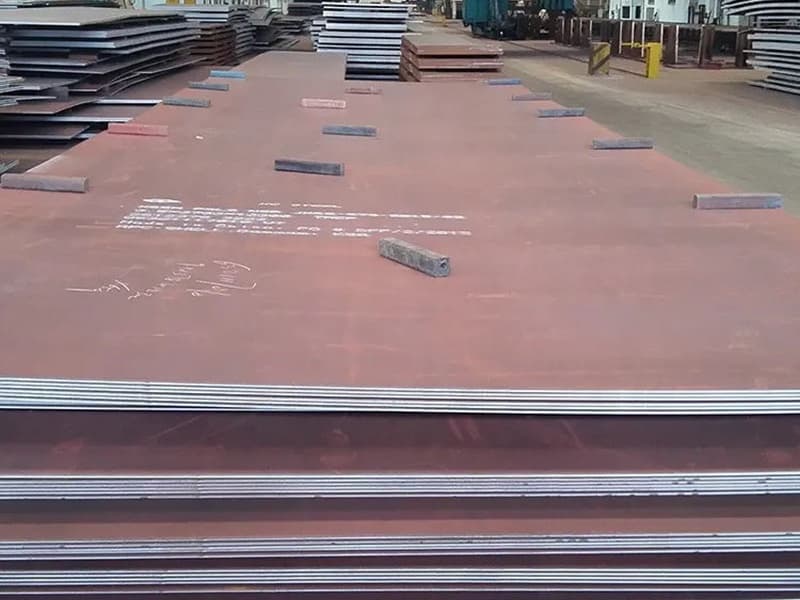
A fabricator in Malaysia had AH36 and Grade A plates in the same workshop. They looked identical. One worker almost cut a Grade A plate for a critical bottom shell. Then he saw the yellow paint on the end of the AH36 plates. He stopped. He grabbed the yellow one. The mistake was avoided.
So let me share the color‑coding system.
First, a simple color code that everyone can remember.
| Grade | Paint Color on Plate End | Spray Mark on Top |
|---|---|---|
| AH36 | Yellow | Yellow stripe |
| DH36 | Orange | Orange stripe |
| Grade A | White | White stripe |
| Grade B | Blue | Blue stripe |
| Unknown | Red (quarantine) | Red X |
Paint the end of each plate when it arrives. Use oil‑based paint that lasts. Reapply every 3‑6 months if plates sit long.
Second, labeling – two levels of backup.
| Label Type | Location | Material | Lifespan |
|---|---|---|---|
| Bundle tag | Tied to bundle | Laminated paper, wire | 3‑6 months |
| Individual plate sticker | Stuck on plate | Weather‑resistant vinyl | 6‑12 months |
| Paint marking | On plate end | Oil‑based paint | 12‑24 months |
I use all three for my shipments. My clients tell me it makes their job much easier.
Third, where to apply the color code.
- On both ends of each plate (visible from forklift)
- On the top surface near the edge (visible to crane operator)
- On the cutting list (match color to work order)
Fourth, training your team on the color code. Post a chart at the receiving bay, storage yard, cutting station, and welding area.
| Grade | Color | Used For |
|---|---|---|
| AH36 | Yellow | Hull structure, most plates |
| DH36 | Orange | High‑stress areas, cold zones |
| Grade A | White | Superstructure, non‑critical |
Do a 5‑minute refresher every Monday. It works.
Your color‑coding and labeling checklist
- You have a defined color code for each grade
- You paint plate ends when they arrive
- You use weather‑resistant labels as backup
- Your team knows the color code (post a chart)
How Do You Maintain Traceability When Multiple Grades Share the Same Heat Number or Mill Runs?
The MTC says the heat number is H22031. Two grades have that same heat number. How do you tell them apart?
When multiple grades share a heat number, you rely on secondary marks – grade stamp, paint color, and separate bundle numbers. The MTC alone is not enough. You must create a secondary traceability system that links each piece to its grade, not just its heat number.
The heat number that covered two grades
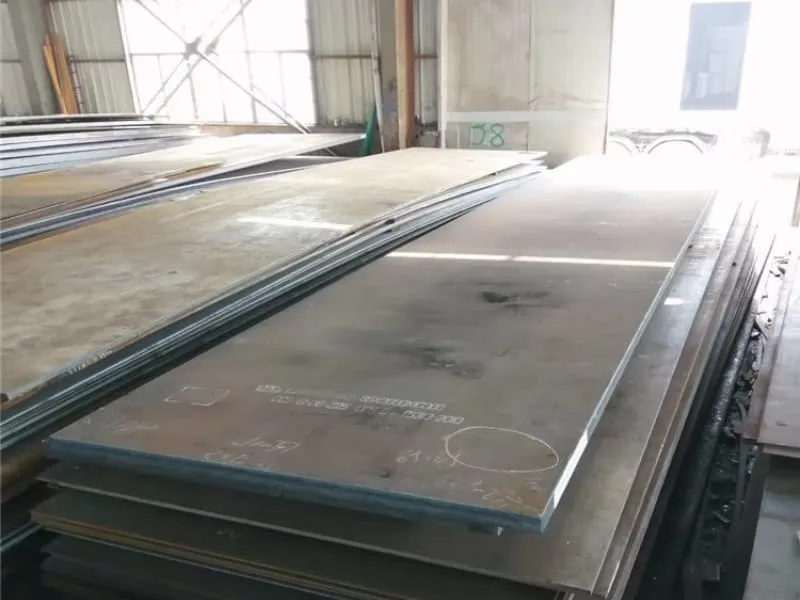
I delivered a project with 200 plates. All had the same heat number on the MTC. But half were AH36 and half were Grade A. The mill had rolled them differently. The client’s quality manager was confused. I had already stamped each plate with "AH36" or "A" next to the heat number. I also painted ends yellow for AH36, white for Grade A. No mix‑ups.
So let me explain how to handle this situation.
First, why multiple grades can come from one heat number. The chemistry of the liquid steel can meet requirements for multiple grades. The mill decides the final grade based on rolling and cooling.
| Same Heat Number | Different Rolling | Different Grade |
|---|---|---|
| H22031 | Controlled rolling + accelerated cooling | AH36 (higher strength) |
| H22031 | Normal rolling + air cooling | Grade A (lower strength) |
Second, the traceability chain for shared heat numbers.
| Element | What to Check |
|---|---|
| Heat number on MTC | Same for both grades |
| Grade stamp on plate | Different (AH36 vs A) |
| Paint color on end | Yellow vs White |
| Bundle number | Separate bundles for each grade |
| Packing list | Clearly links bundle number to grade |
Do not rely only on heat number. Use all four identifiers.
Third, a sample traceability record for a shared heat number.
| Plate ID | Heat Number | Grade Stamp | Paint Color | Bundle | MTC Reference |
|---|---|---|---|---|---|
| P101‑P150 | H22031 | AH36 | Yellow | B101 | MTC‑AH36‑H22031 |
| P151‑P200 | H22031 | A | White | B102 | MTC‑A‑H22031 |
Fourth, how to verify at receiving when heat numbers are shared.
| Step | Action |
|---|---|
| 1 | Check packing list – are heat numbers repeated with different grades? |
| 2 | Look at each plate – does it have a grade stamp next to the heat number? |
| 3 | If only heat number (no grade stamp) – quarantine. Contact supplier. |
| 4 | If grade stamp exists – use that, plus apply your paint color. |
Your shared heat number checklist
- Supplier informed you in advance if multiple grades share a heat number
- Each plate has a grade stamp (not just heat number)
- Separate bundles for each grade
- Packing list and MTCs clearly distinguish grades
I always stamp grade on every plate. My clients never have to guess.
What Production Planning Strategies Ensure the Correct Grade Is Used for Each Structural Zone?
The work order says "AH36 for bottom shell." The cutting operator sees a plate with yellow paint. Good. But what about the next zone?
Production strategies include color‑coding work orders to match plate paint, using a two‑person verification before cutting, separating workstations by grade, and keeping a cut log that records which plate went into which zone.
The two‑person rule that stopped a $20,000 mistake
A shipyard in Thailand had a near‑miss. A cutter picked a Grade A plate for a DH36 zone. The foreman walked by and saw the wrong color. He stopped it. After that, they implemented a rule: before any cut, two people must verify the grade. The cutter reads the color on the plate. The foreman checks the work order color. They both say the grade aloud. No mistakes since.
So let me share the production strategies that work.
First, color‑coded work orders. Match the paper color to the plate paint color.
| Grade | Work Order Paper Color | Plate Paint Color |
|---|---|---|
| AH36 | Yellow | Yellow |
| DH36 | Orange | Orange |
| Grade A | White | White |
The cutter looks at the work order color, then looks for a plate with matching paint. If they do not match, stop.
Second, the two‑person verification rule.
| Step | Person 1 (Cutter) | Person 2 (Foreman) |
|---|---|---|
| 1 | Read work order grade | Confirm |
| 2 | Check plate paint color | Confirm |
| 3 | Say grade aloud | Say grade aloud |
| 4 | Cut | – |
This takes 10 seconds. It stops 99% of errors.
Third, separate workstations by grade (if space allows).
| Workstation | Grade | Equipment |
|---|---|---|
| Station 1 | AH36 | Plasma cutter A |
| Station 2 | DH36 | Plasma cutter B |
| Station 3 | Grade A | Band saw |
If a plate of the wrong grade ends up at a station, the operator will notice because the station should only have one color.
Fourth, a cut log that records grade assignment.
| Date | Work Order | Plate ID | Grade | Cut Length | Used In Zone | Verified By |
|---|---|---|---|---|---|---|
| Apr 10 | WO‑101 | P101 | AH36 | 12m | Bottom shell | Tom |
This log lets you trace any future issue back to the exact plate.
Your production planning checklist
- Work orders are color‑coded to match plate paint
- Two people verify grade before every cut
- Separate workstations for different grades (if possible)
- You keep a cut log for traceability
Conclusion
Segregate at receiving, color‑code plates, maintain traceability for shared heat numbers, and verify grade before every cut. That is how you manage multi‑grade marine steel plate supply.