
You order bulb flat steel project by project. Every time you renegotiate price. Every time you wait in line.
Long‑term supply agreements (LTAs) lock in stable pricing, give you production priority from mills, ensure batch‑to‑batch quality consistency, and let you forecast accurately with lower inventory risk.
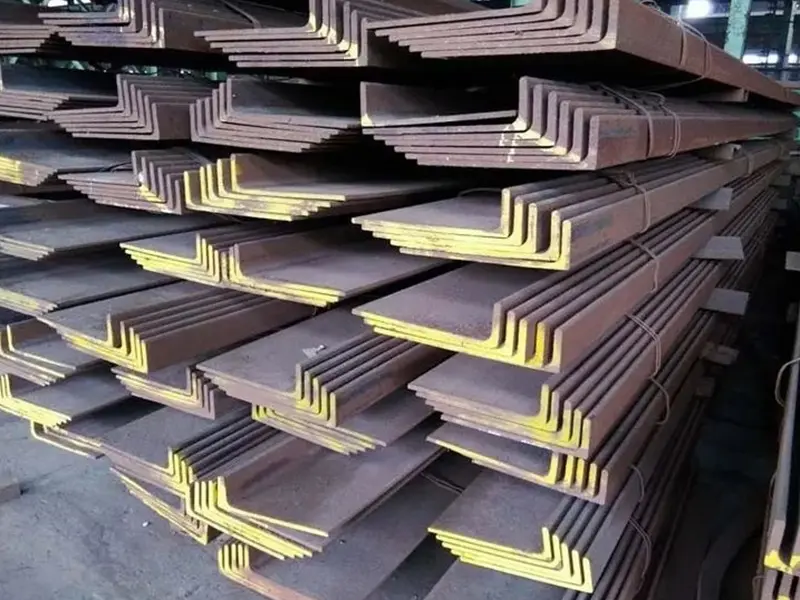
I have seen shipyards switch from spot buying to LTAs. The difference is night and day. They stop worrying about price spikes. They stop chasing deliveries. They focus on building vessels. Let me walk you through why LTAs are not just a contract – they are a strategy.
How Do Long‑Term Agreements Lock in Stable Pricing and Protect Against Market Volatility?
Steel prices jumped 30% last year. Your spot supplier raised your price immediately. Your project budget broke.
Under an LTA, you and the supplier agree on a fixed price or a formula for 6‑12 months. When the market spikes, your price does not change. When the market drops, you may pay a little more – but you never face sudden, budget‑breaking increases.
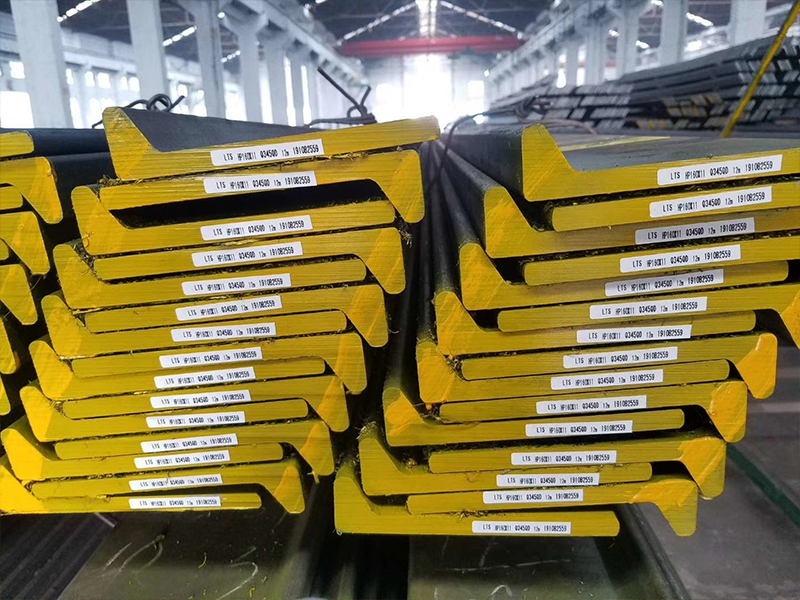
The client who saved $120,000 in one market spike
I had a client in Malaysia who signed a 12‑month LTA with me for 800 tons of bulb flat steel at a fixed price of $660/ton. Six months in, the market spiked to $780/ton. He saved $120/ton on the remaining 400 tons – $48,000. The next year, prices dropped to $630/ton. He paid $30/ton more than the spot price on 800 tons – $24,000 extra. But over the two years, his net saving was $24,000. Plus, he never had to explain a budget overrun to his management.
So let me break down the pricing mechanisms.
First, the two main types of LTA pricing.
| Pricing Type | How It Works | Best For |
|---|---|---|
| Fixed price | Price stays the same for the entire contract period (e.g., $650/ton) | Short contracts (6‑12 months), stable market expectations |
| Formula pricing | Price = base + raw material index adjustment (e.g., iron ore + coal) | Long contracts (2‑3 years), both sides share risk |
Second, how price stability protects your project budget.
| Scenario | Spot Buyer | LTA Buyer |
|---|---|---|
| Market price at contract signing | $650 | $650 (LTA price) |
| 3 months later: spike to $800 | Pay $800 on new orders | Still pay $650 |
| 6 months later: drop to $600 | Pay $600 on new orders | Still pay $650 (but contract end is near) |
| Budget predictability | Low – changes every order | High – fixed for contract period |
Third, what you give up for price stability. Suppliers offer stable prices in exchange for volume commitment.[web:1][web:4]
| Your Commitment | Typical Price Stability |
|---|---|
| 6‑month LTA, 50 tons/month | Fixed price for 6 months, ±5% tolerance |
| 12‑month LTA, 100 tons/month | Fixed price for 12 months, or formula with cap |
| 24‑month LTA, 150 tons/month | Formula pricing with floor and ceiling |
Fourth, the cost of market volatility without an LTA. I tracked a spot buyer over 18 months.
| Quarter | Market Price ($/ton) | Tons Bought | Total Cost |
|---|---|---|---|
| Q1 | 640 | 200 | 128,000 |
| Q2 | 710 | 250 | 177,500 |
| Q3 | 780 | 200 | 156,000 |
| Q4 | 650 | 300 | 195,000 |
| Q1 next year | 590 | 250 | 147,500 |
| Total | Average 678 | 1,200 | 804,000 |
With an LTA at $660 fixed, the same 1,200 tons would cost $792,000 – a saving of $12,000. And the buyer had no budget surprises.[web:1][web:7]
Your price stability checklist
- You understand the two pricing models (fixed vs formula)
- You have a volume commitment that justifies price stability
- You agree on price adjustment triggers (e.g., raw material index)
- You know the notice period for price changes (if any)
I offer fixed pricing for 6‑12 months to my long‑term partners. It gives them peace of mind.
Why Do Mills Give Production Priority and Shorter Lead Times to Buyers with Annual Contracts?
A spot buyer calls for steel. The mill says "6 weeks." An LTA buyer calls. The mill says "3 weeks."
Mills have limited production capacity. They reserve slots for buyers who commit to volume. When demand is high, spot orders get pushed back. LTA orders go to the front of the line. This means shorter and more predictable lead times for you.
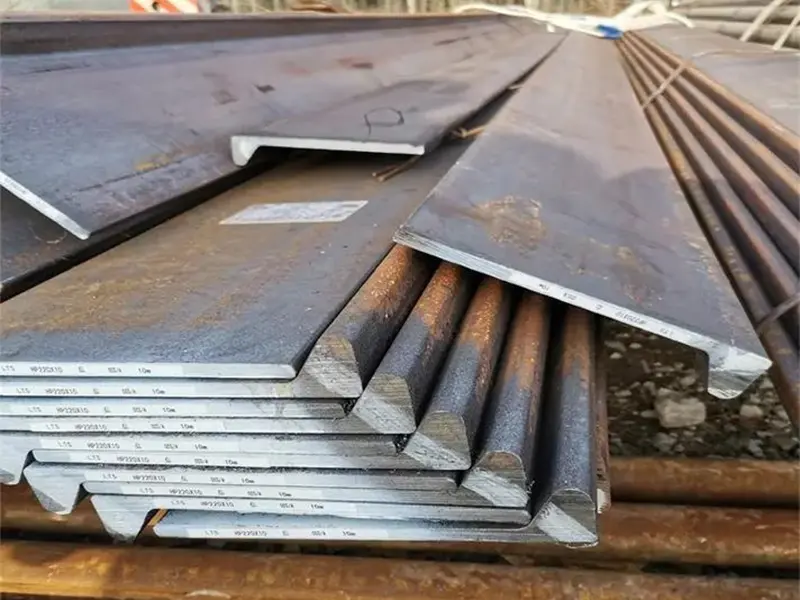
The LTA that cut lead time from 50 to 28 days
A shipyard in Thailand used to buy bulb flat steel spot from various traders. Lead time ranged from 35 to 55 days. Then they signed a 12‑month LTA directly with a mill (through me). The mill reserved a monthly rolling slot. Lead time dropped to 25‑30 days consistently. The shipyard could finally plan its fabrication schedule with confidence.
So let me explain how priority works.
First, how mills allocate capacity.
| Customer Type | Priority Level | Lead Time (peak demand) | Lead Time (normal) |
|---|---|---|---|
| 24‑month LTA with high volume | Highest | 15‑20 days | 15‑20 days |
| 12‑month LTA with medium volume | High | 20‑25 days | 20‑25 days |
| 6‑month rolling forecast, no commitment | Medium | 30‑40 days | 25‑30 days |
| Spot buyer, no LTA | Low | 40‑60 days | 30‑35 days |
Second, what LTA buyers get that spot buyers do not.
| Benefit | Spot Buyer | LTA Buyer |
|---|---|---|
| Reserved mill slot | No | Yes – monthly |
| Shorter lead time | 35‑55 days | 20‑30 days |
| Lead time consistency | ±15 days | ±5 days |
| Ability to expedite | Unlikely | Possible (within slot) |
| Notice of delays | Short (if any) | Long (mills inform LTA buyers first) |
Third, a real example of lead time improvement with LTA.
| Order | Spot Buyer Lead Time (days) | LTA Buyer Lead Time (days) |
|---|---|---|
| 1 | 38 | 28 |
| 2 | 52 | 30 |
| 3 | 45 | 27 |
| 4 | 60 | 29 |
| Average | 49 | 28.5 |
The LTA buyer saved 20 days on average. That is 3 weeks of fabrication time recovered.
Fourth, how to negotiate priority into your LTA. When you sign, include a clause like:
"Supplier agrees to reserve [X] tons per month of mill production capacity for Buyer’s orders. Lead time shall not exceed [Y] days from order confirmation to shipment. Supplier shall notify Buyer of any potential delay at least [Z] days in advance." [web:23][web:30]
I accept these terms. My LTA clients get priority.
Your production priority checklist
- Your LTA includes a reserved capacity or priority clause
- You have a guaranteed maximum lead time in the contract
- The supplier has a clear process for notifying delays
- You know the supplier’s mill and can verify capacity
How Does a Long‑Term Partnership Ensure Batch-to-Batch Quality Consistency Across Multiple Projects?
Every time you order from a different spot supplier, you get different mill, different rolling parameters, different quality.
Under an LTA, you work with the same mill through the same supplier. The production process is stable. Your fabricators learn the material’s behavior. Rework drops.
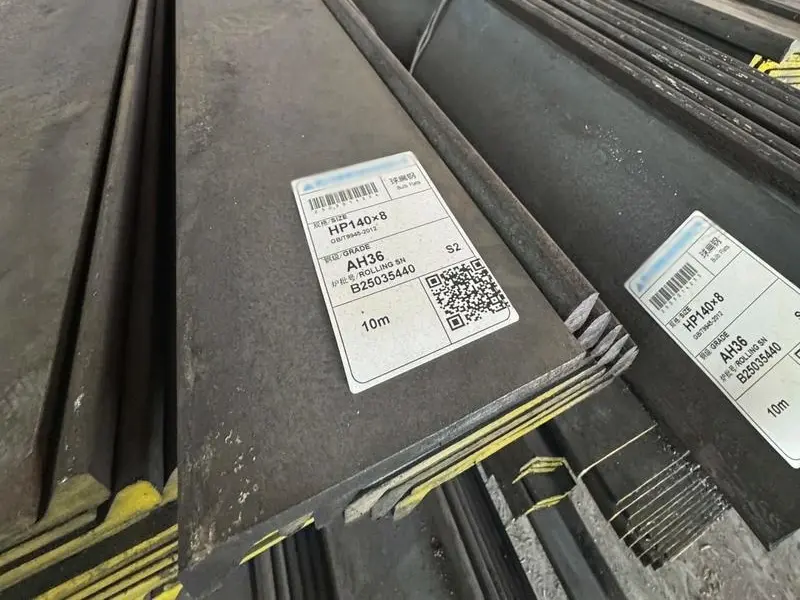
The LTA that ended my client’s fit‑up problems
A shipbuilder in Vietnam built a series of 6 vessels. For the first 2 vessels, he used spot suppliers. Each vessel had different bulb flat dimensions – not hugely different, but enough that his welding robot needed re‑calibration. For vessel 3, he signed an LTA with me. I used the same mill, same rolling parameters, same tolerance checks. Vessels 3‑6 had identical steel. No robot re‑calibration. Fit‑up time dropped by 15%.
So let me explain why consistency improves with LTAs.
First, sources of batch variation that LTAs eliminate.
| Variation Source | Spot Buying | LTA (Same Mill) |
|---|---|---|
| Mill source | Changes every order | Same mill |
| Rolling parameters | Unknown, may vary | Fixed and documented |
| Chemistry | Different heat numbers, different ranges | Same mill’s consistent range |
| Tolerance interpretation | Each mill has its own "standard" | Same QC team, same gauges |
Second, how LTA quality is documented and enforced.
| Document | What It Shows | LTA Benefit |
|---|---|---|
| Mill Test Certificate (MTC) | Chemistry and properties per batch | Same mill, same format, comparable over time |
| Dimensional records | Actual measurements | Build a history; spot outliers |
| Third‑party inspection | Independent check | Can be done periodically, not every order |
Third, the cost of inconsistency avoided by LTAs.
| Inconsistency Type | Cost per 100 tons | With LTA (consistent) |
|---|---|---|
| Dimensional rework (grinding, shimming) | $800‑2,000 | Near zero |
| Welding parameter adjustments | $500‑1,500 | Zero after first batch |
| Quality inspection and testing | $300‑800 | Reduced (spot check only) |
| Production delay | $2,000‑10,000 | None |
Fourth, a real example: two yards – one with LTA, one without.
| Metric | Yard A (No LTA) | Yard B (LTA with same supplier) |
|---|---|---|
| Number of mills used in 2 years | 5 | 1 |
| Dimensional variation (bulb height) | ±1.4mm | ±0.3mm |
| Welder complaints per month | 8 | 1 |
| Rework hours per 100 tons | 12 | 3 |
Your batch consistency checklist
- Your LTA specifies the mill to be used
- Tolerances are written into the contract (tighter than standard)
- You receive batch‑specific dimensional records for every delivery
- You have a process to reject and replace inconsistent batches
I guarantee consistency in my LTAs. My clients trust that every batch will be the same.
What Strategic Advantages Do Shipyards Gain in Forecasting, Inventory, and Risk Reduction with LTAs?
You guess your steel needs for the next 6 months. You order safety stock just in case. You tie up capital.
With an LTA, you share a rolling forecast with your supplier. The supplier reserves capacity and may even keep stock for you. You reduce your safety stock. You free up working capital. And you eliminate most supply risks.
The yard that cut inventory by 40% with an LTA
A shipyard in the Philippines had 800 tons of bulb flat steel in stock. They kept that much because lead times were unpredictable. Then they signed a 12‑month LTA with a supplier who held stock for them. Lead time became a reliable 25 days. They reduced their safety stock to 450 tons. That freed up 350 tons of steel value – about $245,000 – that could be used elsewhere.
So let me show you the strategic advantages.
First, forecasting accuracy improves with LTA.
| Forecast Horizon | Without LTA (spot) | With LTA |
|---|---|---|
| 1 month | ±40% accuracy | ±15% |
| 3 months | ±60% | ±25% |
| 6 months | ±80% | ±40% |
Why? Because you know the supplier will be there. You are not guessing whether you can get steel.
Second, inventory reduction.
| Inventory Type | Without LTA | With LTA |
|---|---|---|
| Safety stock (to cover lead time uncertainty) | High (6‑8 weeks) | Low (2‑3 weeks) |
| Buffer for supplier changes | High | None |
| Total inventory value (per 1,000 tons/year) | $700,000 | $450,000 |
| Working capital freed | – | $250,000 |
So let me break down the pricing mechanisms.
First, the two main types of LTA pricing.
| Pricing Type | How It Works | Best For |
|---|---|---|
| Fixed price | Price stays the same for the entire contract period (e.g., $650/ton) | Short contracts (6‑12 months), stable market expectations |
| Formula pricing | Price = base + raw material index adjustment (e.g., iron ore + coal) | Long contracts (2‑3 years), both sides share risk |
Second, how price stability protects your project budget.
| Scenario | Spot Buyer | LTA Buyer |
|---|---|---|
| Market price at contract signing | $650 | $650 (LTA price) |
| 3 months later: spike to $800 | Pay $800 on new orders | Still pay $650 |
| 6 months later: drop to $600 | Pay $600 on new orders | Still pay $650 (but contract end is near) |
| Budget predictability | Low – changes every order | High – fixed for contract period |
Third, what you give up for price stability. Suppliers offer stable prices in exchange for volume commitment.[web:1][web:4]
| Your Commitment | Typical Price Stability |
|---|---|
| 6‑month LTA, 50 tons/month | Fixed price for 6 months, ±5% tolerance |
| 12‑month LTA, 100 tons/month | Fixed price for 12 months, or formula with cap |
| 24‑month LTA, 150 tons/month | Formula pricing with floor and ceiling |
Fourth, the cost of market volatility without an LTA. I tracked a spot buyer over 18 months.
| Quarter | Market Price ($/ton) | Tons Bought | Total Cost |
|---|---|---|---|
| Q1 | 640 | 200 | 128,000 |
| Q2 | 710 | 250 | 177,500 |
| Q3 | 780 | 200 | 156,000 |
| Q4 | 650 | 300 | 195,000 |
| Q1 next year | 590 | 250 | 147,500 |
| Total | Average 678 | 1,200 | 804,000 |
With an LTA at $660 fixed, the same 1,200 tons would cost $792,000 – a saving of $12,000. And the buyer had no budget surprises.
Your forecasting and risk reduction checklist
- You share a rolling 6‑month forecast with your LTA supplier
- You have reduced safety stock based on reliable lead times
- Your LTA includes a risk‑sharing mechanism (e.g., force majeure, alternative sourcing)
- You review the LTA annually to adjust volumes and terms
Conclusion
Long‑term supply agreements lock in price stability, secure mill priority, ensure batch consistency, and reduce inventory and risk. For bulb flat steel, LTAs are a strategic necessity, not just a contract.