
I once reviewed a ship design where the frame was too heavy, hurting fuel efficiency. The designer used the wrong steel section. That day, I learned that smart material choice is the first step to a great ship design. L-shaped steel is a key player in this process.
You can optimize ship design by strategically using marine L-shaped steel for structural framing, brackets, and reinforcements. Its shape provides excellent strength-to-weight ratio and torsional stiffness, allowing for lighter, stronger, and more efficient hull and deck structures without compromising safety or integrity.
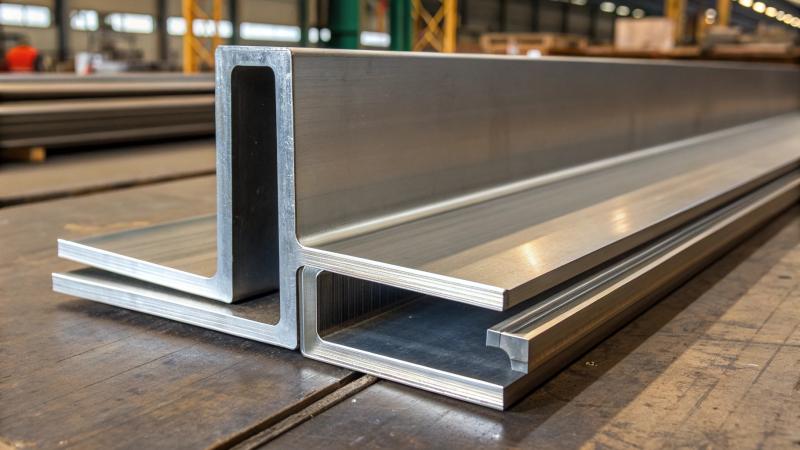
Knowing L-shaped steel is useful is just the beginning. To truly optimize, you need to understand its details, its best applications, and how it connects. Let’s look at the fundamental questions that shape better design decisions.
What is L-shaped steel called?
If you ask for "L-shaped steel" at a shipyard, you might get a confused look. The industry uses specific names. This simple naming issue can cause delays in sourcing and misunderstandings in design discussions.
L-shaped steel is most commonly called "angle steel1" or "angle bar." In marine and structural engineering, it is formally known as "equal leg angle2" or "unequal leg angle3e](https://cnmarinesteel.com/unequal-l-shaped-steel-sizes-applications-and-benefits/)[^2]," based on the dimensions of its two perpendicular legs. The standard designation, like L 100x100x12, describes its shape and size.
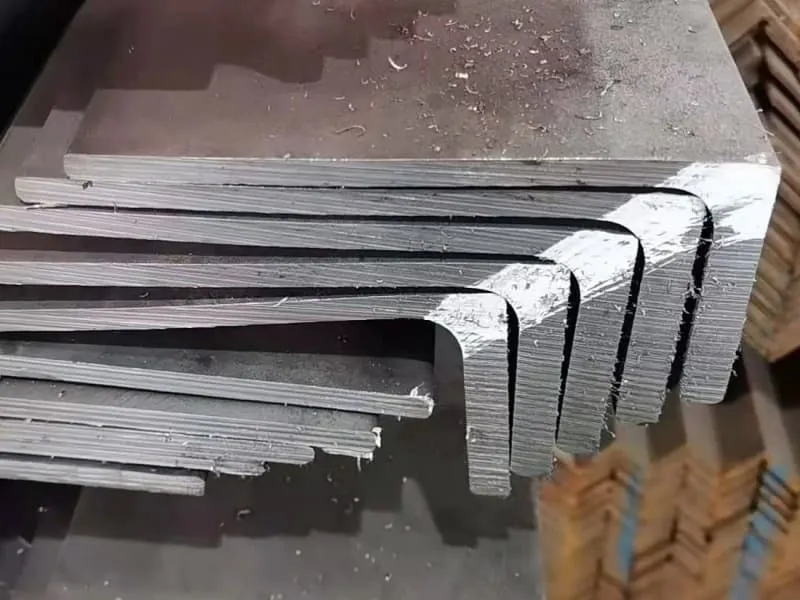
The name tells you more than just the shape. It gives you the first key to optimization: selecting the right profile for the job. Let’s break down what these names mean for your design.
Decoding the Names for Smart Selection
The most basic split is between equal and unequal angles. An equal leg angle2, like L 80x80x8, has legs of the same length (80mm) and the same thickness (8mm). This symmetry makes it very versatile. We see it used everywhere in shipbuilding for standard frames, stiffeners, and secondary support structures. Its balance is good for loads coming from multiple directions.
The unequal leg angle3e](https://cnmarinesteel.com/unequal-l-shaped-steel-sizes-applications-and-benefits/)[^2], like L 150x90x10, is a more specialized tool. One leg is longer (150mm) than the other (90mm). This is a design optimizer’s secret. You can use the longer leg for a bigger attachment surface or for greater strength in one primary direction, while the shorter leg saves weight and material. Think of a bulkhead stiffener where you need strong vertical support but want to minimize the footprint on the plating.
The naming system itself is an optimization code. L 100x100x12 breaks down like this:
- L: The shape (Angle).
- 100×100: The leg lengths in millimeters. This tells you it’s an equal angle.
- 12: The thickness in millimeters.
For marine use, the name gets another layer. You will see prefixes like "AH" or "DH" for higher strength grades, or references to standards like ABS Grade AH364 or LR Grade A. This tells you about the steel’s chemistry and mechanical properties, which are critical for withstanding corrosive seawater and dynamic loads.
Choosing the right "name" is the first design choice. A heavier, equal angle might be perfect for a main deck edge. A lighter, unequal angle could be the best choice for non-critical interior partitioning, saving crucial weight. As a supplier, my job starts with helping clients and designers translate their stress calculations and spatial constraints into the correct, most efficient angle steel1 designation for procurement.
What is the best steel for marine use?
There is no single "best" steel. Asking this is like asking for the best tool without saying if you’re building a house or fixing a watch. The best steel is the one that perfectly balances strength, toughness1, weldability, and corrosion resistance for your specific ship part and operating environment.
The best steel for marine use is corrosion-resistant2, high-strength steel graded and certified by a major classification society like ABS, DNV, LR, or BV. Common grades include A, B, D, E for normal strength, and AH32, DH36, EH40 for high strength, where the letter indicates impact toughness at low temperatures.
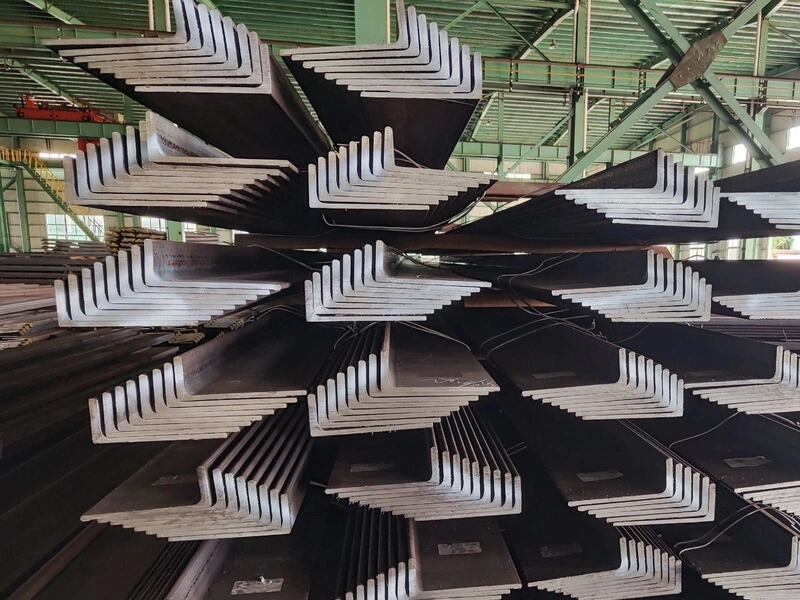
The "best" choice is a series of trade-offs. Let’s examine the key properties and how they interact, so you can make an informed decision for each component on your drawings.
The Optimization Triangle: Strength, Toughness, Corrosion
Ship design is a constant battle against three enemies: weight, the corrosive sea, and extreme forces. The steel you choose is your main weapon.
First, consider strength-to-weight ratio3. High-strength steels (like AH36, DH40) allow you to use thinner sections to achieve the same structural strength. This directly reduces the ship’s weight, which improves fuel efficiency and increases cargo capacity. For the main hull framing of a large container ship or bulk carrier, this is often the primary driver. However, higher strength can sometimes come with challenges in welding and fabrication, which increases cost.
Second, and critically for safety, is toughness1, especially at low temperatures. A steel can be very strong but brittle in cold waters, like the North Atlantic. The "grade" letters (A, B, D, E, F) in classification society standards4 primarily indicate this impact toughness1. Grade A is for general use above 0°C. Grade D is for service down to -20°C. Grade E and F are for Arctic conditions. Choosing a higher toughness1 grade than necessary adds cost without benefit for a coastal tug in the Gulf of Mexico. But under-specifying it for an oil tanker in Northern Europe is a severe safety risk.
Third is corrosion resistance. Marine steel is almost always made with added elements like copper, chromium, and nickel to improve its resistance to rust. Some projects use "weathering steel" for certain above-deck structures. The most common and cost-effective approach is to use certified marine steel5 with a proper paint or coating system. The steel’s chemical composition must be compatible with this system.
Here is a simple table to guide initial selection for different ship parts:
| Ship Component | Primary Concern | Recommended Steel Grade Focus | Why This is "Best" Here |
|---|---|---|---|
| Outer Hull Plating | Strength, Corrosion, Toughness | High Strength (AH/DH36+), Grade D/E | Handles wave impact, water pressure, and low seawater temperatures. |
| Main Deck Structures | Strength-to-Weight, Fatigue | High Strength (AH32/36) | Reduces top-side weight, resists constant loading/unloading cycles. |
| Internal Bulkheads | Fire Division, General Support | Normal Strength (Grade A/B) | Cost-effective for non-primary structural walls inside the controlled environment. |
| Ballast Tanks | Extreme Corrosion, Fatigue | Grade D/E with dedicated coating | Must withstand the corrosive combination of water, air, and microbes. |
In my work with clients from Saudi Arabia to the Philippines, the final choice always comes down to the class rules, the ship’s intended trade route, and the total project budget. The "best" steel is the one that meets all regulatory and safety requirements at the optimal economic point for the shipowner.
What is the L shape steel connection?
An L-angle is strong on its own, but its real power in ship design comes from how you connect it. A poorly designed connection is the weakest link. I’ve seen failures start not at the beam, but at a badly welded bracket.
An L-shape steel connection1 refers to how the angle is joined to other members, typically using welding, bolting, or a combination. In shipbuilding, fillet welding along the toe of the angle leg to a plate or another section is the most common method, creating strong and continuous structural joints.
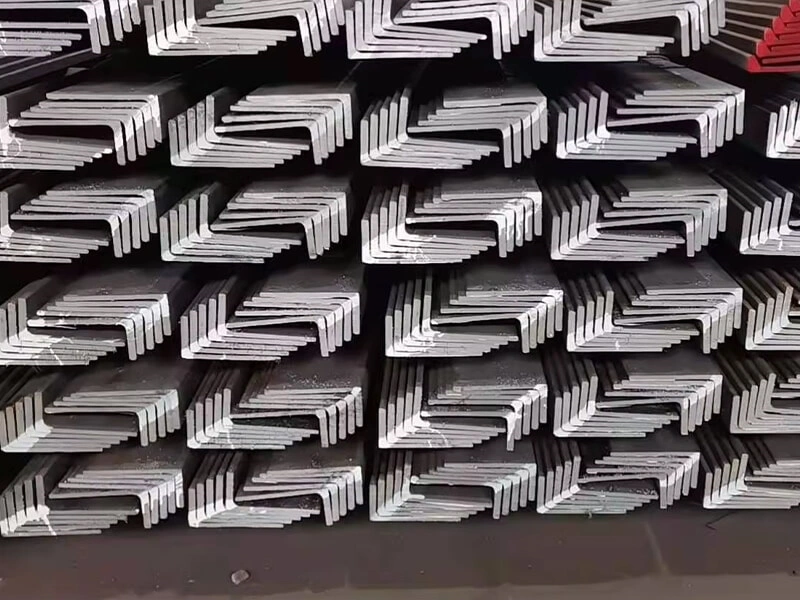
Connections are where theory meets practice. A good connection transfers force efficiently. A great connection also considers fabrication cost, inspection access, and future maintenance.
Designing Connections for Strength and Buildability
The primary goal of any connection is to transfer load from one member to another without failing. For L-angles, the geometry of the shape gives us two main connection faces: the two legs. You can attach one leg to a plate (like a hull or deck), leaving the other leg free to support another member or provide stiffness. This is called a "seat" or "attachment" connection.
The most critical connection in shipbuilding is the frame-to-hull connection. Here, one leg of the angle (the "web") is welded perpendicularly to the hull plating. The other leg (the "flange") runs parallel to the plating, adding bending stiffness. The length and thickness of the weld along the toe of the web leg determine the joint’s strength. Designers must calculate the required weld size (e.g., a 6mm continuous fillet weld) to handle the shear forces.
But optimization goes beyond basic strength. We must think about constructability2. Can a welder easily access both sides of the joint? If not, you might need to specify a partial penetration weld from one side, which requires stricter procedure qualification. Using bolted connections for some pre-fabricated modules can speed up yard assembly, but bolts add weight and require careful corrosion protection.
Another key consideration is stress concentration3. The end of an angle where the weld stops is a natural stress riser. Good design practices, like wrapping the weld around the end of the angle or using a "scallop" (a curved cut-out at the end), help distribute stress more evenly and prevent cracking.
From a procurement and supply perspective, connection design affects what we supply. If a design calls for many complex, mitred connections where angles meet at corners, it increases fabrication complexity and waste. Sometimes, we work with designers and fabricators to see if standard lengths with simple connections can achieve the same goal more efficiently. The best connection design is simple, strong, easy to inspect, and uses standard, readily available materials.
What is L in structural steel?
In structural engineering and ship design, "L" is more than a letter. It is a symbol for efficiency. The L-shape takes a flat plate and bends it into a form that naturally resists bending in two directions. This simple geometric transformation creates a highly efficient structural component.
In structural steel, "L" stands for "Angle," representing an L-shaped cross-section1. It is a standard rolled steel section with two legs (flanges) at a 90-degree angle. The "L" designation is used in sizing codes (e.g., L4x4x1/2) to denote this specific and widely used profile.
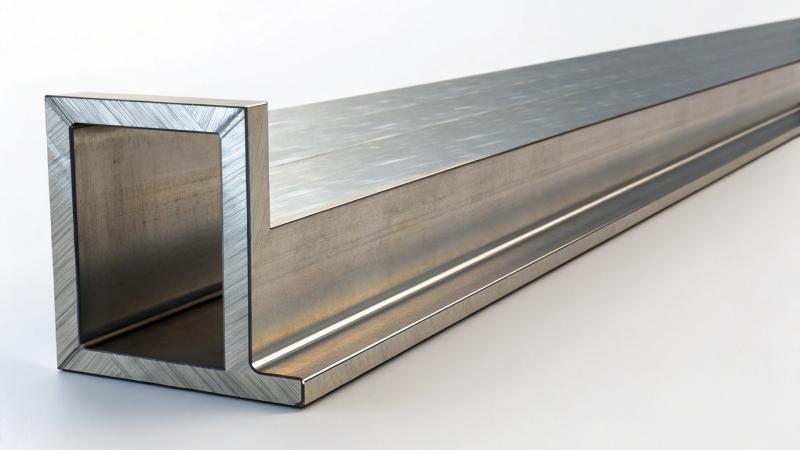
Understanding why the "L" shape is so fundamental helps you appreciate its role as a design optimization tool. Let’s compare it to other shapes to see its unique place.
The Unique Role of the L-Section in the Structural Family
Structural members come in various shapes: I-beams (wide flange), channels (C), tees (T), tubes (HSS), and angles (L). Each has a primary strength axis. An I-beam is extremely strong in bending along its web but weak in torsion. A tube is strong in all directions but is closed, making connections and internal corrosion control harder.
The L-angle2 occupies a special niche. Its open shape makes it very easy to connect to flat surfaces using welding or bolting. This is its biggest advantage in complex structures like ships, where thousands of connections must be made to curved hull plates.
The L-shape provides good torsional stiffness3—resistance to twisting—compared to a flat bar of the same weight. This is why angles are preferred for edge stiffeners on plates that might experience racking forces.
However, the L-angle2 also has a key characteristic: its principal axes4 (its strongest bending directions) are not aligned with its legs. They are at a 45-degree angle to the legs. This means a single equal-leg angle is almost equally strong against bending forces coming from any direction in its plane. This makes it an excellent choice for bracing members5 in trusses or for brackets that must handle loads from varying directions.
Here’s how it compares to other common sections for typical shipbuilding tasks:
| Structural Section | Best For | Limitation | Why L-Angle Might Be Better |
|---|---|---|---|
| Flat Bar | Simple stiffeners, small brackets. | Very weak in torsion, can buckle easily. | L-angle2 has much higher torsional and buckling resistance for similar weight. |
| I-Beam / H-Beam | Primary girders, long-span deck beams. | Complex/expensive connections to plating; overkill for secondary framing. | L-angle2 is simpler, lighter, and cheaper for frames, braces, and secondary support. |
| Channel (C-Section) | Longer, lightweight purlins or framing where one side needs to be open. | Asymmetric; can be prone to twisting if not properly restrained. | L-angle2 is simpler to fabricate and connect for most bracketing and stiffening jobs. |
| Tube (HSS) | Columns, roll-over protection, high-torsion applications. | Difficult to weld to plates; interior corrosion is a hidden risk. | L-angle2 is far easier to weld inspect, and allows for air circulation, reducing hidden corrosion. |
In summary, the "L" is the workhorse of secondary ship structure. It is not always the absolute strongest option for a single, specific load. But its combination of adequate strength, excellent connectivity, torsional resistance, and cost-effectiveness makes it the default optimized choice for countless applications from the engine room to the deckhouse.
Conclusion
Optimizing ship design starts with knowing your materials. Marine L-shaped steel, when selected and connected wisely, is a powerful tool for building lighter, stronger, and more efficient vessels.
-
Explore this link to understand the significance of L-shaped cross-sections in enhancing structural efficiency. ↩ ↩ ↩ ↩ ↩ ↩ ↩ ↩
-
Understand the unique advantages of L-angles in structural applications and their role in design optimization. ↩ ↩ ↩ ↩ ↩ ↩ ↩ ↩ ↩ ↩
-
Learn about torsional stiffness and its importance in structural design for better performance and safety. ↩ ↩ ↩ ↩ ↩
-
Discover how principal axes affect the strength and performance of structural components in engineering. ↩ ↩ ↩
-
Find out how bracing members contribute to stability and strength in various structures. ↩ ↩