
Missing certificates stall marine angle steel shipments at customs. A delayed vessel costs money every day. This checklist shows which documents to demand and how to verify each one.
An international marine angle steel order needs five core documents: an EN 10204 3.1 mill test certificate, classification society approval, a commercial invoice, a packing list, and a certificate of origin. Match every heat number on paper to the steel itself before you accept the delivery.

I handle export paperwork for marine angle steel orders going to Vietnam, Qatar, Saudi Arabia, Mexico, and beyond. Most of the problems I see are not steel problems. They are paper problems. A bar that measures perfectly and tests beautifully can still sit in a bonded yard for two weeks because one document did not say what the customs officer expected. So before we talk about grades and tolerances, I want to walk you through the document set the way I build it for our own clients, one paper at a time, and show you where each one usually goes wrong.
Which Documents Must Every Marine Angle Steel Order Include?
Buyers often assume the mill handles the paperwork. It does not. One missing document at the destination port can hold a full container until demurrage eats your margin.
Every marine angle steel export file should carry five documents: an EN 10204 3.1 mill test certificate, a classification society certificate, a commercial invoice, a packing list, and a certificate of origin. Bulk vessel shipments also need the bill of lading and, when the contract says so, a third-party inspection report.
The Mill Test Certificate Comes First
The mill test certificate, usually called the MTC, is the identity card of your steel. For marine angle steel the document you want is an EN 10204 Type 3.1 inspection certificate. It reports the actual chemical analysis and mechanical test results for the specific heat that was rolled into your bars, and it is validated by an inspection representative at the mill who is independent of the production department. A 2.2 test report is not the same thing. It covers non-specific results from similar production, not your heat, and classification surveyors will not accept it for hull structural material.
A proper 3.1 certificate for marine angle steel lists the heat number, the grade and standard, the chemical composition including carbon, manganese, silicon, phosphorus, and sulphur, the yield strength, tensile strength, elongation, and the Charpy V-notch impact results at the temperature your grade requires. It also states the delivery condition, for example as-rolled or normalized, and carries the mill name, an authorized signature, and a stamp. When we supply angle steel to a project contractor in Romania or a distributor in Qatar, the proforma invoice states clearly that the price includes an EN 10204 3.1 certificate for every heat. That single line in the contract saves more arguments than any other sentence I write.
Ask for a draft scan of the certificate before the steel leaves the mill. Any supplier who controls its supply chain can produce a draft within days. If the answer is “you will get the certificate with the goods”, treat that as a warning, not as normal.
Classification Society Papers Close the Loop
The second document is the classification society certificate. Shipyards build under class rules, so the steel in the hull must come from a mill approved by the relevant society: ABS, DNV, LR, BV, KR, CCS, or others depending on the vessel’s registry. The grade on the certificate must match the grade in your purchase order, and the naming must be consistent. An ABS order should say AH36, a DNV order may show VL AH36, a KR order may show KAH36. Same steel family, different society shorthand. If your drawing says one society and the certificate says another, stop and align the paperwork before shipment, because the yard’s surveyor will check exactly that.
One practical note from our side: we hold approvals across several societies, but approval lives at the mill, not with the trader. If your supplier cannot name the producing mill, it probably cannot produce a genuine society-backed certificate either. That question, “which mill rolls this?”, filters out weak suppliers faster than any price comparison.
Trade Documents Tie It Together
| Document | Issued by | What it proves | Buyer check before acceptance |
|---|---|---|---|
| Mill test certificate EN 10204 3.1 | Mill QC department | Chemistry and mechanical results for your heat | Heat number matches the stencils on the bars |
| Classification society certificate | ABS / DNV / LR / BV / KR / CCS | Material meets class rules for hull structure | Society stamp and grade name match the purchase order |
| Commercial invoice | Exporter | Price, quantity, grade, Incoterm | Quantity and grade wording match the contract |
| Packing list | Exporter | Bundles, lengths, pieces per bundle | Piece count and bundle marks match the invoice |
| Certificate of origin | Chamber of commerce | The producing country of the steel | Correct HS heading and exporter details |
These five papers travel together and they must agree with each other. I once reviewed a file where the invoice said 9-metre lengths and the packing list said 12-metre. Nothing was wrong with the steel, but the discrepancy froze the buyer’s import declaration for days. Now I cross-check every document pair before any of our marine angle steel shipments leaves Liaocheng, and I recommend your purchasing team does the same. Five papers, ten pairwise comparisons, thirty minutes of checking. That is the cheapest insurance in this trade.
How Do You Verify a Mill Test Certificate Before Accepting the Steel?
A certificate that looks perfect can still be wrong. Fakes, copied heats, and honest mix-ups all exist in this market, and each one fails at a different moment.
Verify an MTC in four steps: confirm it is a true EN 10204 3.1, match the heat number to the marking on the bars, check every chemistry and mechanical result against the standard’s limits, and confirm each required test actually appears on the certificate. Any gap means stop and clarify before shipment.
Start With the Heat Number
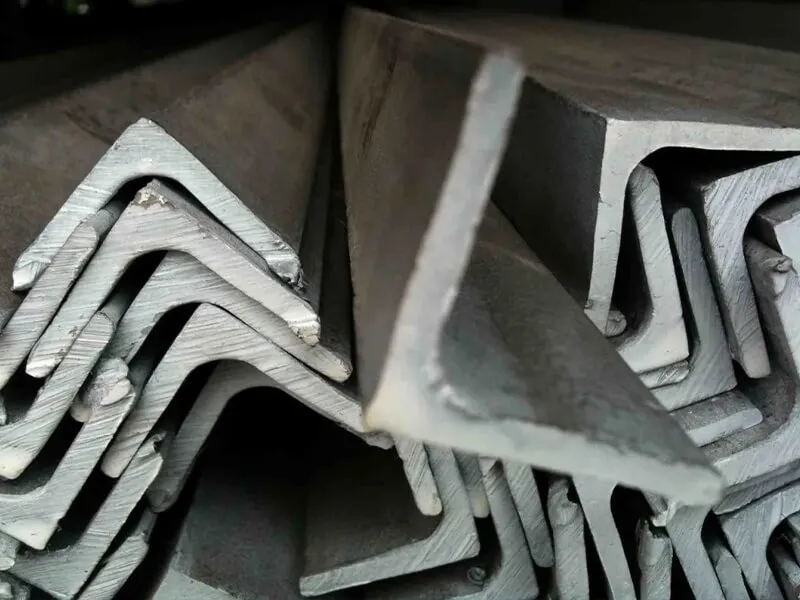
The heat number is the thread that ties paper to steel. Every heat of steel is one melt, one chemistry, one set of test results. The mill stencils or paints the heat number on each bar or bundle, and the certificate must carry the same number. Walk your warehouse team through this: read the stencil on the bundle, find that heat number on the certificate, confirm the grade, the size, and the quantity sitting in front of you are all covered by that heat. When a container is split into partial deliveries, make sure the split still preserves the heat-to-bundle mapping on paper. If the heat number on the steel cannot be found on any certificate, reject the material. There is no version of this where the missing link is acceptable for hull structure.
I stood in our warehouse last month with a visiting surveyor while he chalked heat numbers off bundle tags onto his own sheet, one by one. It took him about forty minutes for a full container. He told me he does this for every steel shipment he witnesses, and in his words, “the mills that object to being checked are the ones you should worry about.” I could not have said it better.
Check Chemistry and Mechanical Results Against the Standard
Next, compare the reported values with the limits in the product standard, not with the limits printed on the certificate itself. The certificate may show a result with no limit column, or quote an older edition of the standard. Pull up the grade table yourself. For normal-strength hull grades the minimum yield is 235 MPa; for AH32 and DH32 it is 315 MPa; for AH36, DH36, and EH36 it is 355 MPa. Impact testing temperature follows the grade letter, and this is where I see the most quiet substitution in the market, so check it line by line.
| Grade | Minimum yield strength | Typical tensile range | Charpy V-notch test temperature |
|---|---|---|---|
| A | 235 MPa | 400–520 MPa | +20 °C when required |
| B | 235 MPa | 400–520 MPa | 0 °C |
| D | 235 MPa | 400–520 MPa | −20 °C |
| E | 235 MPa | 400–520 MPa | −40 °C |
| AH32 | 315 MPa | 440–570 MPa | 0 °C |
| DH32 | 315 MPa | 440–570 MPa | −20 °C |
| EH32 | 315 MPa | 440–570 MPa | −40 °C |
| AH36 | 355 MPa | 490–630 MPa | 0 °C |
| DH36 | 355 MPa | 490–630 MPa | −20 °C |
| EH36 | 355 MPa | 490–630 MPa | −40 °C |
If your drawing calls for DH36, the certificate must show impact results at −20 °C for that heat. An AH36 result with its 0 °C test does not satisfy a DH36 requirement, even though the yield strength is identical. Surveyors check this, and so should you, because once the steel is welded into frames, nobody can retro-test the installed bars. Also confirm the delivery condition, as-rolled or normalized, matches what the class rules require for the thickness you bought. Thicker sections often need normalized delivery, and that requirement is easy to miss in a purchase order that only names the grade.
Know Your Certificate Types
| EN 10204 type | Name | Test results cover | Validated by | Typical use for steel |
|---|---|---|---|---|
| 2.1 | Declaration of compliance | No test results | Mill only | Non-critical fabrications |
| 2.2 | Test report | Non-specific results from similar production | Mill only | General commercial steel |
| 3.1 | Inspection certificate | Specific results for the delivered heat | Mill inspector independent of production | Default for marine structural steel |
| 3.2 | Inspection certificate | Specific results for the delivered heat | Mill plus buyer’s representative or class surveyor | Offshore, pressure, or contract-mandated orders |
Type 3.1 is the working standard for marine angle steel, and 3.2 is the upgrade path when your end client or the vessel’s class demands independent validation. What you cannot do is ask the mill to “upgrade” a 2.2 into a 3.1 after the fact. The document type is decided by who tests and who validates, not by what gets printed later. If a supplier offers a 3.1 that was re-issued from a 2.2, the testing basis never changed, and the certificate is not what it claims.
Red Flags That Should Stop Acceptance
A few patterns tell me a certificate needs a second look. Identical chemistry values copied across different heats. Impact energies reported at a temperature the grade does not require. A certificate with no named inspection representative or no stamp. Test results that sit exactly on the limit for every single element, which real heats almost never do. A PDF with no revision trail that replaces an earlier version without explanation. None of these prove fraud on their own, but each one means you should pause and ask questions while the steel is still at the mill, where fixing things is cheap. After loading, fixing things is never cheap.
What Paperwork Keeps Your Container Moving Through Customs?
Customs does not care how good your steel is. It cares whether the documents in front of the officer agree with each other and with the goods in the box.
Smooth clearance depends on one matching set: invoice value, packing list quantities, bill of lading description, and certificate of origin must all describe the same marine angle steel in the same words. Fix any mismatch before the vessel sails, not after it berths.
The Four Documents Customs Reads First
| Document | Purpose | Issued by | Common cause of clearance delay |
|---|---|---|---|
| Commercial invoice | Declares value for duty and tax | Exporter | Value, currency, or Incoterm differs from the contract |
| Certificate of origin | States the producing country | Chamber of commerce | Wrong HS heading for steel sections |
| Preferential certificate of origin (Form E, RCEP) | Cuts or removes duty under trade agreements | Authorised issuing body | Rules of origin not met or wording inconsistent with invoice |
| Bill of lading | Title document and carriage contract | Carrier | Goods description does not match the invoice |
| Packing list | Physical inventory of the shipment | Exporter | Bundle or piece counts disagree with the invoice or MTC |
The certificate of origin deserves special attention for teams buying from China. A non-preferential COO, issued by the chamber of commerce, simply states the country of production. A preferential certificate under an agreement such as Form E for ASEAN or RCEP for the wider region can reduce the duty your importer pays, but only if the steel genuinely satisfies the rules of origin and every document describes it identically. Our trade team suggests the appropriate certificate on the proforma for buyers in Vietnam and Malaysia, but we always tell them the final call belongs to their customs broker, because each country applies the agreements a little differently. Never let a supplier promise you “the cheap certificate” without checking whether your shipment actually qualifies. A rejected preferential claim at import costs more in penalties than the duty you were trying to save.
Agree the Document List Before You Book the Vessel
The cleanest shipments I run are the ones where the buyer told me the full document list at the quotation stage. When Gulf Metal Solutions in Saudi Arabia first ordered marine angle steel and plate from us, they sent their required document set with the enquiry: EN 10204 3.1 certificates per heat, an SGS pre-shipment inspection, and the standard export file for Dammam port. Nothing was negotiated after booking. Their inspection at the loading port took half a day, the documents matched the goods because the goods were matched to the documents from day one, and the container cleared without a single query. That is what this article is really about. Documentation is not a paperwork chore at the end of a deal. It is a specification you write at the beginning, alongside the grade and the size.
So put the document list into your purchase order template. Name the certificate type, the societies, the inspection body if you want one, and the exact trade documents your broker needs. Send it to the supplier before you sign. A supplier who answers that list quickly and precisely, the way our team tries to answer within hours rather than days, is showing you how the whole order will run. A supplier who dodges the paperwork questions is telling you something too, and it is better to hear it before the steel is on the water.
Conclusion
Demand the five core documents, verify heat numbers against the steel, and fix paperwork before shipment. A clean document set is the cheapest schedule insurance a purchasing team can buy.