
Slow-moving angle steel eats your margin quietly: rust creeps over the top bars, storage fees pile up, and cash sits frozen in bundles nobody needs. Here is how to get your stock moving again.
Marine angle steel inventory turnover is how many times per year you sell and replace your stock — healthy steel warehouses target 6 to 12 turns. Rank every size by turnover, flag anything unsold past 180 days, then work that list through a ladder: re-use, transfer, discount, or scrap.
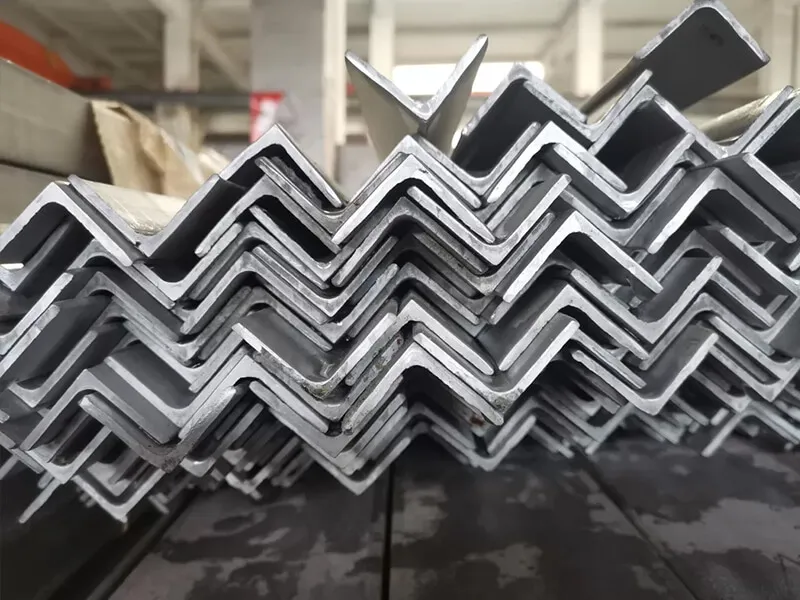
I visit a lot of steel warehouses — our own in Liaocheng, and buyers’ yards in Vietnam, Saudi Arabia, and the Philippines. The warehouses with fast turnover all look the same: labeled rows, clear aisles, bundles dated on arrival. The warehouses with slow-moving stock all look the same too. There is always one corner where the same rusty bundles have been sitting since the last project ended. That corner is where your profit goes to die, so let’s deal with it properly.
What Does Inventory Turnover Actually Mean for Marine Angle Steel?
Most buyers know the term but never calculate it for steel specifically. Generic benchmarks mislead, because marine sections behave differently from fasteners or plate. You need your own numbers before you can fix anything.
Inventory turnover equals cost of goods sold divided by average inventory value. Sell 6,000 tonnes last year against an average stock of 750 tonnes and your turnover is 8 — stock sits about 45 days before it leaves. Below 4 turns, dig into which sizes are stuck.
The Formula, and the Days-On-Hand Number That Matters More
The formula itself is simple. Take your annual cost of goods sold for marine angle steel and divide it by your average inventory value. Use the average of twelve month-end figures, not two snapshots, or a single seasonal spike will distort everything. Then convert it into days on hand: 365 divided by the turnover. I find buyers respond better to days than to ratios. A turn of 8 sounds abstract. “Every bundle sits in my yard about 45 days before it ships” is something you can feel, and you can walk your warehouse and judge whether 45 days looks right for what you see.
Here is a worked example for a mid-size stockist holding both mild and high-strength sections:
| Input | Value | Notes |
|---|---|---|
| Annual COGS (marine angle steel) | USD 4,800,000 | Delivered tonnage × purchase cost |
| Beginning inventory value | USD 700,000 | 1 January count |
| Ending inventory value | USD 500,000 | 31 December count |
| Average inventory value | USD 600,000 | (700,000 + 500,000) ÷ 2 |
| Inventory turnover | 8.0 turns | 4,800,000 ÷ 600,000 |
| Days on hand | ~46 days | 365 ÷ 8 |
| Slow-moving ratio (over 180 days) | 11% of value | The number to attack |
Steel distribution benchmarks put healthy warehouses in the 6 to 12 turn range, and industrial goods analysts usually treat 180 to 365 days without movement as the slow-moving threshold for steel and commodities. But the aggregate ratio is only the first alarm. It is an average, and averages hide tails. You can run a healthy 8 turns overall while 15% of your tonnage has not moved in a year, propped up by a handful of hot sizes flying off the racks.
Why Angle Steel Turns Slower Than Plate
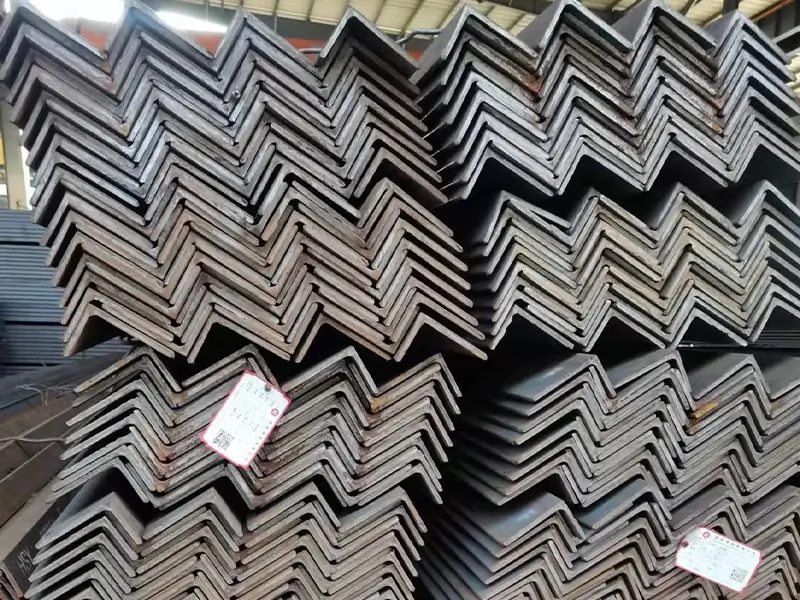
Marine plate moves in project-sized lots against a hull schedule, so its turnover tracks your order book. Angle steel is different. Half of it serves standard frame, bracket, and stiffener work that repeats across almost every vessel, and that half should turn fast. The other half serves odd one-off jobs — a special unequal leg for a deckhouse, an oversize bracket spec for one conversion project. That half is where stock quietly ages. So never judge your warehouse by one blended number. Split the report: standard equal-leg sizes (your L75×75×6, L100×100×10, L125×125×9 type lines) should turn fast, while the tail needs its own supervision. When I walk a yard, I look at the rack labels first. If the arrival dates on the standard sizes are older than the arrival dates on the specials, something is wrong with your picking discipline, because it means the warehouse is consuming the newest bundles and pushing the oldest ones deeper into the rack.
Why Does Marine Angle Steel Turn Into Slow-Moving Stock?
Stock does not become slow by accident. It becomes slow through a handful of repeating causes, and each one leaves a fingerprint you can recognize early — if you know what to look for.
Four causes make most slow marine angle steel: one-off project sizes left after the job ends, certificate-locked grades nobody can substitute, overbuying to fill containers, and remnant lengths stranded by partial bundle consumption. Each leaves an early signal in your purchase orders, so catch it there.
One-Off Project Sizes and the Leftover Problem
The classic pattern: a yard wins a conversion or a barge repair that calls for, say, 38 tonnes of L150×90×10. The mill’s rolling batch or the container economics push the buyer to take 52 tonnes. Fourteen tonnes finish the project with the ship sailing. Nobody wants to move fourteen tonnes of one size at a discount, so it goes on the rack “for the next job” — and there is never a next job for that exact size. I saw this with a buyer in Myanmar [Zora will replace] who had accumulated over 60 tonnes of project leftovers across three years. Every bundle had a story; none of them had a buyer. The fix is not heroic. It is a standing rule: any size purchased for a specific job gets an owner, an expected consumption date, and a review the week the project closes.
Certificate-Locked Grades Freeze Substitution
Angle steel grades do not substitute freely the way people assume. A bundle of AH36 with an LR certificate cannot quietly stand in for a grade A line item on a hull job without the classification society’s approval, and the reverse substitution is even worse — a buyer who holds grade A when the drawing calls for AH36 is holding material that cannot be used at all for that structure. High-strength and mild stock therefore age separately, and your purchasing has to respect that boundary. The early signal is in your order book: if you keep buying both grades because “we always need some of each,” check whether the consumption history actually supports the quantities. Grade-specific safety stock should be sized on grade-specific data, not on a blended tonnage figure, otherwise one grade turns at 10 and the other sits at 2 — and the average hides it.
Container Economics Push You Past What You Need
This is the quietest cause because it looks like good purchasing. Shipping a part container costs proportionally more, so buyers round up: “I need 22 tonnes, a 40-foot container takes about 26, so I’ll take 26.” Four tonnes of overbuy per order does not sound serious until you multiply it across twelve orders a year and three sizes. That is 100+ tonnes of drift, and drift is exactly what becomes slow-moving stock, because it is bought against need plus rounding, not against a plan. The honest way to handle it is to make the rounding deliberate instead of accidental: decide which standard sizes you are willing to round up on (the fast-turning A-class lines), and refuse to round up on anything else — even if the per-tonne freight looks worse on the order confirmation. Freight saved on stock that never moves is not saving.
| Cause | Early signal | First response |
|---|---|---|
| One-off project size | PO tied to a single job number | Assign owner + review date at project close |
| Certificate-locked grade | Grade-specific stock growing vs consumption | Size grade buffers on grade-level data |
| Container rounding-up | Purchases consistently above forecast | Round up only on A-class standard sizes |
| Remnant stranding | Part bundles consumed, tails left | Remnant log with lengths and locations |
What Does Slow-Moving Angle Steel Actually Cost You?
Buyers underestimate this cost because none of it arrives as a single invoice. It arrives as a spread — capital, storage, rework, and scrap — and it compounds the longer the bundles sit.
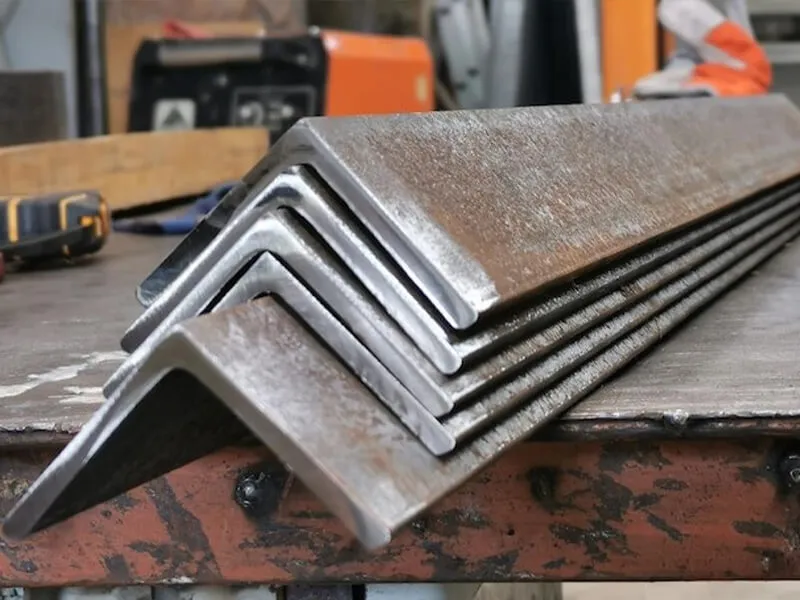
Slow-moving steel typically costs 15 to 30% of its value per year in carrying costs: tied-up capital, storage, insurance, and deterioration. Surface rust starts within months outdoors, and pitting follows after a year — so your aging report must drive action, not sit in a spreadsheet.
The Carrying Cost Nobody Books
Financial guidance across the industry puts inventory carrying cost at roughly 15 to 30% of inventory value annually, combining the cost of capital, warehouse space, handling labor, insurance, and shrinkage. On 200 tonnes of slow-moving marine angle steel worth USD 130,000, the midpoint quietly burns something like USD 26,000 to 39,000 a year — before any rust damage at all. Almost none of this appears on a P&L as a named line, which is why it survives year after year. It shows up instead as “warehouse costs went up” and “we wrote off some steel.” I tell buyers to compute the number once, put it on one page, and show it to whoever approves purchase orders. The conversation changes immediately when the cost of holding is printed next to the cost of the discount you were trying to avoid.
Rust Is a Clock, Not a Coincidence
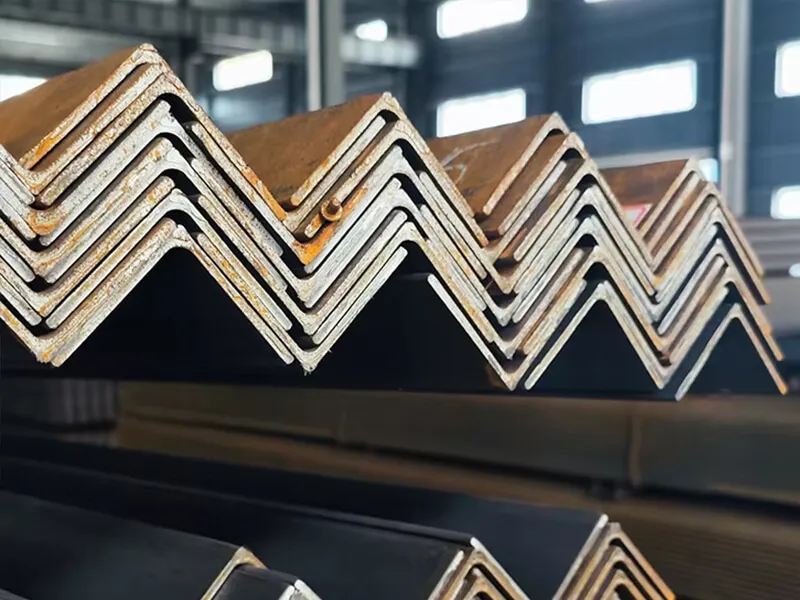
Steel ages in storage on a schedule I have watched many times. Mill-varnished angle steel develops surface rust within a few months in humid coastal storage — my own estimate from bundles we have re-inspected in tropical yards is that visible surface bloom starts around the third or fourth month, and by a full year outdoors, the rust on uncoated tops can progress toward pitting [Zora will replace]. Pitting is the point where the section loses measurable thickness and the material stops being freely usable for critical structural parts. This is why slow-moving stock is not just a finance problem; it is a quality problem with a timer on it. Storage discipline buys you time — dunnage to keep bars off the ground, orientation that sheds water, re-tiling and re-oiling on a fixed cycle — but discipline only slows the clock, it does not stop it. The only real cure is movement.
The cost by aging band looks roughly like this:
| Age band (no movement) | Typical condition | What it costs you | Action required |
|---|---|---|---|
| 0–90 days | Mill varnish intact | Carrying cost only | None — healthy FIFO zone |
| 90–180 days | Light surface bloom possible | Carrying cost + first re-inspection | Re-inspect surface, re-tile, re-oil |
| 180–365 days | Visible rust on exposed faces | Cleaning cost, price erosion | Discount review, active sale push |
| Over 365 days | Pitting risk on uncoated areas | Downgrade or scrap, write-down risk | Decisive disposition, not storage |
Your Records Lie If Nobody Counts
One more cost, and it is the sneaky one. Slow stock is the stock nobody touches, and stock nobody touches is stock nobody counts accurately. Bundles get partially picked, lengths get moved and not logged, and over two years the system quantity drifts away from the physical reality. When you finally go to sell the aging stock, you discover half of it is not the size the system claims. I have watched a stocktake in a Gulf yard go from “we have 34 tonnes of L100×100×8 to offer” to “we actually have 19” in one afternoon. A slow-moving report without a cycle count is a report about numbers that may not exist. Count the slow corner first, precisely because it moves the least and drifts the most.
How Do You Turn Slow-Moving Stock Back Into Cash — and Keep It Moving?
Diagnosis without a decision process just produces a tidy report about rusty steel. What works is a fixed disposition ladder, worked every month, plus three purchasing habits that stop new stock from joining the slow corner.
Run a monthly aging review and force every flagged bundle through a fixed ladder: re-use on an active project, transfer to another site, discount to a fabricator, scrap only last. Then prevent regrowth with FIFO discipline, ABC-based ordering, and lead times short enough that hoarding never makes sense.
The Disposition Ladder, In Order
The ladder matters because buyers skip to the painful options or, worse, postpone all of them. Work it strictly in order of value recovery:
| Rung | Action | Recovery level | Best for |
|---|---|---|---|
| 1 | Re-use on an active project (re-nest against the cut list) | Near full value | Standard sizes + remnant lengths |
| 2 | Transfer to another yard, department, or partner project | Full value internally | Groups sharing one stock pool |
| 3 | Bundle and discount to fabricators or smaller traders | 60–80% [Zora will replace] | Odd sizes, older grades |
| 4 | Return or swap via your supplier | Varies by agreement | Recent overbuys, clean condition |
| 5 | Scrap, with the write-down booked honestly | Scrap value only | Pitted or mixed/untraceable stock |
Two disciplines make the ladder real. First, set the decision deadline: any line on the aging report gets a rung assigned within one month of appearing on it, because hesitation is the single most expensive habit in dead-stock management. Second, mark the scrapped material physically so it cannot creep back into the picking area — a painted band across the bundle, a relocated quarantine rack, whatever your yard can enforce. I have seen “scrap” bundles resurface in a picking list twice; once because nobody marked them, once because somebody optimistically second-guessed the decision.
Prevention: Three Habits That Keep the Corner Empty
Prevention beats disposition every time, and it rests on three habits. First, FIFO with visible dates: every bundle gets its arrival date on the end tag where the crane operator can see it, and picks go to the oldest bundle that meets the spec — not the most convenient one. Second, ABC-based ordering: rank your sizes by consumption value, and let the top 20% of sizes (usually around 80% of value) carry modest buffer stock, while B and C sizes are ordered against firm demand only. The C tail is where slow stock is born, so C sizes get zero standing stock and an order only when a job confirms. Third, compress your lead time so hoarding stops making sense. This is where supplier choice matters more than warehouse technique. When a supplier can confirm stock and load a container within days, you do not need six months of angle steel sitting in your yard as insurance.
That is how we work with our own export customers, and it is what made the Gulf Metal Solutions relationship in Saudi Arabia work so smoothly. They order marine angle steel and plate against a rolling forecast, we hold their confirmed quantities ready in Liaocheng, and each shipment goes out to Dammam on the sailing schedule — so their yard carries weeks of cover, not months. Their feedback was that the packaging and the response speed made them plan a follow-up order for L-shaped steel and bulb flat, which tells you something: buyers stop hoarding when they trust the pipeline. A reliable marine angle steel supplier with short, honest lead times does more for your turnover ratio than any spreadsheet. If you are weighing container versus breakbulk for your next order, our shipping and packing guide covers how that choice drives what you should hold locally.
One last thing I tell every buyer who walks our warehouse with me: look at the bundle end tags, not the racks. The tags tell you whether stock is dated, graded, and traceable, and dated stock is moving stock. The corner with no dates is the corner with your margin buried in it. Dig it out monthly, sell it honestly, and keep the arrivals coming in behind it.
Conclusion
Measure your turnover, split standard sizes from project tails, cost your slow corner honestly, and work every flagged bundle through a fixed monthly ladder. Movement, not storage, preserves steel value.