
Shipbuilding is booming. But steel prices are moving. And buyers are asking: what will change in 2025?
In 2025, China’s marine steel plate exports will grow in Southeast Asia, the Middle East, and Africa. Prices will stay firm due to higher energy and raw material costs. Green certifications like carbon footprint reports will become standard. Shipping routes will shift, with longer lead times but more stable freight rates.
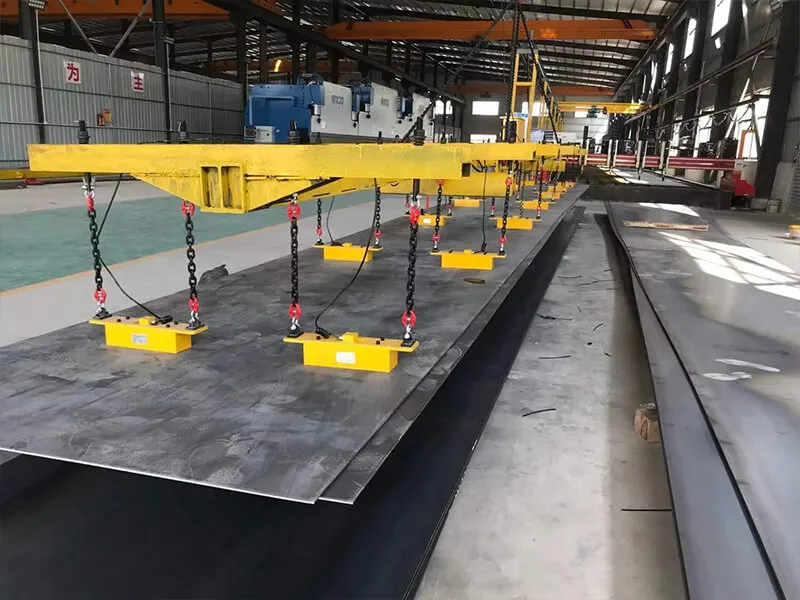
I have been exporting marine steel plates for years. I watch the market every day. My buyers ask me: where should we buy from? what will prices do? how do we plan our inventory? Let me share what I see coming in 2025. These are not guesses. These are trends already starting to show up in my orders and conversations with mills and clients.
Which Countries and Regions Will Drive Marine Steel Plate Demand from China in 2025?
Not every country is buying the same way. Some are growing fast. Others are slowing down.
In 2025, the top demand regions for Chinese marine steel plates1 will be Vietnam2, Mexico3, Saudi Arabia4, Qatar5, Malaysia, and new markets like Nigeria6 and Egypt. Shipbuilding, offshore oil, and port construction will drive the growth.
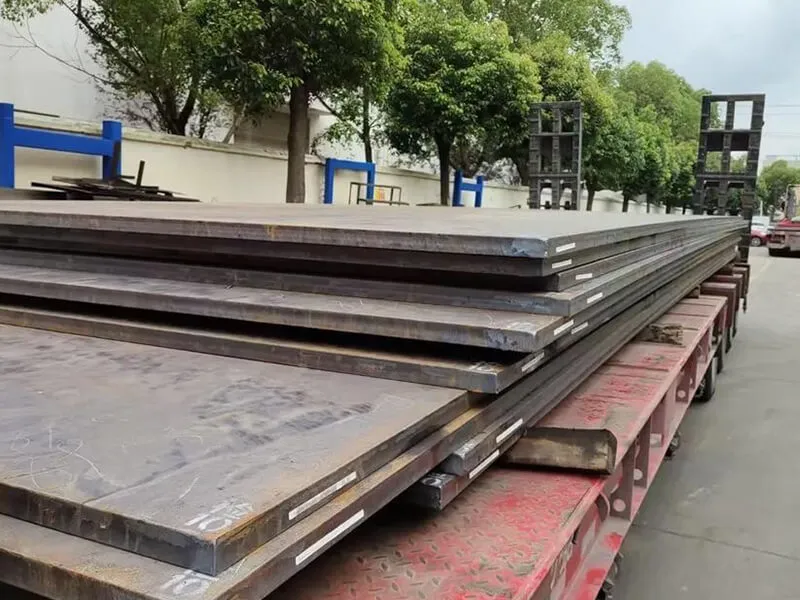
Where my orders are coming from and why
I look at my own sales data. It tells a clear story. Last year, my top five export countries were Vietnam, Saudi Arabia, Mexico, Malaysia, and the Philippines. In 2025, I expect two changes: Qatar will move up, and two African countries will enter the list.
Let me break down the key regions.
First, Southeast Asia – still the biggest market. Vietnam, Malaysia, the Philippines, and Thailand continue to build ships and ports. Vietnam’s shipbuilding industry is growing fast. They are building bulk carriers and container ships for export. I have three regular buyers in Vietnam. They increased their order volume by 30% this year. In 2025, I expect another 20% growth.
| Country | Key Driver | Expected Growth in 2025 |
|---|---|---|
| Vietnam | Shipbuilding for export | +20% |
| Malaysia | Offshore oil and gas platforms | +15% |
| Philippines | Ferry and cargo vessel construction | +10% |
| Thailand | Port expansion projects | +12% |
Second, the Middle East – big projects, big volumes. Saudi Arabia’s Vision 2030 includes shipbuilding and port development. I already supply a contractor there. Qatar is expanding its LNG fleet. They need marine steel plates for new carriers. The United Arab Emirates is also buying, but more for re-export. In 2025, I expect Qatar to become my third-largest market.
Third, North America – Mexico is the surprise. Mexico is not a traditional shipbuilding country. But their ports are expanding. They are also building patrol boats and small vessels. I have two Mexican buyers. One is a wholesaler. One is a fabricator for port equipment. Both increased their orders in 2024. In 2025, Mexico could be my second-largest market.
Fourth, Africa – the new frontier. Nigeria and Egypt are starting to buy directly. Nigeria is building a new shipyard in Lagos. Egypt is expanding the Suez Canal support facilities. These are small volumes now. But the trend is clear. By 2025, Africa will be a regular destination for Chinese marine steel plates.
One of my buyers from Nigeria told me: "We used to buy from European traders. Now we go direct to China. The price is better, and the quality is the same." That is a trend I see accelerating in 2025.
What this means for your sourcing strategy
If you are a buyer in these growing regions, you will see more competition for steel. Prices may rise. Lead times may extend. Plan ahead. Lock in annual contracts with a reliable Chinese supplier. Do not rely on spot buying.
How Will Fluctuating Raw Material Costs and Energy Prices Affect Export Pricing?
Steel prices move like a wave. You cannot stop it. But you can understand it.
In 2025, marine steel plate export prices from China will be influenced by iron ore1 costs, coking coal2 prices, and electricity rates for mills. Prices will stay higher than 2023 levels, with small ups and downs every quarter.
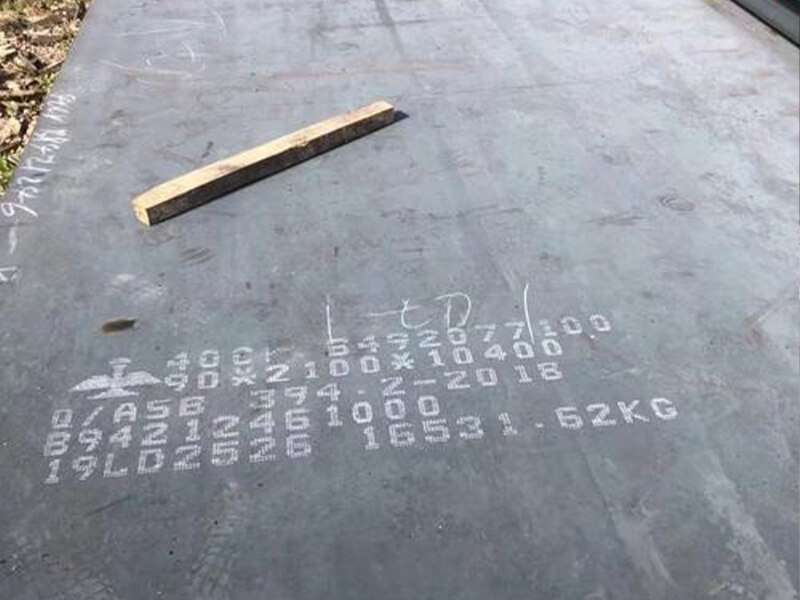
What I tell my buyers about price planning
Every month, my buyers ask: "Will prices go up or down?" I cannot predict the future. But I watch three things. And I share those with my clients.
First, iron ore – the biggest cost driver. Iron ore makes up about 60% of the raw material cost for steel plates. In 2024, iron ore stayed between $100 and $120 per ton. In 2025, I expect it to stay in a similar range. But there could be spikes. Why? Because Australia and Brazil – the top two suppliers – have weather risks. A cyclone in Australia can shut down mines for two weeks. That pushes prices up by 10-15%.
Here is how iron ore changes affect marine steel plate prices:
| Iron Ore Price Range | Impact on Steel Plate Price (per ton) | Typical Time Lag |
|---|---|---|
| $80-100 | Low – prices drop 5-10% | 4-6 weeks |
| $100-120 | Stable – prices flat | – |
| $120-140 | Moderate – prices rise 8-12% | 4-6 weeks |
| $140+ | High – prices rise 15-20% | 4-6 weeks |
Second, coking coal and energy. Coking coal is used to make iron. China also uses electric arc furnaces for some steel. Electricity prices in China went up in 2024. The government increased industrial power rates by about 5%. In 2025, energy costs3 will stay high. Mills will pass that cost to buyers.
Third, mill production policies4. The Chinese government sometimes cuts steel production to reduce pollution. These cuts usually happen in winter (October to March) and around major events. When production cuts happen, prices go up. In 2025, I expect normal winter cuts but no extreme shutdowns.
A simple price planning table for 2025
| Quarter | Expected Price Trend | Reason |
|---|---|---|
| Q1 2025 | Slight increase (3-5%) | Winter production cuts, post-New Year demand |
| Q2 2025 | Stable to slight drop | Spring production ramp-up |
| Q3 2025 | Volatile, maybe up | Summer maintenance at mills |
| Q4 2025 | Stable to down | End-of-year inventory clearance |
My advice to buyers: If you need steel in Q1, order in December or early January. If you can wait, Q2 is usually the best price window.
What New Quality Standards and Green Certification Requirements Will Shape 2025 Exports?
Five years ago, buyers only asked for MTC and class approval. Now they ask for carbon footprint reports and environmental declarations.
In 2025, marine steel plate buyers will increasingly require ISO 140011 environmental management certification, product carbon footprint (PCF)2 data, and proof of low-emission production. Some European and Middle Eastern projects will make these mandatory.
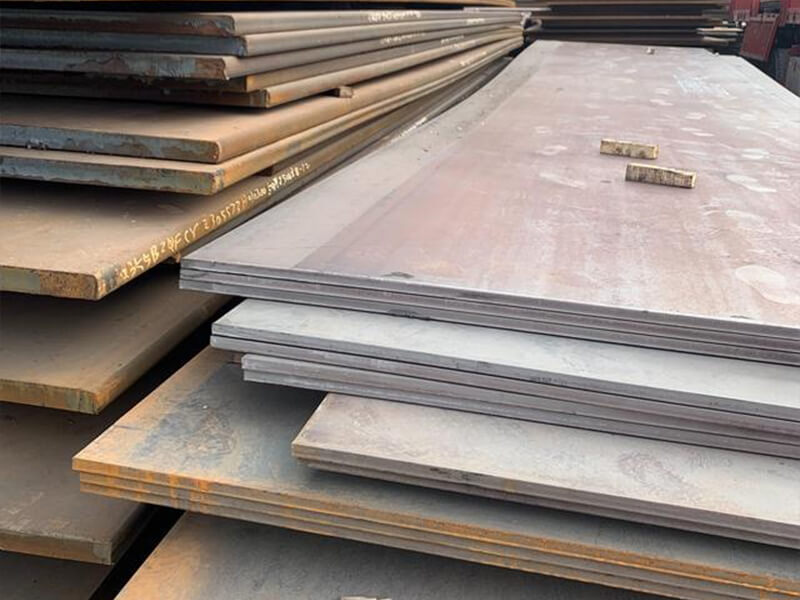
The new paperwork you need to prepare for
I had a buyer from Qatar. He ordered 500 tons of marine steel plates. After we agreed on price, he sent a new requirement: a carbon footprint declaration per ton of steel. I had to go back to my mill and ask for the data. It took me three days to get it. The buyer told me: "In 2025, we will not accept orders without this."
So let me show you the green standards that are coming.
First, ISO 14001 – the baseline. Many Chinese mills already have this certification. It means the mill has an environmental management system. But not all steel traders ask for it. In 2025, more buyers will put ISO 14001 in their request for quotes. If your supplier does not have it, you may lose orders.
Second, product carbon footprint (PCF). This is the big one. PCF measures how many kilograms of CO2 are emitted to produce one ton of steel. A typical Chinese blast furnace steel has about 1.8 to 2.2 tons of CO2 per ton of steel. Electric arc furnace steel can be lower, around 0.5 to 0.8 tons.
Here is what different PCF levels mean for your project:
| PCF Level (kg CO2/ton steel) | Production Method | Likely Buyer Requirement |
|---|---|---|
| Below 0.6 | Electric arc with green power | Premium projects, green shipbuilding3 |
| 0.6 – 1.2 | Electric arc (standard mix) | European buyers, some Middle East |
| 1.2 – 1.8 | Blast furnace with efficiency | Most standard projects |
| 1.8 – 2.5 | Older blast furnace | No green requirement, lower price |
Third, low-emission shipping documentation4. Some buyers are now asking for the carbon footprint of the sea freight too. That is new. In 2025, I expect more container lines to provide carbon calculators. As a supplier, I will add that data to my delivery package.
What you should do now
If you are a buyer, start asking your Chinese supplier for PCF data. Not all mills have it. The good ones do. I am already collecting PCF data from my partner mills. In 2025, I will include it in every quote for European and Middle Eastern buyers.
If you are a supplier, get your ISO 14001 and start measuring PCF. Buyers will not wait.
How Are Shipping Routes, Lead Times, and Freight Costs Changing for Marine Steel Plates?
The Red Sea situation. Panama Canal droughts. Port congestion. Shipping is not what it used to be.
In 2025, marine steel plate shipping1 from China will use more routes via the Cape of Good Hope2, avoiding the Red Sea for safety. Lead times to Europe and the US East Coast will be 5-10 days longer. Freight costs will be 20-30% higher than pre-2023 levels but stable compared to 2024.
Real numbers for your logistics planning
I ship steel to 12 countries. Every route has changed in the last two years. Let me give you the 2025 picture.
First, route changes. Before 2023, most steel to Europe went through the Suez Canal3 and the Red Sea. Now, many shipping lines avoid the Red Sea because of security risks. They go around the Cape of Good Hope (South Africa). That adds 7 to 10 days of sailing time.
| Destination | Old Route | New Route (2025) | Extra Days |
|---|---|---|---|
| Northern Europe | Suez Canal | Cape of Good Hope | +8 to 10 days |
| Mediterranean | Suez Canal | Cape of Good Hope or transshipment | +5 to 7 days |
| US East Coast | Panama Canal or Suez | Panama or Cape (depending) | +0 to 5 days |
| Middle East | Red Sea (direct) | Red Sea (some lines) or transshipment | +0 to 3 days |
For my buyers in Saudi Arabia and Qatar, the Red Sea route is still usable but with higher insurance costs. For buyers in Romania and Thailand, the Suez route is still open but with longer wait times.
Second, lead times from order to delivery. In 2025, you should plan for longer lead times4 than before 2020. Here is my current actual data:
| Destination Port | Production Time (China) | Sea Freight Time | Total Lead Time (order to arrival) |
|---|---|---|---|
| Ho Chi Minh, Vietnam | 7-10 days | 5-7 days | 12-17 days |
| Klang, Malaysia | 7-10 days | 8-10 days | 15-20 days |
| Dammam, Saudi Arabia | 10-15 days | 18-22 days | 28-37 days |
| Manila, Philippines | 7-10 days | 8-12 days | 15-22 days |
| Veracruz, Mexico | 10-15 days | 25-30 days | 35-45 days |
| Constanta, Romania | 10-15 days | 30-35 days | 40-50 days |
Compare that to 2019. Sea freight to Europe was 25 days. Now it is 30-35 days. That is a real difference.
Third, freight costs5. Freight rates went down from the 2021-2022 peaks. But they are still higher than pre-COVID. In 2025, I expect a 40-foot container from Qingdao to Jebel Ali (Dubai) to cost $1,500 to $2,500. To Rotterdam, $3,000 to $5,000. Compared to 2019 ($800 to Rotterdam), that is still double.
Here is a freight cost table for 2025 (estimates):
| Route | 2019 Cost (40ft) | 2024 Cost | 2025 Expected |
|---|---|---|---|
| Qingdao – Jebel Ali | $700 | $1,800 | $1,500-2,200 |
| Qingdao – Rotterdam | $800 | $4,000 | $3,000-4,500 |
| Qingdao – Los Angeles | $1,000 | $3,500 | $2,800-4,000 |
| Qingdao – Veracruz | $1,500 | $4,500 | $3,500-5,000 |
Fourth, what you can do to manage. Plan ahead. Add 10 days to your old lead time estimate. Ask your supplier to book shipping early. Use a freight forwarder who has multiple route options. And consider ordering larger batches less often to reduce the per-unit freight cost.
One of my clients from Romania used to order every month. Now he orders every two months. He saves on freight because he fills a full container each time. But he needs more storage space. That is the trade-off.
Conclusion
Demand grows in new regions. Prices stay firm. Green certifications become standard. Shipping takes longer. Plan your 2025 sourcing now.
-
Explore this link to understand the evolving landscape of marine steel plate shipping and its implications for logistics. ↩ ↩ ↩ ↩
-
Learn about the strategic shift to the Cape of Good Hope and its impact on shipping routes and safety. ↩ ↩ ↩ ↩
-
Stay updated on the Suez Canal’s status, a critical route for global shipping and logistics. ↩ ↩ ↩ ↩
-
This resource will provide insights into the changing lead times in shipping, crucial for effective logistics planning. ↩ ↩ ↩ ↩
-
Discover the factors affecting freight costs to better manage your shipping budget and logistics. ↩ ↩
-
Discover Nigeria’s shipbuilding plans to assess potential sourcing options and market entry. ↩