
You buy marine steel plates. They fail inspection. Your project stops. The cost is huge.
Top Chinese exporters control quality at four stages: mill chemistry and mechanical testing, dimensional and surface checks during production, third-party inspections like SGS before shipment, and full traceability from heat number to final documents.
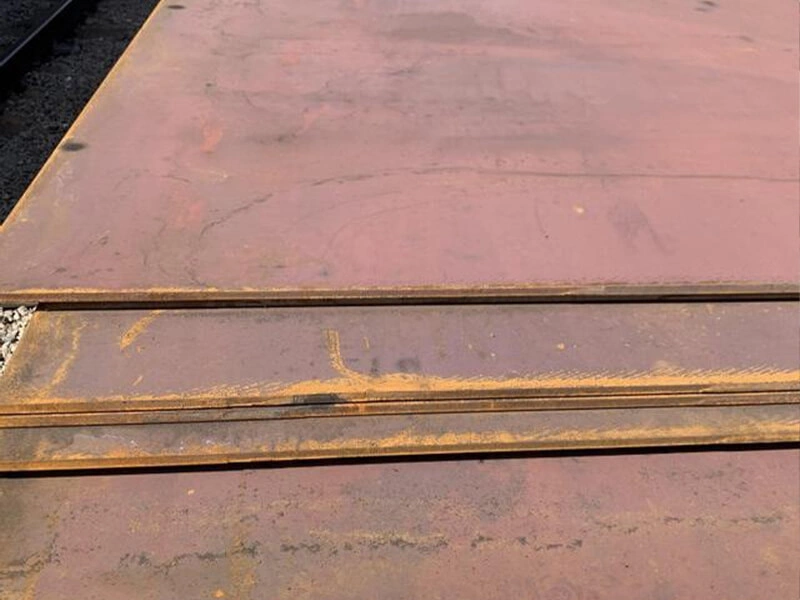
I have worked with some of the best mills in China. I have also seen bad steel from cheap suppliers. The difference is not luck. It is a system. Top exporters follow a strict quality control process. They do not skip steps. They do not fake documents. Let me walk you through exactly what they do. You can use this knowledge to pick the right supplier for your next project.
How Do Leading Exporters Control Steel Chemistry and Mechanical Properties from the Mill?
Steel that looks the same can have different carbon levels. That changes everything about how it welds and bends.
Leading exporters control chemistry by requiring mill‑certified heat analysis1 for every batch. They also perform mechanical tests (tensile, yield, elongation, and impact) on samples from each heat number. Results must meet the specified grade standard like ABS AH36 or DNV DH36.
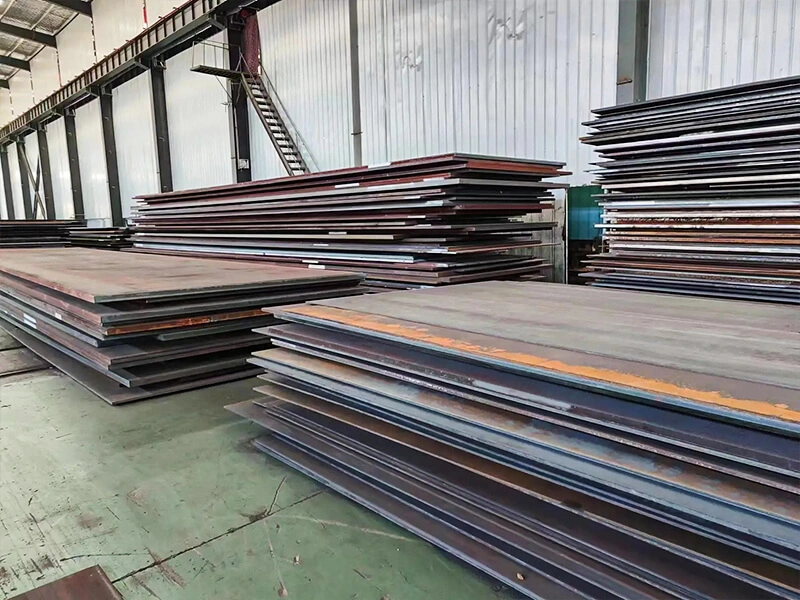
The lab tests that separate good steel from bad
I remember a buyer from Malaysia. He bought plates from a cheap trader. The steel looked fine. But when his welder tried to weld it, the metal cracked. He tested the chemistry. The carbon was 0.29% instead of the required 0.21%. That small difference made the steel too hard. The trader had skipped mill testing. That buyer lost $20,000.
So let me explain what top exporters do differently.
First, heat analysis at the mill. Every batch of liquid steel is tested before it is cast. A sample is taken from the ladle. It goes to a spectrometer. The machine reads the exact percentage of carbon, manganese, silicon, phosphorus, sulfur, and other alloying elements. The results go into the Mill Test Certificate (MTC)2.
Here is what a good heat analysis looks like for AH36 grade:
| Element | Required Range (ABS AH36) | Typical Value from Good Mill |
|---|---|---|
| Carbon (C) | ≤0.18% | 0.16% |
| Manganese (Mn) | 0.90-1.60% | 1.25% |
| Silicon (Si) | 0.15-0.50% | 0.28% |
| Phosphorus (P) | ≤0.025% | 0.018% |
| Sulfur (S) | ≤0.025% | 0.012% |
| Niobium (Nb) | ≤0.05% | 0.02% |
| Vanadium (V) | ≤0.10% | 0.03% |
Second, mechanical testing3 from each heat. After the steel is rolled into plates, the mill cuts samples. They test:
- Yield strength (YS) – how much stress before permanent bending
- Tensile strength (TS) – maximum stress before breaking
- Elongation – how much the steel stretches before breaking
- Impact toughness (Charpy V‑notch) – how much energy the steel absorbs before breaking at low temperatures
For AH36, the requirements are:
| Test | Requirement | Good Mill Typical Result |
|---|---|---|
| Yield strength | ≥355 MPa | 380‑410 MPa |
| Tensile strength | 490‑620 MPa | 520‑560 MPa |
| Elongation | ≥21% | 24‑28% |
| Impact at 0°C | ≥34 J (average) | 80‑120 J |
Third, how top exporters verify these results. They do not just take the mill’s word. They do their own random checks. I have a simple rule: for every 100 tons, I take one sample and send it to an independent lab. If the independent results are within 5% of the mill’s results, I trust the mill. If not, I reject the whole heat.
One of my clients from Saudi Arabia saw me do this. He said: "You test the mill. Most traders do not." That is why he stays with me.
What to ask your supplier about mill testing
- Does the mill perform heat analysis on every ladle?
- Are mechanical tests done on samples from every heat number?
- Can you provide the actual test values (not just pass/fail)?
- Do you do any independent verification4 of mill results?
If the answer to any of these is "no" or "I don’t know", be careful.
What Dimensional and Surface Inspection Routines Are Performed During Production?
A plate that is 0.5mm too thin might still pass the standard. But it will fail your welding procedure.
Top exporters perform dimensional checks1 (thickness, flatness, length, width) at multiple points during rolling. They also inspect surface condition2 (rust, pits, laminations, cracks) under good lighting. Any defect is marked and removed before the plate is cut to final size.
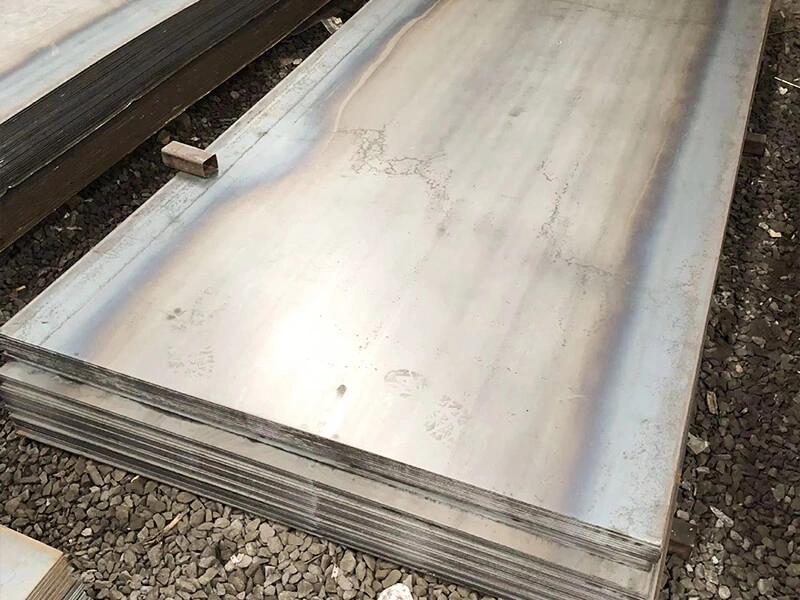
The five inspection points that catch defects early
I visited a mill in Shandong with a client from Thailand. We walked along the rolling line. The mill had five inspection stations. My client was surprised. He had never seen that level of detail. He asked: "Do all mills do this?" I said: "No. Only the good ones."
Let me walk you through those five inspection points.
First, after rough rolling. The steel is still hot, about 900°C. Inspectors use a laser gauge to measure thickness across the width. They also check for edge cracks. If the thickness is off by more than 1mm, the mill adjusts the rollers immediately.
Second, after finish rolling and cooling. Now the steel is at room temperature. Inspectors use an ultrasonic thickness gauge3. They take readings at the four corners and the center. The tolerance for marine plate is usually ±0.3mm for thickness under 20mm, and ±0.4mm for thicker plates.
Here is a typical inspection record:
| Plate ID | Position 1 (mm) | Position 2 (mm) | Position 3 (mm) | Position 4 (mm) | Pass/Fail |
|---|---|---|---|---|---|
| P001 | 15.03 | 14.98 | 15.01 | 15.00 | Pass |
| P002 | 15.02 | 14.95 | 14.96 | 14.97 | Pass |
| P003 | 14.85 | 14.82 | 14.83 | 14.81 | Fail (under 14.9) |
Third, flatness check4. The plate is laid on a flat table. Inspectors measure the gap between the plate and the table using a feeler gauge. For marine plates, flatness must be within 3mm per meter. If the plate is bowed or twisted, it is rejected or sent to a press for straightening.
Fourth, surface inspection under bright light. Inspectors look for:
| Defect | Description | Action |
|---|---|---|
| Lamination | Layers peeling off the surface | Cut out or reject whole plate |
| Scabs | Patches of loose material | Grind off and re‑inspect |
| Cracks | Thin lines on surface or edge | Reject |
| Deep pitting | Holes deeper than 0.3mm | Reject or repair |
| Heavy scale | Thick, flaky iron oxide | Blast clean or reject |
Fifth, final dimensional check after cutting to length. Length and width are measured with a tape measure. Diagonal difference (squareness) is checked. For a 12m x 2.5m plate, the diagonal difference should be under 10mm.
How top exporters document these checks
I keep a file for every order. It contains:
- Thickness measurement report (five points per plate)
- Flatness report (one reading per meter)
- Surface defect log with photos of any repairs
- Final dimension report with length, width, and diagonal
I share these reports with my clients before shipping. They can see exactly what they are getting.
One of my clients from Vietnam told me: "Your reports are better than the mill’s certificates. I trust your numbers more."
Why Do Top Exporters Use Third-Party Inspections Like SGS, BV, or TÜV Before Shipment?
You trust your supplier. But your client does not. They want proof from an independent company.
Top exporters use third-party inspections1 because they provide unbiased verification of quality, dimensions, and packaging. SGS, BV, or TÜV inspectors check random samples, issue a formal report, and give buyers confidence that the steel meets specifications before it leaves China.
Why third-party inspection is not an extra cost – it is an investment
I had a buyer from Qatar. He ordered 800 tons of DH36 plates. He did not want to pay for SGS inspection2. I said: "It is only $500." He said: "No, I trust you." The steel arrived. His client’s engineer asked for an independent inspection report3. My buyer had none. The engineer rejected the whole shipment. The buyer had to pay for a new inspection at his port. That cost him $2,000 plus a 10‑day delay. After that, he never skipped third-party inspection again.
So let me explain what third-party inspectors actually do and why it matters.
First, what a third-party inspection covers. When you hire SGS, BV, or TÜV, they send an inspector to the loading port. That person does:
| Check | What They Do | Output |
|---|---|---|
| Document verification | Check MTC, packing list, commercial invoice | Confirmation of consistency |
| Random dimensional check | Measure thickness, length, width on 5‑10% of plates | Measurement report |
| Surface inspection | Look for rust, pits, laminations, cracks | Visual report with photos |
| Chemical verification | Take small samples for lab analysis (optional extra) | Independent chemistry report |
| Packaging check | Inspect wrapping, strapping, edge protectors | Packaging report |
| Loading supervision | Watch the steel go into the container | Loading report and seal number |
Second, the cost vs benefit4. Here is a real comparison from one of my clients:
| Without third-party inspection | Cost |
|---|---|
| Steel price for 500 tons | $350,000 |
| No inspection | $0 |
| Risk of bad steel | High |
| Potential loss if steel fails | $350,000 + project delay |
| With third-party inspection | Cost |
|---|---|
| Steel price for 500 tons | $350,000 |
| SGS inspection (full scope) | $800 |
| Risk of bad steel | Very low |
| Potential loss | Near zero |
$800 to protect $350,000. That is a 0.2% insurance cost. It makes sense.
Third, how top exporters coordinate with third-party inspectors. I have a standard process:
- Step 1: Buyer pays for inspection directly to SGS (or I pay and add to invoice)
- Step 2: I provide the inspector with mill location, loading date, and sample plan
- Step 3: Inspector visits the loading port, spends 2‑4 hours checking
- Step 4: Inspector issues preliminary report within 24 hours, final report within 5 days
- Step 5: I share the report with my buyer before the ship sails
If the inspector finds a problem, I stop loading. I replace the bad steel. The buyer never sees it.
What to look for in a third-party inspection report
A good report should include:
- Inspector’s name and credentials
- Date and location of inspection
- List of samples taken (bundle numbers, heat numbers)
- Measurement results (actual numbers, not just "pass")
- Photos of any defects
- Final recommendation (accept / reject with conditions)
I keep every SGS report for seven years. My clients can ask for a copy anytime.
How Is Traceability Maintained from Heat Number to Final Packaging and Documentation?
A piece of steel fails. You need to know which batch it came from. Without traceability, you cannot recall or claim.
Top exporters maintain traceability by stamping or painting the heat number on every plate, recording bundle numbers1 linked to heat numbers, and including all heat numbers in the packing list and commercial invoice2. This creates a chain from mill to destination.
[^3] stamp on marine steel plate for traceability](https://cnmarinesteel.com/wp-content/uploads/2025/10/Marine-steel-plate-20.webp)
The chain that protects you from liability
I had a client from the Philippines. He built a small ferry. Two years later, some plates showed cracks. The owner asked for the heat numbers of the cracked plates. My client had the records. He traced the crack to one specific heat. That heat had a known issue – the mill had produced it during a shift change. The mill accepted responsibility and paid for replacement. Without traceability, my client would have paid himself.
So let me show you how top exporters build traceability.
First, marking at the mill. Every plate is marked with:
- Heat number (unique to the ladle)
- Plate ID (sequential number)
- Grade (e.g., AH36)
- Mill name
- Thickness
The marking is done with paint or a stamp while the plate is still hot. It stays visible through shipping and storage.
Second, bundle numbering. When plates are cut to length and packed into bundles, each bundle gets a label. The label includes:
| Information | Example |
|---|---|
| Bundle number | B-101 |
| Heat number | H22031 |
| Quantity | 5 plates |
| Size per plate | 12m x 2.5m x 15mm |
| Total weight | 17.7 tons |
The label is laminated and tied to the bundle with a strong wire.
Third, documentation linkage. Every document that leaves the exporter’s office has the same heat numbers and bundle numbers.
| Document | What It Contains |
|---|---|
| Packing list | Bundle numbers, heat numbers, quantity per bundle |
| Commercial invoice | Total quantity by heat number |
| Mill Test Certificate4 | Heat number and test results |
| Inspection report (SGS) | Heat numbers of samples tested |
If you look at the packing list, you see: "Bundle B-101: Heat H22031, 5 plates." Then you look at the plate, you see "H22031" stamped on the steel. They match.
Fourth, photo evidence5. I take photos of:
- The heat number stamp on each plate (random sample)
- The bundle label attached to the steel
- The packing list next to the bundle
- The sealed container with the seal number
These photos are saved in a folder with the order number. I can send them to a client in five minutes.
A traceability checklist6 for buyers
- Every plate has a visible heat number stamp
- Every bundle has a weather‑resistant label
- The packing list links bundle numbers to heat numbers
- The commercial invoice shows heat numbers
- The MTC has the same heat numbers
- Photos of stamps and labels are available
Ask your supplier: "Can you send me a photo of the heat number stamp on a random plate from each heat?" If they cannot, they are not serious about traceability.
Conclusion
Top exporters control chemistry, inspect dimensions and surface, use third-party verification, and maintain full traceability. That is how they deliver reliable steel.
-
Bundle numbers play a key role in tracking steel products, linking them to specific heat numbers for quality assurance. ↩ ↩ ↩ ↩
-
The commercial invoice is critical for verifying the details of steel shipments, ensuring accurate traceability. ↩ ↩ ↩ ↩
-
Understanding heat numbers is crucial for traceability in steel production, ensuring quality and accountability. ↩ ↩ ↩
-
A Mill Test Certificate provides essential information about the steel’s quality and traceability, vital for compliance. ↩ ↩ ↩ ↩
-
Photo evidence serves as a reliable record of compliance and quality, enhancing trust in the supply chain. ↩
-
A traceability checklist helps buyers ensure that all necessary documentation and markings are in place for accountability. ↩