
You hand over a steel certificate. The shipyard inspector frowns and asks for more documents. That delay costs you time and money.
Shipyards check four main things on your marine L-shaped steel certificate: material grade and mechanical properties, chemical composition limits, dimensional tolerances, and classification society approvals with traceability numbers. Missing any one of these can stop your delivery.

I have shipped L-shaped steel to shipyards in Vietnam, Mexico, and Saudi Arabia. Every yard follows the same basic checklist. But many new suppliers miss small details. Then the cargo sits at the port while the buyer waits for new papers. Let me walk you through exactly what inspectors look for. These four questions come up in every single project.
Which Material Grades and Mechanical Properties Must Your L‑Shaped Steel Certificate Show?
The inspector turns to the grade column first. If the grade does not match the purchase order, the whole batch gets rejected on the spot.
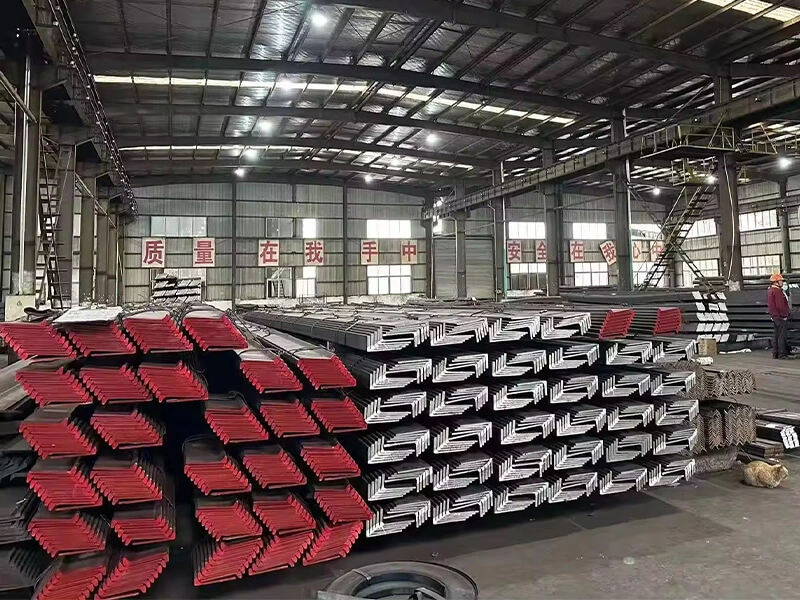
Your certificate must clearly show the material grade1 (like A, B, D, E, AH32, AH36, DH36) and three mechanical properties: yield strength2, tensile strength3, and elongation percentage4. These numbers must meet the minimum values from the classification society rules.
What each mechanical property means
Let me break down these three numbers. They tell you how the steel behaves under load.
| Property | What it measures | Typical minimum for Grade A | Why shipyards care |
|---|---|---|---|
| Yield strength (MPa) | The stress point where steel starts to permanently bend | 235 MPa | Frame keeps its shape under normal loads |
| Tensile strength (MPa) | The maximum stress before the steel breaks | 400-520 MPa | Safety margin after yielding |
| Elongation (%) | How much the steel stretches before breaking | 22% (on 5.65√So) | Shows ductility, prevents brittle failure |
The grade naming trap
Many buyers get confused by grade names. A common mistake: thinking Grade A and AH32 are the same because both have an "A". They are not. Grade A has a yield strength of 235 MPa. AH32 has 315 MPa. That is 34% stronger. If you send Grade A when the order calls for AH32, the shipyard will reject it.
I had a client in Pakistan who ordered AH36 L-shaped steel from a cheap supplier. The certificate said AH36. But when the shipyard tested a sample, the yield strength came back at 280 MPa, not the required 355 MPa. The supplier had faked the certificate. We had to air freight new steel from our mill in Shandong. That cost the client $12,000 extra.
Impact toughness numbers
For grades D, E, DH32, DH36, you also need impact toughness5 values. The certificate must show the test temperature and the absorbed energy in Joules. For Grade D, the test is at -20°C. For Grade E, it is at -40°C. The minimum energy is usually 27 Joules for longitudinal specimens.
I always tell my buyers: if your ship sails in cold waters, do not accept a certificate without impact test results. A buyer from Romania once ignored this. He bought Grade A steel for a ship that went to the Baltic Sea in winter. The hull plates cracked during a storm. The repair cost more than the whole steel order.
What a good certificate looks like
A proper certificate from a certified mill6 will have a table with these exact headings:
- Heat number
- Grade designation
- Yield strength (ReH or Rp0.2)
- Tensile strength (Rm)
- Elongation (A%)
- Impact test temperature and energy (for grades D and above)
If any of these is missing, ask the mill to reissue the certificate. Do not accept a partial document.
How Do Shipyards Verify the Chemical Composition Limits on Your Marine Steel Certificate?
Too much carbon or sulfur makes the steel hard to weld. Shipyards test every heat number. They compare the numbers to the standard limits.
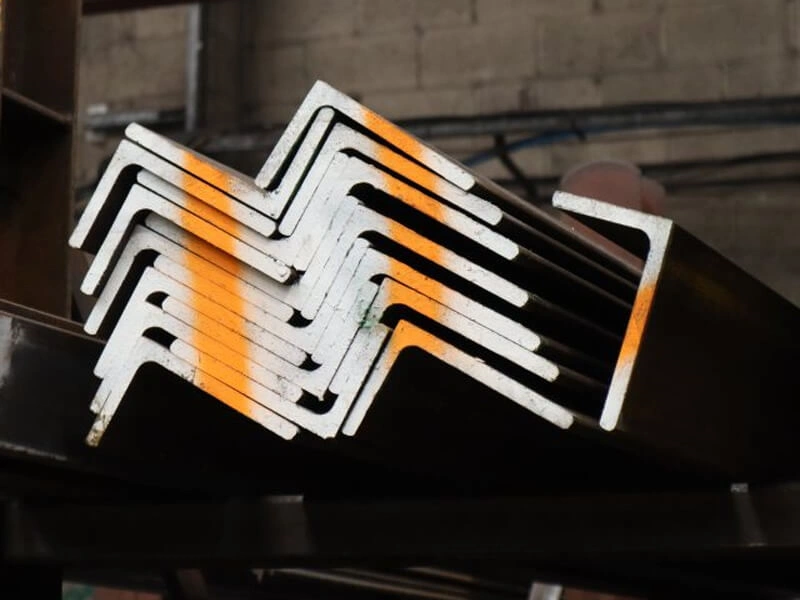
Shipyards check five key elements on your certificate: carbon (C), manganese (Mn), silicon (Si), phosphorus (P), and sulfur (S). Each element has a maximum allowed percentage1. The certificate must list the actual measured values2 for every heat number.
The five critical elements and their limits
| Element | Maximum allowed (Grade A) | Why it matters |
|---|---|---|
| Carbon (C) | 0.21% | Too much carbon makes welding difficult and causes cracking |
| Manganese (Mn) | 0.60% minimum (no max typically) | Improves strength and toughness, but too much reduces ductility |
| Silicon (Si) | 0.35% | Helps with deoxidation, but high silicon reduces weldability |
| Phosphorus (P) | 0.035% | A harmful impurity. High phosphorus causes cold shortness |
| Sulfur (S) | 0.035% | Another harmful impurity. High sulfur causes hot cracking in welds |
The carbon equivalent problem3
Shipyards do not just look at carbon alone. They calculate the carbon equivalent (CEV). This formula combines the effect of several elements. The most common formula is:
CEV = C + Mn/6 + (Cr+Mo+V)/5 + (Ni+Cu)/15
For marine L-shaped steel, the CEV should stay below 0.43% for good weldability. Some classification societies allow up to 0.45% for thicker sections. But if your certificate shows a CEV above 0.45%, expect the shipyard to ask for special welding procedures.
I remember a shipment to Thailand. The mill certificate showed 0.23% carbon. That was already above the 0.21% limit. But the CEV was 0.48% because of high manganese and chromium. The shipyard rejected the whole batch. The buyer had to find a new supplier fast. We delivered from our stock in Liaocheng within two weeks. But the buyer lost a month of production time.
How shipyards spot fake certificates4
Fake certificates often have perfect round numbers. Real test results have decimals like 0.187%, 0.342%, 0.021%. If you see 0.20%, 0.35%, 0.03% exactly, be suspicious. Also check that the heat number on the certificate matches the stamp on the steel. Every piece of L-shaped steel should have a heat number painted or stamped on it. If the numbers do not match, the certificate is useless.
I advise all my clients to take photos of the steel markings before loading. Then compare them to the certificate. One customer from Mexico did this and caught a mismatch. The mill had sent the wrong certificate. We fixed it before the ship sailed.
Special limits for higher grades
Higher grades like AH36 and DH36 have tighter limits. For example, carbon is usually kept below 0.18%. Phosphorus and sulfur below 0.025% each. The certificate must show these lower values. Do not accept a general certificate that says "meets requirements." You need the actual measured numbers.
What Dimensional Tolerances Do Inspectors Check Against Your L‑Section Mill Certificate?
Steel that is out of tolerance does not fit. I have seen L-sections rejected because the leg length was 2mm too short. That 2mm ruined a whole assembly line.
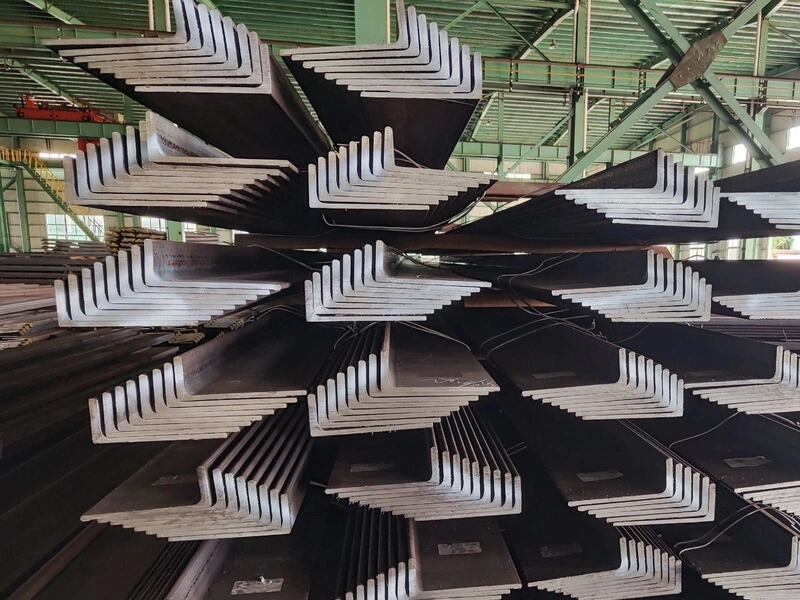
Inspectors check four dimensional tolerances1: leg length (both legs), leg thickness, root radius2, and straightness. Your mill certificate3 must list the nominal dimensions and the actual measured values. The actual values must fall within the tolerances set by standards like JIS G3192 or EN 10056.
Standard tolerances for L-shaped steel
Let me give you the typical numbers based on JIS G3192, which is common in Asian shipyards.
| Dimension | Tolerance for leg size up to 100mm | Tolerance for leg size 101-200mm |
|---|---|---|
| Leg length (both legs) | ±1.5mm | ±2.0mm |
| Leg thickness | ±0.3mm for thickness under 10mm | ±0.4mm for thickness 10-15mm |
| Root radius (inside corner) | +0% to +50% of nominal | Same |
| Straightness | 0.2% of total length | 0.2% of total length |
The root radius trap
Many buyers ignore the root radius. But shipyards check it. The inside corner of an L-section is not sharp. It has a radius. That radius helps reduce stress concentration. If the radius is too small, the corner becomes a crack starter. If the radius is too large, the flat part of the leg is shorter than expected.
For a typical L100x100x10 section, the root radius should be about 10mm to 12mm. The tolerance allows it to be bigger, but never smaller than nominal. I once had a mill deliver L-sections with a 6mm root radius. The shipyard rejected them because the small radius created a sharp corner. We had to replace 20 tons of steel.
How to read the dimensional section on your certificate
A good certificate will have a table like this:
| Item | Nominal (mm) | Actual measured (mm) | Tolerance (mm) | Pass/Fail |
|---|---|---|---|---|
| Leg length A | 100 | 99.8 | ±1.5 | Pass |
| Leg length B | 100 | 100.2 | ±1.5 | Pass |
| Thickness | 10 | 9.9 | ±0.3 | Pass |
| Root radius | 11 | 11.5 | +0 to 5.5 | Pass |
| Straightness (per 6m) | 0 | 8mm | 12mm max | Pass |
If any of these is missing, ask for a complete report.
A real rejection story
A buyer from Malaysia ordered L150x90x12 angle bars for a barge. The mill certificate showed the leg lengths as 150mm and 90mm. But when the steel arrived, the short leg measured 86mm on average. That was 4mm below nominal. The shipyard could not fit the angle bars into the prefabricated brackets. The buyer had to cut and re-weld every bracket. That cost him $8,000 in extra labor.
I always tell my clients: ask for a dimensional inspection report4 from a third party like SGS before the steel leaves China. We offer this service. For a small fee, an inspector visits the mill, measures random samples, and sends you a report with photos. Then you know the steel fits before it ships.
Straightness and twist
Long L-sections can bend or twist. The straightness tolerance5 is usually 0.2% of the length. So for a 12-meter bar, the maximum bow is 24mm. Twist is measured over 1 meter of length. The twist should not exceed 4mm per meter. If your certificate does not list straightness and twist, the shipyard will measure it themselves. I have seen bars rejected because of a 30mm bow. The buyer had to straighten them with a press, which took days.
Which Classification Society Approvals and Traceability Numbers Are Mandatory on the Certificate?
Without the right stamps and numbers, your steel is just scrap with a fancy shape. Classification societies like ABS, DNV, LR, and BV will not approve a ship built with untraceable steel.
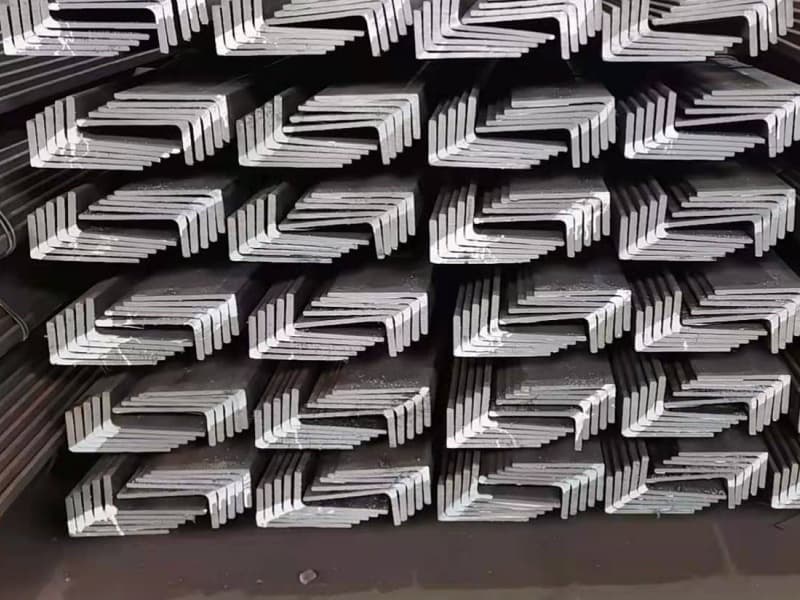
Your certificate must show a valid classification society approval1 stamp (ABS, DNV, LR, BV, or NK) and a unique heat number2 for every cast. The heat number must match the stamp on the steel. Without traceability, the shipyard cannot use your L-shaped steel3 in a classed vessel.
Which classification societies are accepted?
Different shipyards prefer different societies. Here is a quick guide:
| Classification society | Abbreviation | Common regions |
|---|---|---|
| American Bureau of Shipping | ABS | USA, Mexico, Saudi Arabia |
| DNV (Det Norske Veritas) | DNV | Europe, Southeast Asia |
| Lloyd’s Register | LR | UK, Commonwealth countries |
| Bureau Veritas5 | BV | France, Middle East, Vietnam |
| Nippon Kaiji Kyokai | NK | Japan, Thailand, Philippines |
| Korean Register | KR | Korea, global |
| China Classification Society | CCS | China, some Asian countries |
Your certificate must have the stamp or logo of at least one of these societies. Some projects require two, like ABS + DNV. Always check the purchase order.
The heat number traceability chain6
Every piece of L-shaped steel from a certified mill gets a heat number. That number links the steel back to the exact batch of liquid steel from the furnace. The certificate lists that heat number. The steel itself has that same number painted or stamped on it.
The shipyard will randomly pick a piece of steel. They will read the heat number. Then they will find that heat number on your certificate. Then they will check that the certificate has the right grade, chemistry, and properties for that heat number. If any link in this chain breaks, the steel is rejected.
I had a client in the Philippines who bought L-sections from a trader. The certificate had a heat number. But the steel had a different heat number. The trader had mixed two batches together. The shipyard rejected the whole container. The client had to buy new steel from me. Now he only buys from mills that stamp every piece clearly.
What a proper approval looks like
A classification society approval on a certificate is not just a logo. It includes:
- The society’s name and logo
- A unique approval number7 (like "ABS-23-7890")
- The date of approval
- The mill’s name and approval number with that society
- The scope of approval (which grades and shapes)
If the certificate just says "meets ABS requirements" without an approval number, it is not valid. The mill must be approved by the society to produce that specific shape and grade.
Common missing items
I see these mistakes often:
- No heat number on the steel – Some mills use weak paint that rubs off. Then the shipyard cannot trace the steel.
- One certificate for multiple heat numbers – Each heat number needs its own row of test results. A single certificate can list many heats, but each heat must have its own data.
- Expired mill approval – Mills renew their classification society approvals every 1-3 years. Check the date on the certificate.
- Wrong shape approval – A mill may be approved for plates but not for L-sections. The certificate must specifically say "angle bars" or "L-shaped sections."
A tip from my experience
Before you ship, ask your mill for a scanned copy of their classification society approval certificate. This is separate from the product certificate. It proves the mill is allowed to make marine steel. I keep a folder of these approvals for all my partner mills. When a buyer asks, I send the approval in one hour. That fast response has won me many customers, including Gulf Metal Solutions.
So check for four things: a clear society stamp, a unique approval number, a matching heat number on the steel, and a valid mill approval. Miss any one, and the shipyard will say no.
Conclusion
Shipyards check four certificate items: material grade and mechanical properties, chemical composition, dimensional tolerances, and classification approvals with heat numbers. Get all four right, and your steel passes inspection.
-
Understanding classification society approvals is crucial for ensuring compliance and quality in marine steel production. ↩ ↩ ↩ ↩
-
Learn about unique heat numbers to ensure traceability and quality assurance in steel manufacturing. ↩ ↩ ↩ ↩
-
Discover the specifications for L-shaped steel to ensure it meets industry standards for marine construction. ↩ ↩ ↩ ↩
-
Understanding marine steel standards is crucial for ensuring safety and compliance in shipbuilding. ↩ ↩ ↩
-
Bureau Veritas is a leading classification society; understanding their services can enhance your compliance strategy. ↩ ↩ ↩
-
Explore the traceability chain to understand how steel quality is maintained from production to application. ↩ ↩
-
An approval number is vital for verifying the legitimacy of steel certifications; learn more about its significance. ↩