
You split the hull into blocks. Then you realize each block needs different plates at different times. That is a puzzle.
Shipyards break the hull into 20 to 80 blocks. Each block has a unique steel plate list based on its size, shape, and location. You order plates block by block. Then you schedule deliveries so plates arrive right before that block enters the fabrication shop. This keeps waste low and workflow smooth.
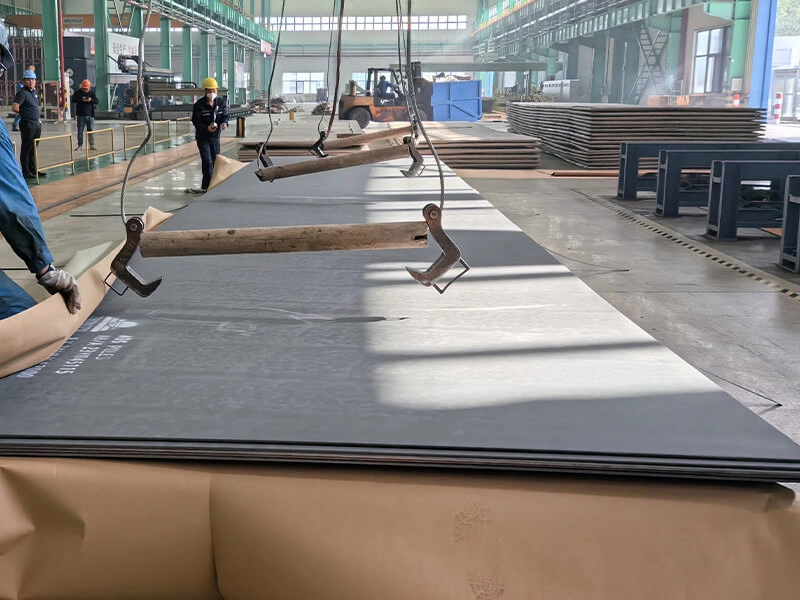
I have helped many shipyards plan their block steel. Let me walk you through the steps. I will share real examples from my work with clients in Vietnam and Saudi Arabia.
How Do Shipyards Break Down the Hull into Blocks and Determine Plate Requirements for Each Block?
A whole ship is too big to build at once. So you cut it into pieces. But how do you know what steel each piece needs?
Shipyards use 3D design software to split the hull into blocks. Each block is 10 to 30 meters long. Then the software generates a cutting list for every plate in that block. You group plates by thickness, grade, and size. That gives you a bill of materials per block.
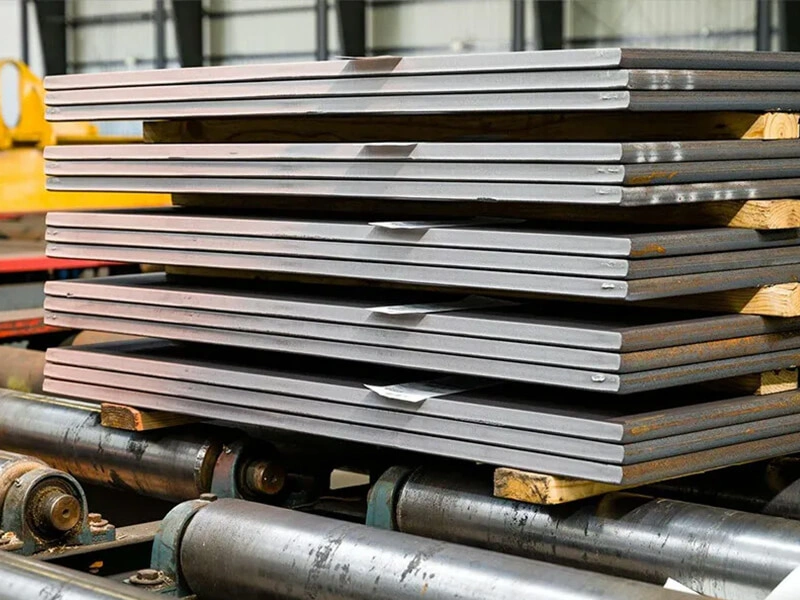
Let me explain how this works in real life. I work with production engineers every week. They start with a 3D model of the ship. This model is already split into blocks. A block is just a section of the hull that you can build on its own and then weld to other blocks later.
There are three types of blocks:
- Bottom blocks: These include the keel and bottom shell. They use thick, high-strength plates (AH36, DH36, 20-40mm).
- Side blocks: These form the port and starboard walls. They use medium thickness (10-20mm, AH32 or AH36.
- Deck blocks: These are the top sections. They use thinner plates (8-12mm, Grade A or AH32.
Inside each block, there are even smaller sub-assemblies. For example, a bottom block might have a center girder, side girders, and floor plates. Each of these has different plate sizes.
So how do you determine the plate requirements for each block? You export the cutting list from the software. That list shows every single plate piece with its dimensions, grade, and quantity. Then you add them up per block.
Here is a real example from a client in Pakistan. He was building a 120-meter bulk carrier. The hull was split into 45 blocks. I asked him to send me the block list. We made a simple table.
| Block Number | Block Type | Plate Thickness (mm) | Steel Grade | Total Plate Weight (tons) |
|---|---|---|---|---|
| B-01 | Bottom | 25 | DH36 | 48 |
| B-02 | Bottom | 25 | DH36 | 52 |
| S-11 | Side | 15 | AH36 | 32 |
| S-12 | Side | 15 | AH36 | 35 |
| D-21 | Deck | 10 | A | 28 |
| D-22 | Deck | 10 | A | 30 |
This table is the foundation. Without it, you cannot plan your orders. I have seen buyers who just order total tonnage. They end up with wrong thicknesses and missing plates.
One more thing. Each block also needs stiffeners and brackets. Those come from marine angle steel and bulb flat steel. We supply those too. But that is another topic. For now, focus on plates.
My advice is simple. Ask your design team to export the block-level BOM. Then send it to me. I will help you group common sizes and grades. This saves you money because we can order larger mill runs.
What Ordering and Delivery Sequence Ensures Plates Arrive Just as Each Block Enters Fabrication?
You know what each block needs. But when do you order? And when do you ask for delivery? Get it wrong and your shop goes idle.
You work backwards from each block’s fabrication start date. Subtract mill lead time and shipping days. Then add a small buffer. You place orders at different times for different blocks. Then you schedule deliveries so plate bundles arrive one week before each block starts.
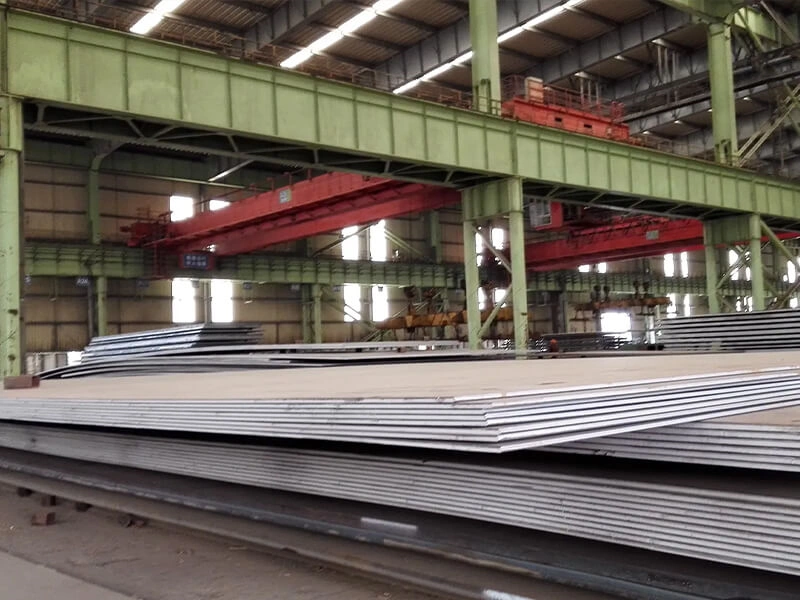
This is where many shipyards make mistakes. They order all block plates at once. Then the steel sits outside for months. It gets rusty. Workers waste time moving stacks to find the right block plates.
I use a method called block-based backward scheduling. Here is how it works step by step.
Step 1: List all blocks with their fabrication start dates
Let us say you have 45 blocks. Block B-01 starts on June 1. Block B-02 starts on June 15. Block S-11 starts on July 10. And so on.
Step 2: Calculate order deadline for each block
Take the start date. Subtract total lead time. Lead time from our mill in China to your yard is usually 50 to 70 days. Let us use 60 days as an example.
For Block B-01 starting June 1: subtract 60 days = April 2. Add 10 days buffer = order by March 23.
For Block B-02 starting June 15: subtract 60 days = April 16. Add buffer = order by April 6.
Step 3: Group blocks into order batches
You do not want to place 45 separate orders. That is too much paperwork. So you group blocks that start within 3 weeks of each other. For example, blocks starting in early June go into one order. Blocks starting in late June go into another order.
Step 4: Schedule delivery dates
Delivery should happen one week before the block starts. That gives you time to unload, inspect, and move plates to the fabrication station. So for Block B-01 starting June 1, delivery on May 25. For Block B-02 starting June 15, delivery on June 8.
Here is a real case. A client in Mexico was building four small tankers. He used my block-based schedule. He placed three separate orders over six months. Each order only had plates for blocks starting in the next 8 weeks. His warehouse never had more than 300 tons of steel. His workers never waited for plates.
I also recommend color-coded delivery labels. We at CN Marine Steel attach a label on each bundle. The label says: Block number, start date, and position in the block (forward, middle, aft). This way, the yard team knows exactly where to put each bundle.
Another tip. Keep your buffer stock separate from the block plates. Do not use buffer plates for scheduled blocks. Buffer is for emergencies only.
Let me show you a simple delivery sequence table.
| Block | Start Date | Delivery Date | Order Date | Lead Time Used |
|---|---|---|---|---|
| B-01 | June 1 | May 25 | March 20 | 66 days |
| B-02 | June 15 | June 8 | April 5 | 64 days |
| S-11 | July 10 | July 3 | May 5 | 59 days |
| S-12 | July 25 | July 18 | May 20 | 59 days |
| D-21 | August 20 | August 13 | June 15 | 59 days |
See how the order dates are spread out? This is the key. You order as late as possible, but with enough buffer. And you deliver just before each block starts.
One more thing. Talk to your plate supplier about holding inventory. I can store finished plates in our Liaocheng warehouse for up to 30 days. Then I ship exactly when you tell me. This gives you even more control.
How Can Standardizing Plate Dimensions and Nesting Plans Reduce Waste Across Multiple Blocks?
Every block has different shapes. You cut big plates into smaller pieces. But you lose 15 to 20 percent of the steel as scrap. Can you cut that waste down?
Yes. You standardize plate dimensions across blocks. Use common widths and lengths like 2.4m x 12m. Then you create nesting plans. Nesting means arranging many small cut pieces on one big plate to use almost all of it. Good nesting can reduce scrap to under 10 percent.
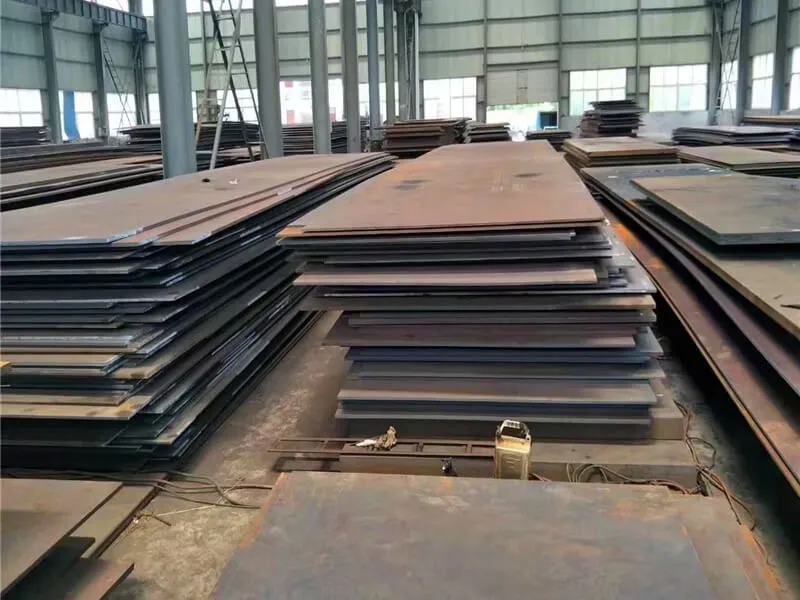
I have seen shipyards throw away thousands of dollars of steel every month. The problem is unplanned plate sizes. Designers just request any size they need. Then the procurement team buys odd-sized plates. When you cut those plates, you get weird leftover shapes that no one can use.
Let me break down two simple solutions.
Solution 1: Standardize plate dimensions
Look at all your blocks. Find the most common plate width and length. For most shipyards, 2.4 meters wide and 12 meters long is standard. Or 3 meters wide and 10 meters long. Then ask your design team to fit as many pieces as possible into these standard sizes.
Why does this help? Because mills produce standard sizes more cheaply. And leftover pieces from one block can be used for another block. For example, a 2.4m x 12m plate might give you 10 pieces for Block B-01. The leftover can give you 3 small pieces for Block S-11.
I worked with a client in Romania. He was using 17 different plate lengths. I asked him to reduce to 5 standard lengths: 6m, 8m, 10m, 12m, 14m. His plate orders became simpler. He got 8 percent lower price from the mill. And his scrap rate dropped from 18% to 12%.
Solution 2: Use nesting plans across blocks
Nesting is like a puzzle. You take a big plate. You draw all the small pieces you need from different blocks. Then you arrange them to use as much of the big plate as possible.
Most design software has a nesting module. But many shipyards do not use it across blocks. They nest within each block separately. That is a mistake.
Here is what you do. Collect the cutting lists from five to ten blocks that will be built around the same time. Then run a multi-block nesting plan. You might find that pieces from Block B-02 fit perfectly into the empty spaces of a plate that is mostly used for Block B-01.
I remember a case from a client in Thailand. He was building a container ship. He ran a multi-block nest for 12 bottom and side blocks. His plate utilization went from 82% to 93%. That saved him 65 tons of steel. At $700 per ton, that was $45,500 saved.
Let me show you a simple before-and-after table.
| Approach | Plate Utilization | Scrap Rate | Extra Steel Needed for 1000 tons of Parts |
|---|---|---|---|
| Single-block nesting | 82% | 18% | 220 tons |
| Multi-block nesting | 93% | 7% | 75 tons |
See the difference? You save 145 tons of steel for every 1000 tons of parts. That is real money.
Another benefit of standardization. You can hold common sizes in inventory. I keep a stock of standard marine plates in our Liaocheng warehouse. Sizes like 2.4m x 12m in AH36 and DH36. If you have an urgent need for a block, I can ship within 7 days. You do not have to wait 60 days for a mill run.
So my advice is simple. Standardize your plate dimensions across all blocks. Use nesting plans that mix pieces from multiple blocks. And if you need help, send me your block BOM. I will help you find the best standard sizes and nesting opportunities.
Why Is Synchronizing plate supply with Block Pre‑Outfitting and Erection Critical for Workflow?
You have the plates. You cut them. You weld the block. Now you add pipes, cables, and equipment. But if the plates come late, the pre-outfitting team has nothing to do.
Pre-outfitting happens right after a block is welded. If plates arrive late, the welding is late. Then pre-outfitting is late. Then block erection is late. Synchronizing plate supply with these steps keeps all trades working. No one waits. No one rushes.
Let me tell you a story. A client in Vietnam was building a tanker. He ordered plates perfectly for the block welding schedule. But he forgot about pre-outfitting. Pre-outfitting needs access to the inside of the block. That means the block must be welded and turned to the right position. If the block is not ready, the pipe fitters sit idle.
So how do you sync plate supply with pre-outfitting and erection? You map out three timelines for each block.
Timeline 1: Plate delivery – Plates arrive 1 week before block welding starts.
Timeline 2: Block welding – Takes 5 to 15 days depending on block size.
Timeline 3: Pre-outfitting – Starts immediately after welding. Takes 10 to 20 days. This includes installing pipes, cable trays, insulation, and small equipment.
Timeline 4: Block erection – The finished block is lifted by crane and welded to the main hull. This happens after pre-outfitting.
If any of these timelines shift, the others shift too. That is why you need buffer days and close communication.
Here is the critical point. Pre-outfitting needs the block to be stable and accessible. That means the block cannot be waiting for missing plates. If you are missing even 5 percent of the plates for a block, you cannot start welding. So pre-outfitting is delayed.
I have seen this cause a domino effect. One missing plate for Block B-02 delayed welding by 4 days. That pushed pre-outfitting by 4 days. That pushed erection by 4 days. The crane was already booked for the original date. So the yard had to pay $8,000 to reschedule the crane.
How do you avoid this? You add a safety check before each block delivery.
My three-step safety check:
-
Two weeks before block welding: I confirm with the client that all plates for that block are either on site or on a ship with tracking. I also check that no design changes have been made.
-
One week before block welding: I ask the client to do a quick inventory count. Match the plates on site with the block BOM. If anything is missing, I send it by air freight for small quantities. I have done this for clients in Qatar and Saudi Arabia. It costs more, but it is cheaper than delaying a million-dollar project.
-
During block welding: I stay in touch with the production supervisor. If he sees a problem with a plate (wrong cut, poor surface), I arrange a replacement immediately. We keep common plate sizes in stock for exactly this reason.
Another synchronization tip. Align plate delivery with the erection sequence. The blocks that go to the bottom of the hull first need their plates first. The blocks that go on top later can have later deliveries. This sounds obvious, but many yards mix up the order.
Let me show you a simple erection sequence table.
| Erection Order | Block Number | Block Type | Plate Delivery Deadline | Pre-outfitting Start | Erection Date |
|---|---|---|---|---|---|
| 1 | B-01 | Bottom | May 25 | June 5 | June 20 |
| 2 | B-02 | Bottom | June 8 | June 19 | July 5 |
| 3 | S-11 | Side | July 3 | July 14 | July 30 |
| 4 | S-12 | Side | July 18 | July 29 | August 15 |
| 5 | D-21 | Deck | August 13 | August 24 | September 10 |
See how the plate delivery deadline is exactly one week before pre-outfitting starts? That is the sync point. If plates are late, everything shifts.
I also recommend a weekly meeting with the pre-outfitting team. They often have insights that the welding team does not. For example, they might need extra access holes cut into plates. That changes the plate design. If I know early, I can ask the mill to cut the holes. If I find out late, we must cut them in the yard. That adds time and cost.
One last point. Talk to your plate supplier about emergency support. At CN Marine Steel, I offer a 48-hour emergency dispatch for small quantities of standard plates. If a block is missing a few pieces, I can send them by air or express courier. This has saved three of my clients from major delays in the past year.
So remember. Block welding, pre-outfitting, and erection are a chain. Plate supply is the first link. If that link is weak, the whole chain breaks. Sync your plates with all three stages, not just welding.
Conclusion
Break your ship into blocks. Order plates block by block. Standardize sizes. Nest across blocks. Sync with pre-outfitting. That is how you build faster and cheaper.